Review by Frank Plowright
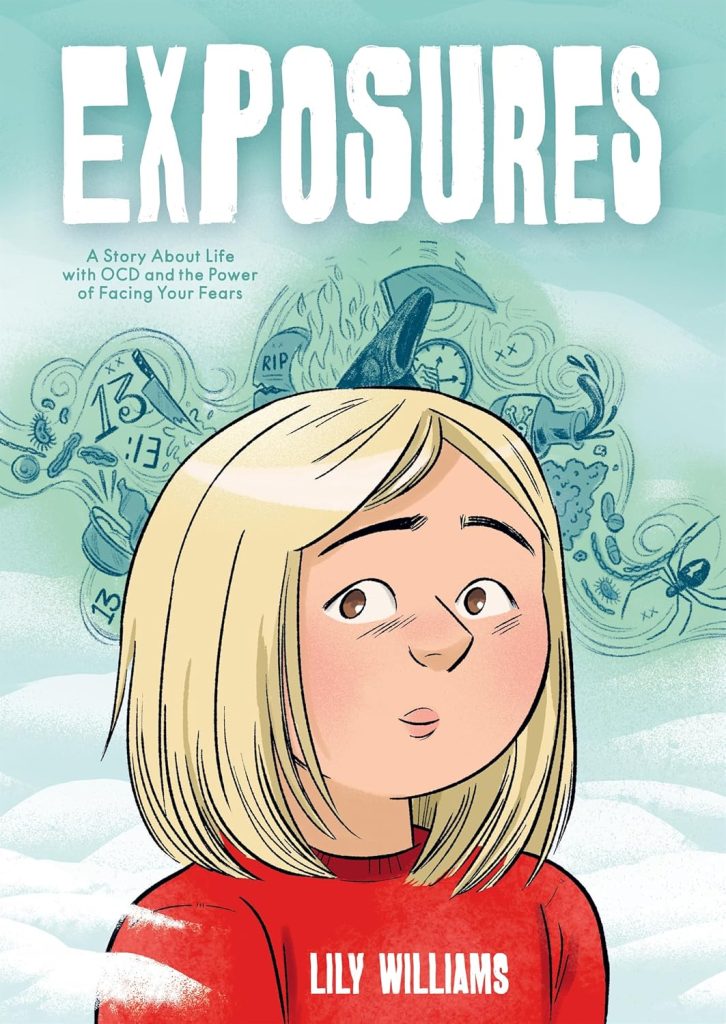
Exposures is about living with Obsessive Compulsive Disorder, commonly contracted to OCD, experienced by twelve year old Peyton, but as an idealised version of the help author Lily Williams needed at an earlier age.
OCD is a condition where people have a compulsion to follow routines under certain circumstances, especially when experiencing stress, and these make no sense to people who don’t experience OCD. It can transmit as superstition, but the compulsion is stronger with a greater fear of consequences, sometimes manifesting as catastrophising. An early example is Peyton having a shower, but unable to dress again while it’s thirteen minutes past the hour. OCD is a lifetime condition where logical reassurance is not a solution, and although coping mechanisms can be applied, they’re an ongoing process.
As much as anything Williams is creating a primer for children who know they react to situations differently from others, so attempt to conceal their routines with the stressful toll that takes. One of Peyton’s coping methods is to pick at her skin, but she’s been able to transfer the process from her face to her head after people noticed and commented. Williams shows how Peyton feels in a variety of situations before a first session with a therapist.
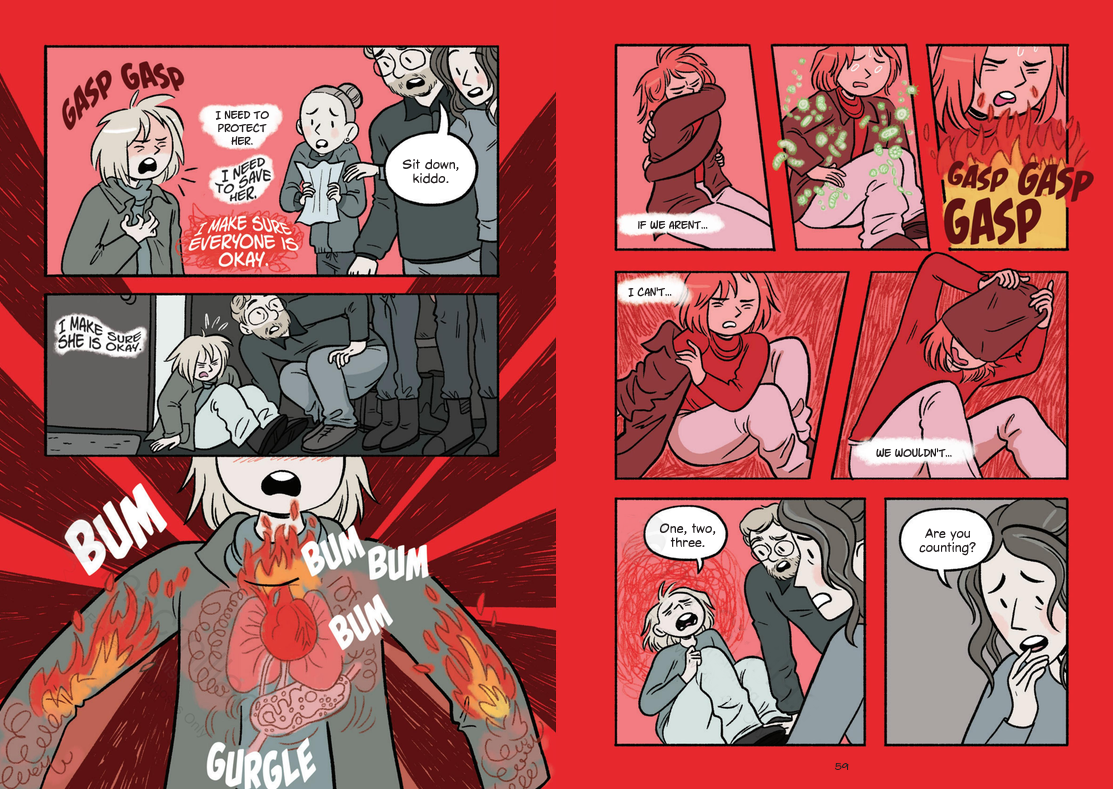
Different thoughtful visual devices are used to show Peyton’s feelings, from comparatively normal to utter panic, when the lines turn wavy and she’s seen in intense close-up, or surrounded by numbers spelled out. Lesser moments of concern can feature dialogue within what look like scribbled word balloons, or floating skulls. As Peyton associates the colour red with blood and then mentally leaps to a connection with death, she reacts badly to it under any circumstances. She’s been able to have her own red clothing removed, but that can’t apply to the remainder of the world.
While any child experiencing similar feelings should derive some initial comfort from Exposures, they’ll also see it’s not an easy path beyond their fears. Peyton’s therapy requires confronting her fears and deliberately putting herself in situations where she’s uncomfortable, but being true to a method of improving life means Williams has to prioritise honesty. It might not seem that way at first, but tracking feelings about responses to situations via a number chart is definitive proof of therapy having an effect.
This is a book that should be in every school library and the children’s section of all other libraries just waiting for the child that needs it to come across it.