Review by Woodrow Phoenix
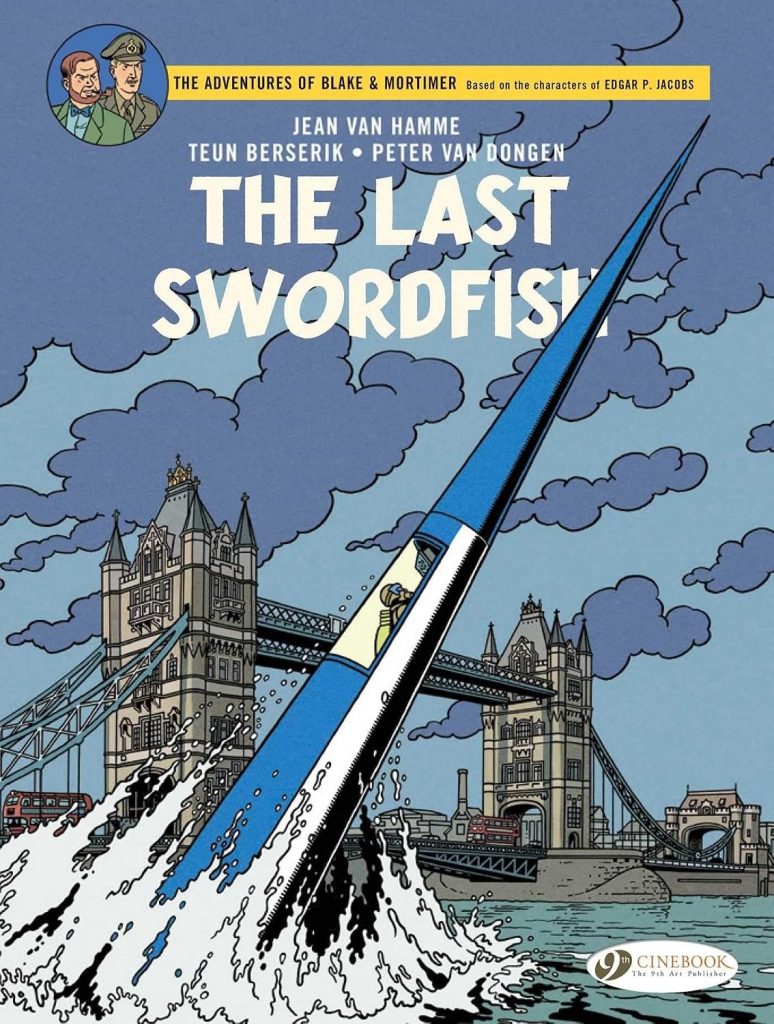
Walk into a comics shop or chain bookstore in France, Belgium, Spain or pretty much anywhere on the continent and even if they don’t sell toys you are still likely to see models of two icons from European comics: the big red lava-lamp-shaped rocket that was the centrepiece of Hergé’s Tintin adventures in Destination Moon and Explorers on the Moon, and the sleekly needle-nosed aircraft with the unusual wings from Edgar P. Jacobs’ The Secret of the Swordfish. People recognise those two flying machines from all the toys, keyrings, bookmarks and other ephemera made from their very distinctive designs, even if they don’t know anything about the stories they appear in.
The Swordfish, a radically advanced fighter aeroplane/submarine designed by Professor Philip Mortimer was vital to winning the Third World War in the first Blake and Mortimer adventure, but Jacobs had too many story ideas and too little time to ever look backwards so the retro-futuristic blue battlecraft were never seen or mentioned again in his later books, despite fans great affection for them. The ongoing series of Blake & Mortimer books create new stories from filling in gaps in Edgar P. Jacobs’ original timeline, so it’s surprising nobody thought to revisit the Swordfish before now. Perhaps it needed an analytical writer like Jean Van Hamme to make the most of the story potential as he did successfully in The Curse of the 30 Pieces of Silver and in The Fiery Arrow, his sequel to Jacobs’ The U-Ray.
There’s always a tension between how closely creators stick to Jacobs’ template for dense, plot-driven action and what modern elements they introduce to make their stories more appealing for contemporary readers. The Last Swordfish exemplifies this struggle with a plotline that looks at the real-world history of the IRA (Irish Republican Army)’s links to Nazis in World War II and asks what form would their attacks against English power take if they had access to more sophisticated weaponry?
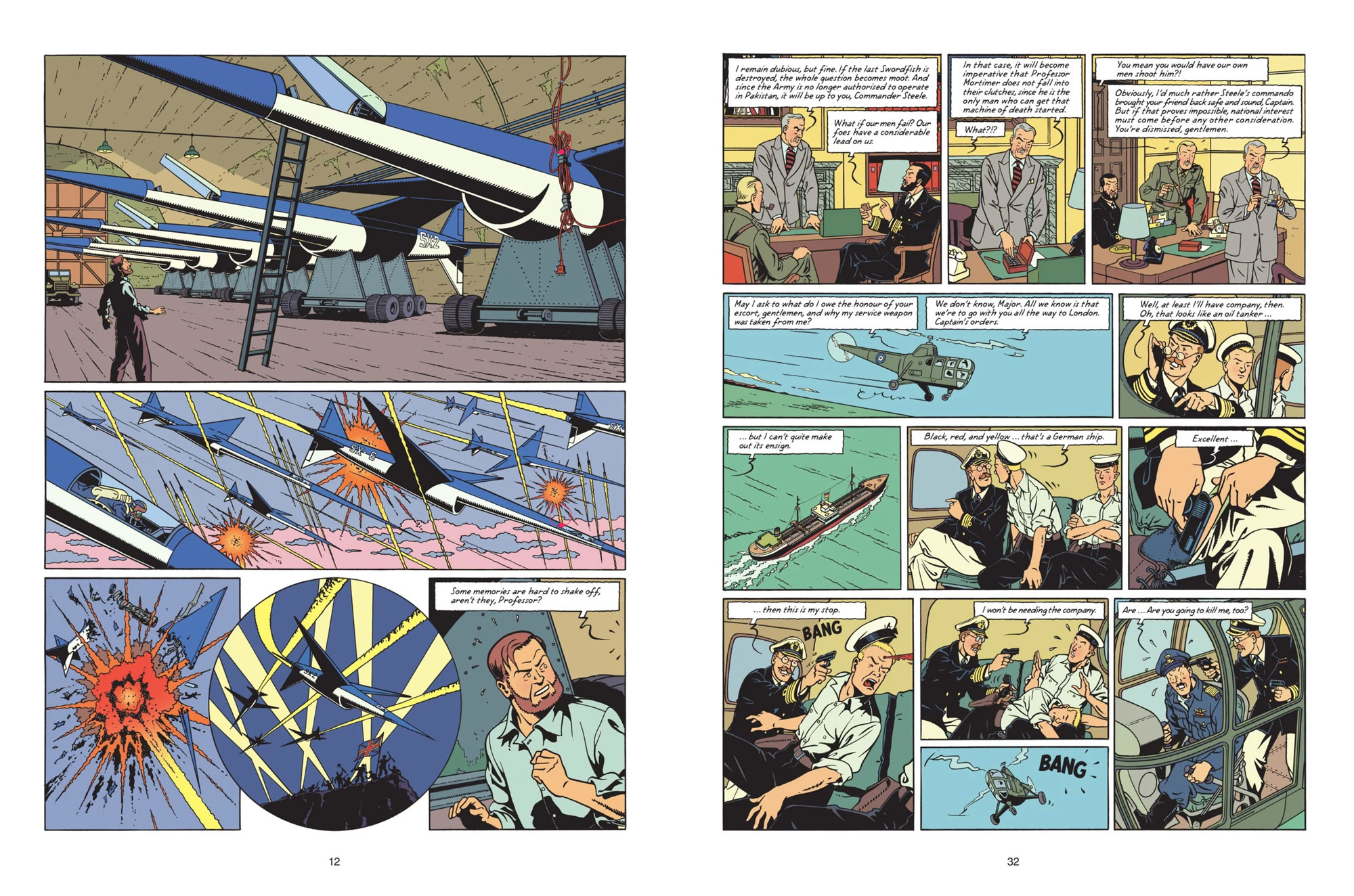
The answer is an engaging, intricate thriller set in 1948 which features a lot more blood and much higher bodycount than readers of these books are used to, drawn by Teun Beserik and Peter Van Dongen with all the elegance of Jacobs at his best. The action moves from the Swordfish base in the Makran to Ireland, where the enemies of The Crown hatch their sinister plans, to Westminster, with a succession of doublecrosses, reveals and revelations. It maintains a speedy, energetic pace without lapsing into cliché or stretching credulity too much – although one particular revelation will surprise nobody who has been reading this series up to now. The science fiction elements are confined to the operation of the Swordfish itself but it all works to make this one of the most satisfying entries in this series to date in its straightforward evocation of wartime heroes foiling cold-eyed villainy.