Review by Frank Plowright
The Resistance: Uprising occurs in a world where across most major countries government response to a global pandemic that’s killed millions has moved toward control and suppression. Some pandemic survivors have developed super powers and are fighting back, but they seemed to have been dealt a fatal blow when The Resistance ended.
J. Michael Straczynski opens Uprising by focusing on a shellshocked resistance, but gradually broadens the cast to accommodate others. He’s very good at small moments of speculation, original consideration of powers and government reactions, which can come to nothing, but provide interesting diversions.
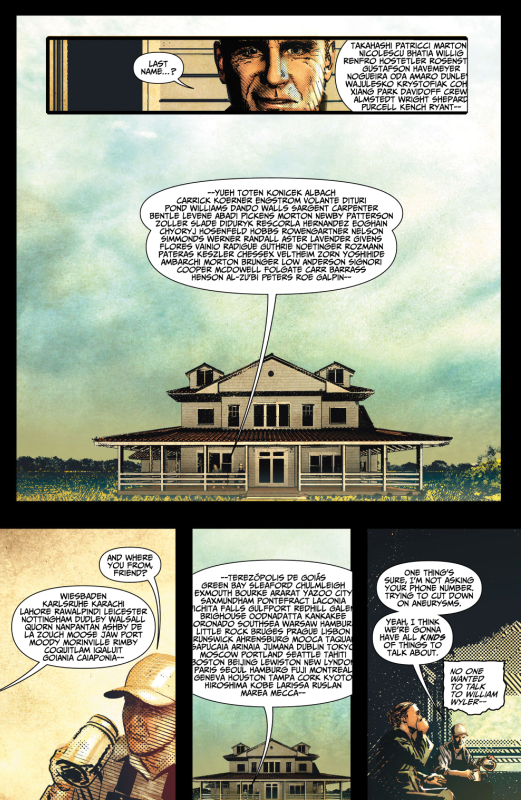
There’s a big change in mood from the first volume as new artist C. P. Smith favours darkness. People have conversations in darkened rooms, act at night, and even during daylight often find their faces covered in shade. It’s not laziness, as Smith opts for full figures and backgrounds, but it makes everyone hard to distinguish, which might be deliberate as that’s a core point of what plays out. Darkness also reflects the prevailing mood.
The prevailing mood is fear. Unknown people with super powers frighten governments, so they in turn inspire fear by brutal methods of control. It’s an unhappy time. In conventional superhero comics it would be ended by someone bright flying in to save the day, but Straczynski’s method of revolution is planning down to minuscule increments, which matches the real world feeling cultivated. Uprising flits from one brief conversation to another, but each of them is relevant, and most deliver extra information.
Monsters are introduced. President Lane and his methods were seen last time, but if several hundred thousand people developed super powers would all act for the betterment of humanity, or would some prioritise self-interest? It’s a theme Straczynski’s explored before in Supreme Power, but the background of reality makes them more terrifying here. Also terrifying is how accurately Straczynski has predicted the methods of the Trump Presidency second time around. It’s most obvious with the targeting of universities, but other moments will transmit as fact rather than the fiction they were when created.
While characters recur throughout, a different theme is prioritised in each chapter, which gives Uprising a stop/start feel, but Straczynski’s always moving events forward, and sets up a tense ending. That’s rather a disappointment for introducing a new factor, but 95% of Uprising is a suspenseful and credible postulation, never forgetting to intrigue and entertain.