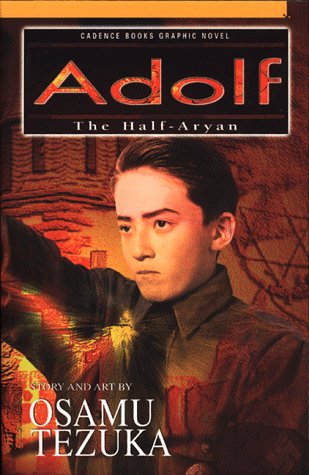
Review by Ian Keogh
Although Osamu Tezuka titled this work Adolf and features three people with that name, until The Half-Aryan the story has been carried by Sohei Toge. A former athlete, and since An Exile in Japan a former journalist, he’s stumbled across documents showing Adolf Hitler has Jewish ancestors. In the late 1903s this is political dynamite, and at considerable cost Toge has resisted surrendering the documents to interested parties. He’s in a bad way at the start of this volume, but things are beginning to look up as Tezuka rather surprisingly pitches him as a target for three different women.
A detailed timeline accompanies the story, listing key events first leading up to World War II, and here during it, paralleled by Tezuka reporting on real events in-story, such as recounting what happened to Jews living in Poland. Until now the Kamil family has been rather secondary, adjuncts to attitudes of the Kaufmann family, but with both Adolfs from Japan now in their teens, the families pay a larger part. There’s a brief diversion of Isaac Kamil on a mission to rescue Jews from Lithuania before attention switches to Adolf Kaufmann, half-German and half-Japanese, but unwillingly sent to a Nazi finishing school in Vienna.
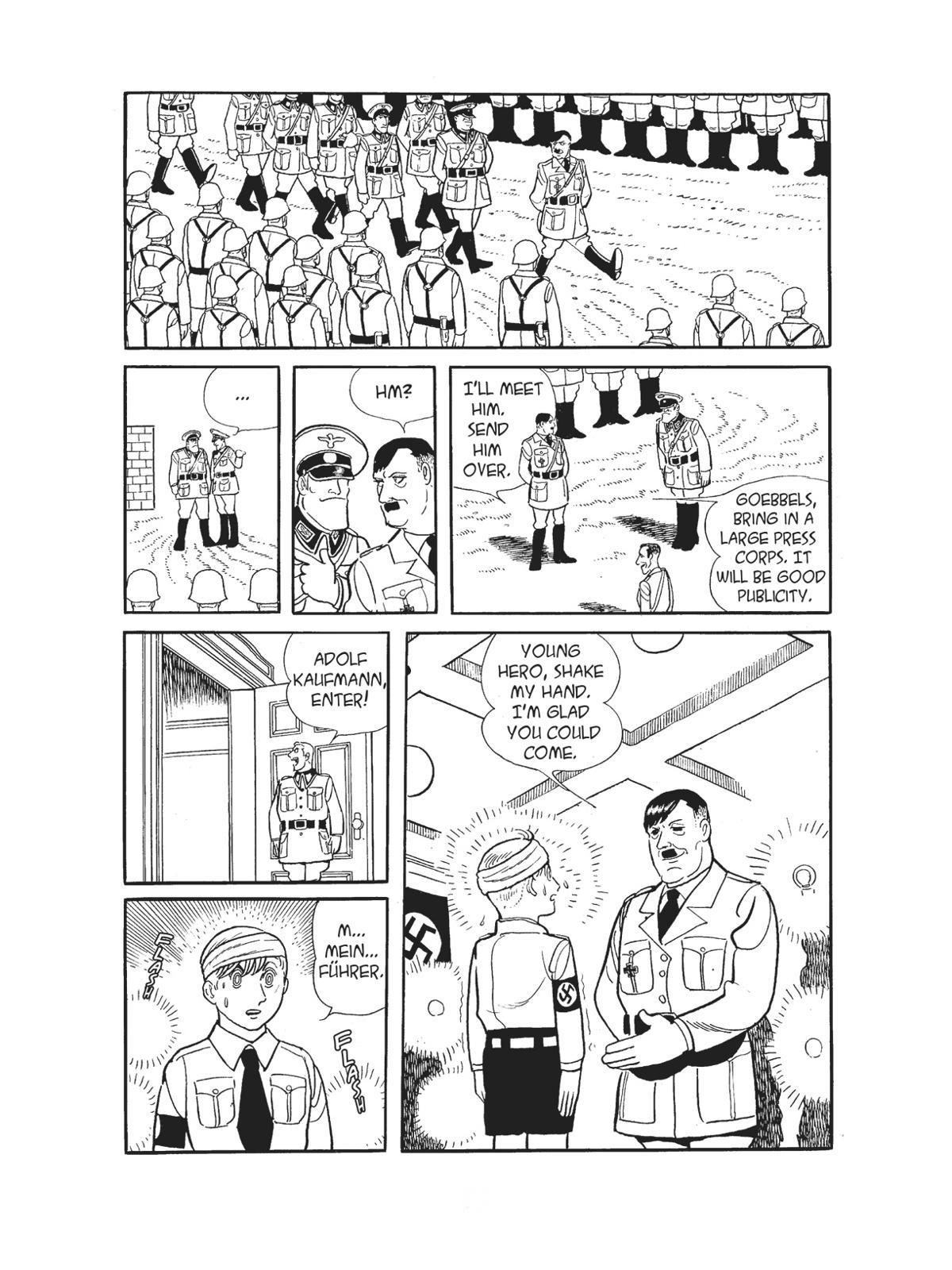
When last seen he was thriving, although hadn’t come to terms with the anti-Jewish dogma. He has no problems with it now, and Tezuka uses that for some powerful appalling scenes, yet also manages to elicit sympathy for a teenager experiencing love for the first time. Tezuka has previously shown Nazis persecuting Jews, but only over a couple of pages. Here he devotes extended sequences to the horror while also showing how fatally compromised Kaufmann is.
This volume features Hitler more than any of the others, portraying him as a venal man who lies about his achievements and earlier plans, adapting to events and claiming the result was always his intention. He’s also prone to aggressive rants and demanding grand architectural structures. It’s caricature, but meaningful in 2026.
The storytelling is masterful. Tezuka weaves his characters in and out of the narrative, arranging surprising meetings and connections between them, and by the end Kaufmann has discovered the secret at the heart of events. Kamil features in the final chapter, Tezuka twisting the knife to heighten the drama, It’s utter comics mastery and continues in Days of Infamy.
The Half-Aryan is split over the two volumes of the later reprinting as Message to Adolf. The break point is this volume’s most horrific moment.