Review by Frank Plowright
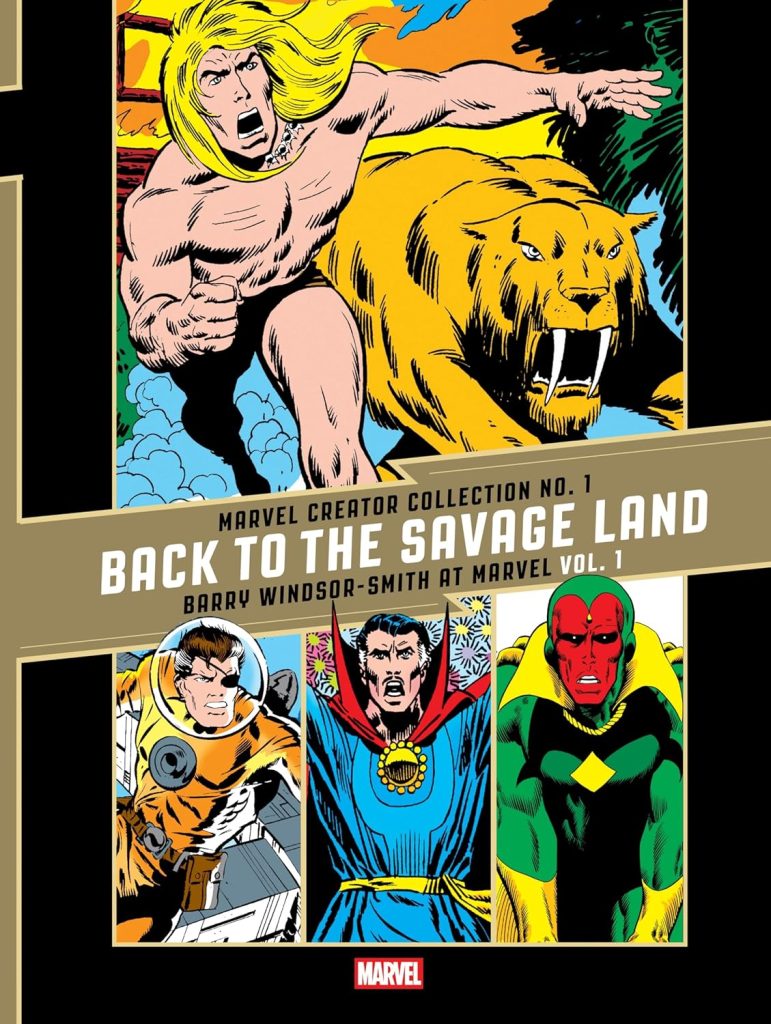
Barry-Windsor Smith’s most sustained Marvel work encompassed four brief years from 1969 to 1972, during which his art evolved immensely into a style still admired half a century later. Given the acclaim, one might have thought the comics reprinted here would have been among the first choices for the Marvel Visionaries hardcovers published from 2004, but instead we’ve had to wait until 2026.
This isn’t a complete collection of work from the early days. Those wanting three Daredevil issues from 1969 will have to wait for one of two further planned collections, while Windsor-Smith’s Conan stories are separately available, but it comprehensively displays rapid artistic progress.
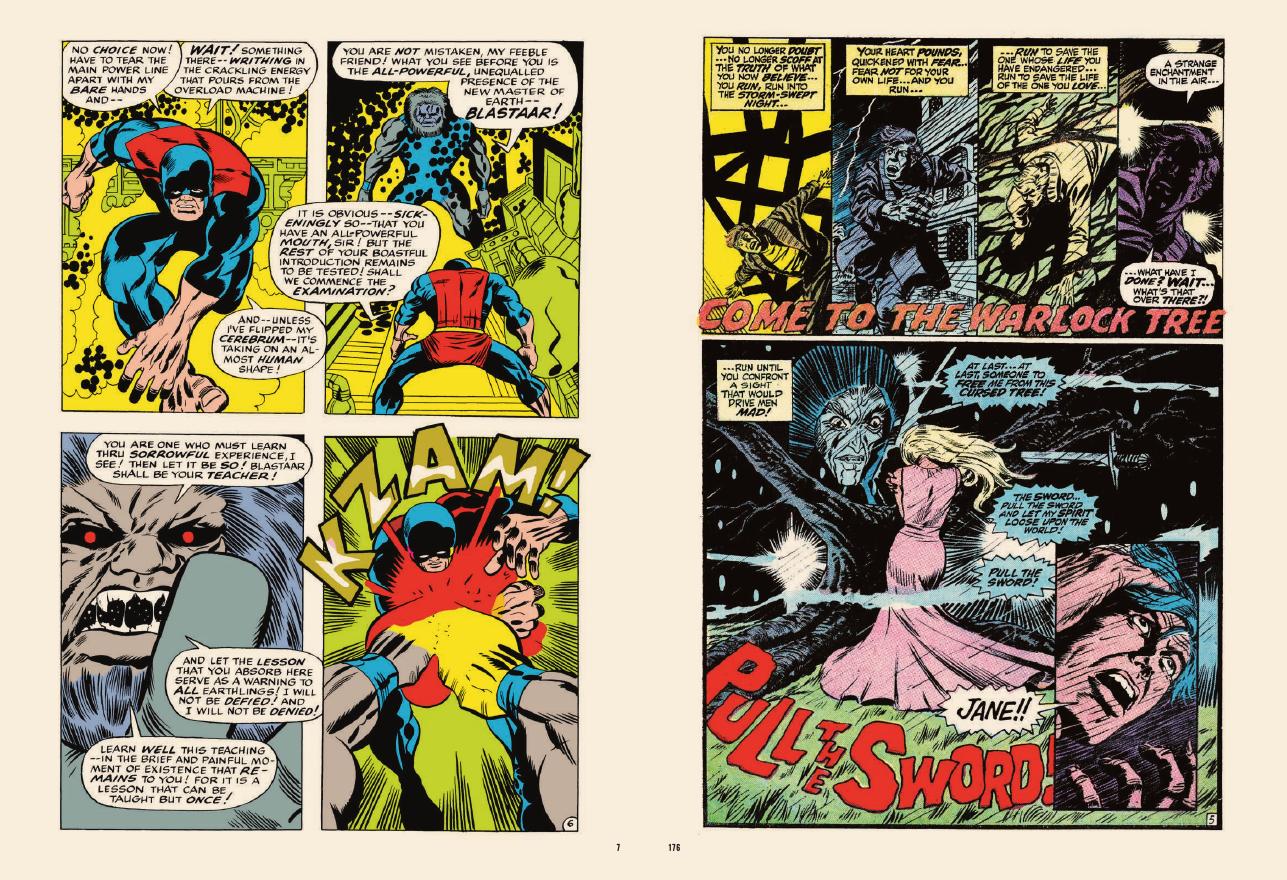
Although other artistic influences are mentioned in Jon Cooke’s introduction, it’s only really Jack Kirby that can be seen in Windsor-Smith’s art in 1969 and early 1970, and a weird distorted version at that. The style and layouts are evident, but the technique and internal consistency aren’t, not that he’s fed great scripts for his X-Men contributions. When drawing Nick Fury it’s obvious Jim Steranko is the influence, and this is more creative, although still an approximation of someone else’s style rather than Windsor-Smith finding his own. The same applies to an improved Kirby homage on two Avengers stories. However, by late 1970 he’s merging those influences and pulling in others for an extremely decorative couple of issues of Ka-Zar and his Savage Land written by Steve Parkhouse.
When contributing short stories to anthologies there’s a greater sense of experimentation, with the light and shade of gothic horror, with taking on other influences such as Steve Ditko on ‘The Scream of Things’ and with Roy Thomas’ dry run for their subsequent Conan series. Four shorts are included, and compositionally they could almost be by four different artists.
The style so beloved fully emerged with Windsor-Smith applying the decorative influences of pre-Raphaelite painting to superhero comics. An Avengers story written by Thomas over three chapters from 1972 still astounds with the sheer ambition of the page compositions, poses and backgrounds, marred only by a truly wretched design for the returning Hawkeye’s new costume, more Magic Mike than superhero. From around the same time there’s Thomas’ revised Iron Man origin, looking different again, as if Sal Buscema provided uncredited layouts. Even allowing for Jim Mooney not being the most sympathetic inker, it’s functional rather than memorable.
Perhaps Windsor-Smith felt there was something to prove on Iron Man, as this collection’s anomalies are two Iron Man issues from 1988 and 1989. The first is the standout, co-plotted with David Michelinie, and a rare good example of the hero battling themselves plot. The visual centrepiece is Tony Stark trapped in wiring and circuitry that writhes around him coiling him into traps, and Windsor-Smith also responsible for colour means such an individual palette distinguishing the art further. In 1989 he’s inking Bob Layton on an unmemorable melodrama.
The collection closes with two issues of Doctor Strange, the first an unheralded artistic masterpiece, being an almost textbook example of how good art elevates an ordinary story. Windsor-Smith plots and Stan Lee scripts Doctor Strange working his way through his mansion aware danger awaits at some stage and eventually facing an old enemy. Drawn after his Conan run, Windsor-Smith creates tension via lighting, small panels and well considered colour. No colourist is credited, so is this also Windsor-Smith’s work? The subtlety suggests so. Frank Brunner working from Windsor-Smith layouts follows, but isn’t as remarkable.
Back to the Savage Land is a carefully curated creative blossoming, showing an artist still unique in comics from his earliest efforts to the full beauty. It’s instructional, but the art can’t raise every average script.