Review by Ian Keogh
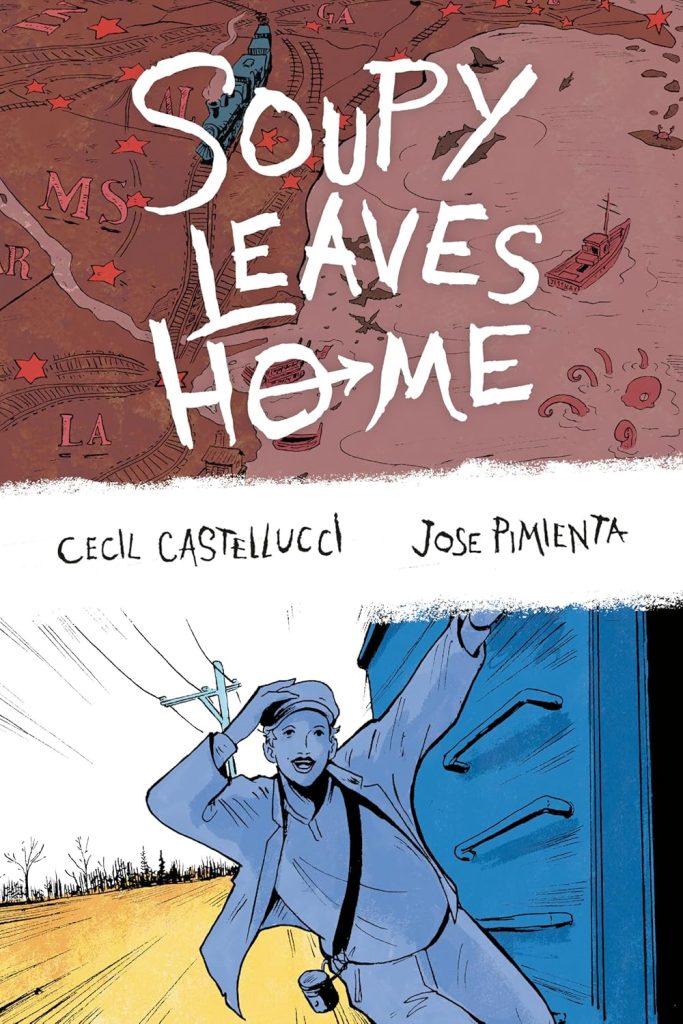
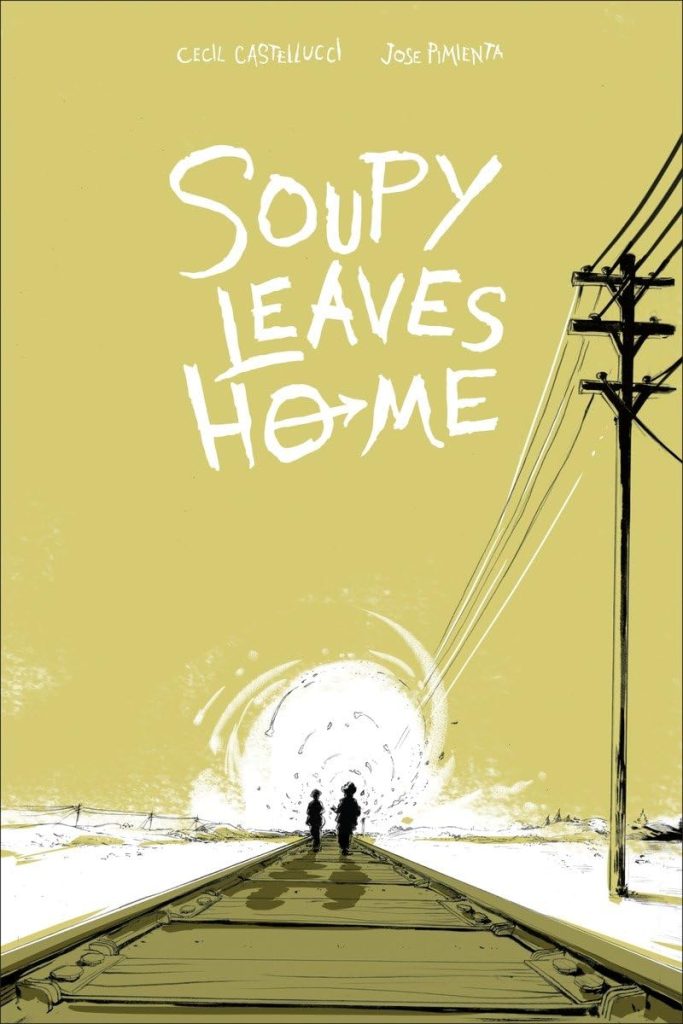
In depression-era USA a teenage girl decides to leave home. We can guess at the circumstances, although she’s silent on the subject when meeting a train-jumper calling himself Ramshackle. She’s also disguised herself well enough that Ramshackle refers to her as Boy, although she eventually settles on Soupy as a name.
Cecil Castelluci uses the circumstances to construct a story not greatly removed from a fairytale, narrated by Soupy in hindsight. She’s fortunate Ramshackle was her first contact with life under the stars as he’s her introduction to the better elements living that life, adopting a humanitarian code explained at length. It seems for a long while that Castelluci is romanticising an extremely difficult life fraught with danger, with Ramshackle some kind of combination of seer and genie, but the hardships eventually manifest, hunger and fear of illness constant companions.
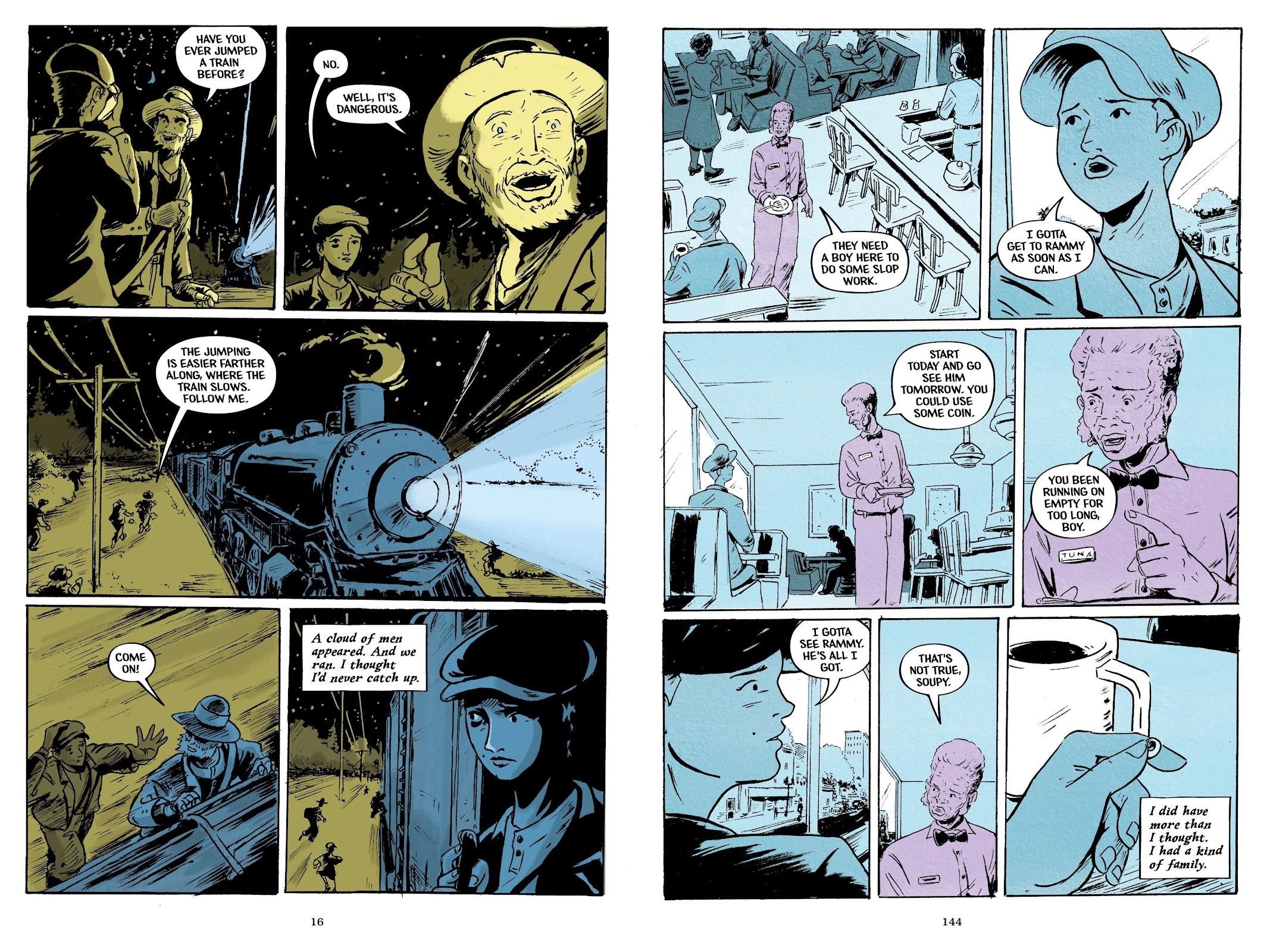
It takes a while to settle into Jose Pimienta’s art, with some early experiments with colour intended to highlight, but very hard on the eye. He persists with the idea, and while later examples improve on the early pages, there never seems any great necessity for the method. A loose, sketchy style depicts people well, though, and expresses their emotions and personalities, and single colour schemes more actively highlight Pimienta’s drawing. His locations are deliberately ordinary, but it’s to better contrast moments of magic, usually connected with memories. These spreads are gloriously expansive and detailed collages
The heart of Soupy Leaves Home is the continuing and deepening relationship between Soupy as novice and Ramshackle as mentor. Both have their needs, and there’s a subtlety about Ramshackle knowing fine Soupy is a girl, but saying nothing. Flashbacks eventually spell out why Soupy left home, and while confirming our worst fears, a better story overall would have left these matters unsaid. While gender identity is an undercurrent, the flashbacks to Soupy’s past lack nuance.
Soupy’s coming of age story eventually reaches a crisis over a hobo with a poor reputation among his peers, who mistrust and dislike him. Situations are cleverly written, with Castelluci showing Soupy believes his version of events, but leaving enough doubt that he may be lying. The climax is overlaid with Ramshackle passing on what he’s learned about life, and an excellent piece of writing in defining who Soupy now is. Because it’s unlikely to be picked up on otherwise, at the end Castelluci and Pimienta supply a map showing the extend of Soupy’s journey, and the explanations that follow reveal further depth of plotting and research.
Enlightening and engaging, Soupy Leaves Home defines a period and a way of life few would willingly choose with richness and charm.