Review by Frank Plowright
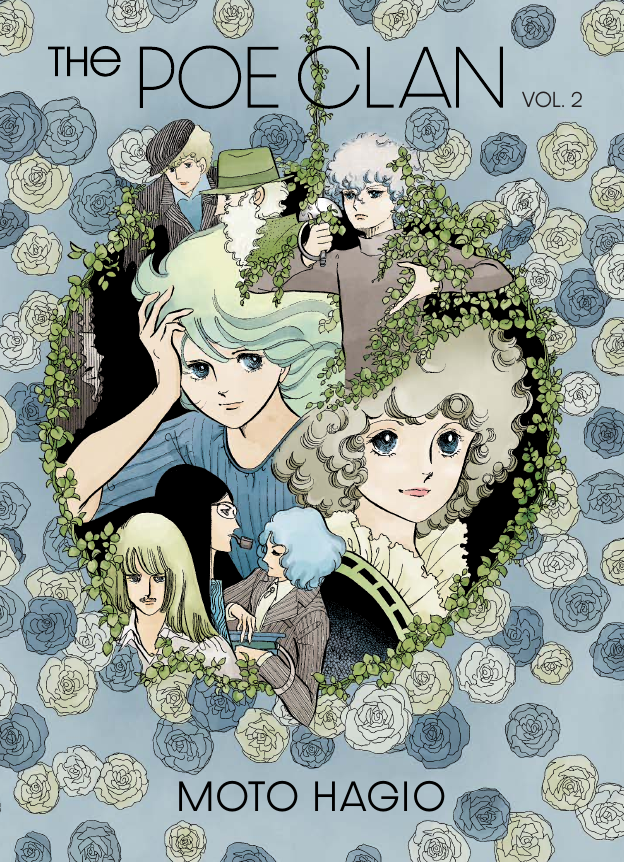
In The Poe Clan vampires are vampirnellas, and differ from their recognised counterparts in more than name. There’s no bloodsucking or transforming into bats for a start. Much happened in The Poe Clan Vol. 1, and Fantagraphics are considerate enough to include a both a summary and a spread illustrating characters who feature. What counts is that Edgar Poe has been a vampirnella aged fifteen since the 1740s, and a century later turned his friend Alan Twilight.
In keeping with the dynastic title, Moto Hagio doesn’t restrict herself to the single time period, so characters we’ve seen die in the opening volume feature before their demise in what’s far less the structured story than the first volume. Instead she skips back and forth filling in consequential details of Edgar, his sister Marybelle and Alan’s lives amid nine decoratively drawn gothic melodramas. The stories are only short in the sense of them being separate in a collection, and can reach up to a hundred pages.
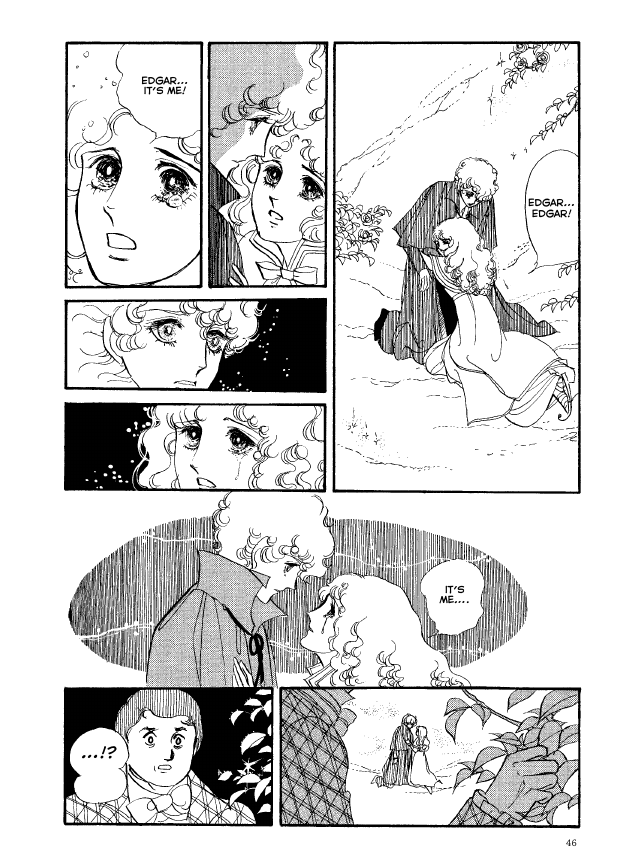
The opening story takes place in the 19th century on a large country estate, with assorted plot complications serviced by Edgar having been in an accident that’s robbed him of his memory. Jealousies, a contested will and plenty of tortured yearnings feature, with the siblings exuding an irresistible allure. Hagio never clarifies if this is a vampirnella trait, and it’s possible something is lost in translation, but feelings are sometimes explicit, yet often conveyed by illustration alone, with decidedly strange behaviour. Uncertainty is compounded by Hagio feminising many of the men in her illustrations, a matter later playing into stories.
A couple of shorter tales follow. We return to Edgar first putting the bite on Alan, and concerns about how long it’s taking him to recover, learning at the same time that Marybelle was always the weaker sibling. The English regional accent is a bit too Thomas Hardy. It’s followed by the childhood memories of a now old woman who spent several idyllic years in the company of Edgar and Alan. Hanging over their story is the circumstances in which Liddy came to be with them. Those circumstances are potentially appalling.
Occasionally stories begin with a few colour pages, and the colour does no favours for Hagio’s delicately structured art, applied with no thought as to the look of the page as a whole. An investigation into a portrait is one example, as an art student in the 1960s starts looking into who the subject might be. Hagio writes this as if an Agatha Christie mystery, uniting various people who’ve pieced together part of Edgar and Alan’s story from over the centuries, including some who’ve actually met them, and ends with a timeline.
That’s followed by a more traditional murder mystery, fine in places but unsubtle in others, someone pining for a lost lover, the most obvious romance included, and the tale of John Orbin in 1934, his long hair making him attuned to the supernatural. The mood of all three is very different, with Ernest playing up the uncanny to help Orbin a finely tuned comedy of manners. Alan is then the object desired by romantic young girls.
Final story ‘Edith’ picks up a decade after events told earlier, and the three acts form a chiller that’s the best tale in the book, pulling together characters seen previously and outlining how far Edgar will go to maintain his secret.
A collection of stories doesn’t quite match the continuity of Vol. 1, but fans of the characters and atmosphere should be very satisfied.