Review by Ian Keogh
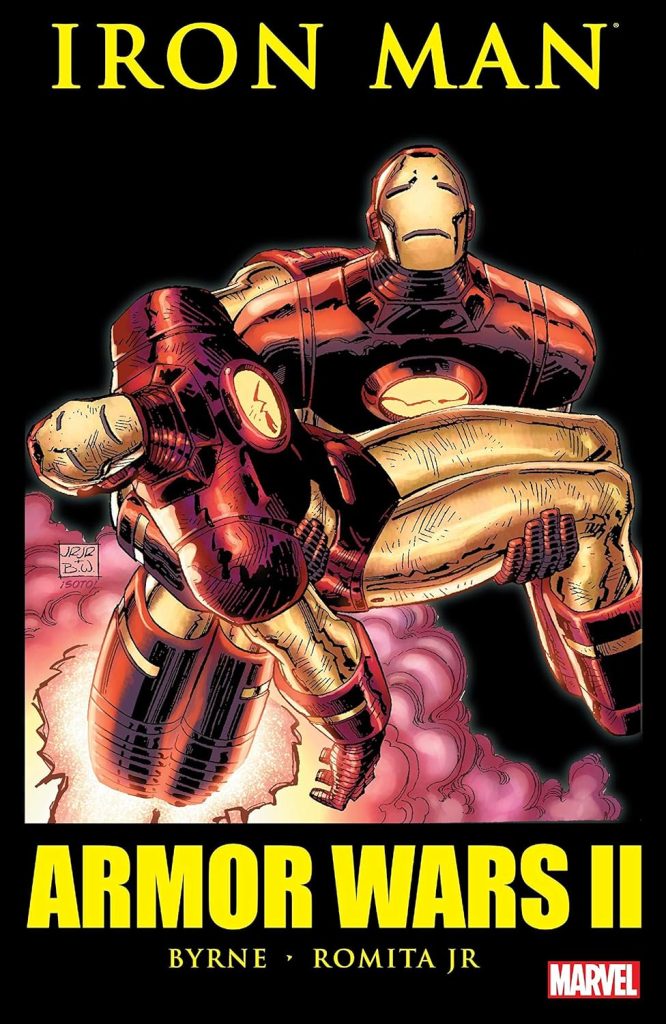
During the first Armor Wars Iron Man fought a succession of villains also wearing armour, but John Byrne and John Romita Jr’s sequel takes a different approach, with the war in question being over control of Iron Man’s armour.
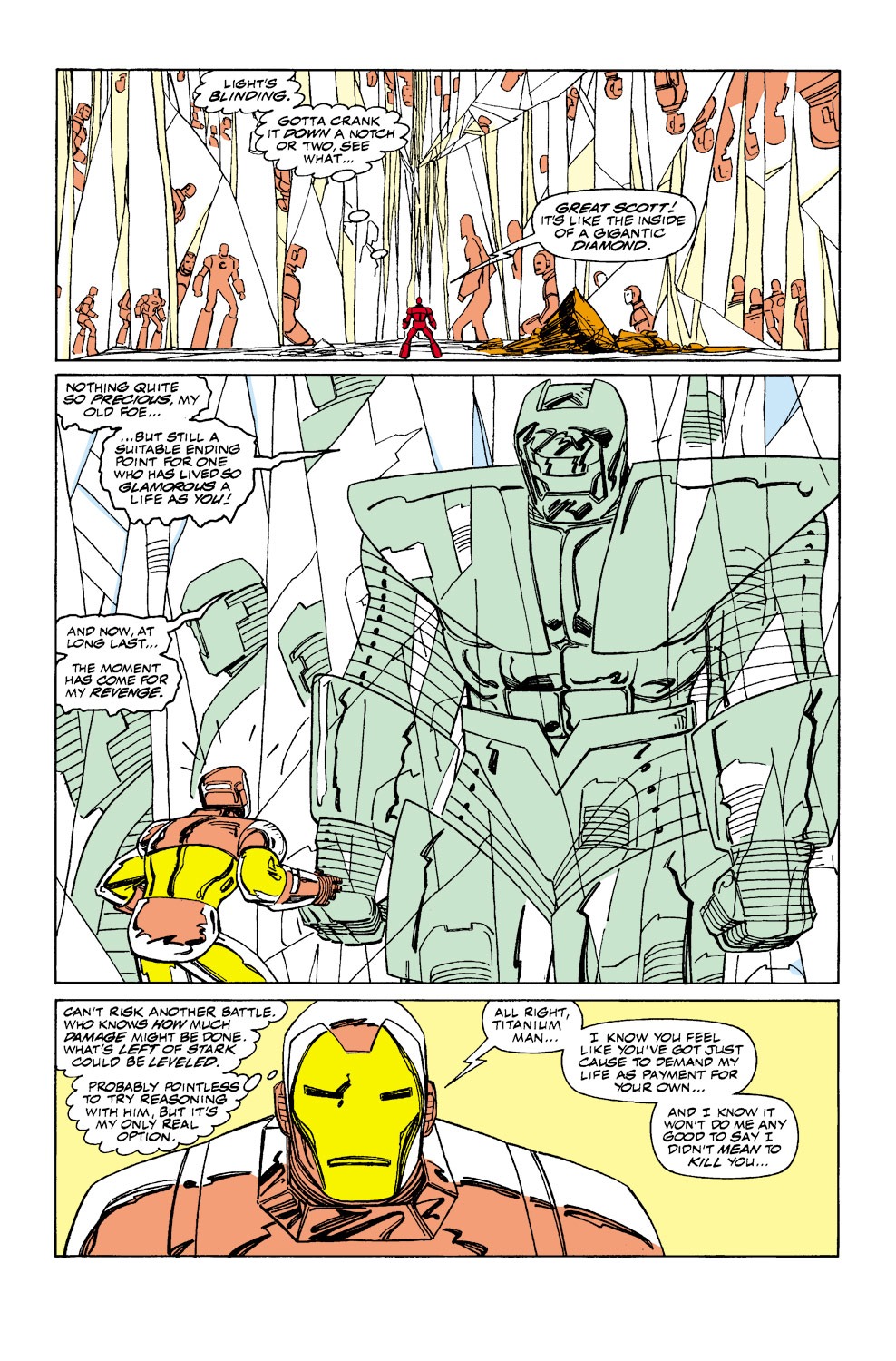
Writing only, Byrne sets off at pace, providing Iron Man with a series of challenges requiring both Tony Stark’s knowledge and the power of Iron Man to solve. The battle scenes occur in the midst of other technology, almost abstractly drawn by Romita, and there are early mysteries, such as the apparent ghost of dead foe Titanium Man. Byrne draws on Iron Man’s past with fears of alcoholism, respects recent continuity by mentioning the world believes this isn’t the original Iron Man and seeds pages of the Mandarin’s activity among the pages showing Stark and Iron Man. Be warned going in that what the Mandarin’s up to doesn’t fully flourish until the following Dragon Seed Saga.
The primary plot is a scientist working for the Marrs Corporation has somehow taking control of Tony Stark, but crucially not aware he’s Iron Man. They’re able to monitor Stark’s activity from a distance, but not see through his eyes, so intense bursts of physical exercise remain a mystery.
Byrne and Romita are pretty well a dream team for superhero comics of the early 1990s, and some aspects of Armor Wars II hit the spot, especially Romita’s increasingly experimental art. The bond between Stark and Jim Rhodes is well maintained, almost making it to the end avoiding the cliché of his stepping into the Iron Man armour. Also interesting for the time is the presence of Fin Fang Foom, although that’s been diminished by repeated encounters with superheroes. Let it be said Byrne and Romita were there first. However, the story never sparks into life. It’s partly because Byrne seems more interested in the Mandarin, whose plotting occupies considerable space, despite his USP of having ten rings of power being sidelined. It’s also partly because there are too many scenes of Stark not in control, and partly because none of the villains really inspire. One is used just to show off some light trickery, while it’s a long time before the gloating distant observing presence is tracked, and despite their appearing in nine chapters, their motivation is never clarified.
That doesn’t even occur in Dragon Seed Saga, and strangely neither collection features three chapters exploring the Mandarin and Iron Man’s past. Readers would have to wait for the Epic Collection War Games to have those in book form.