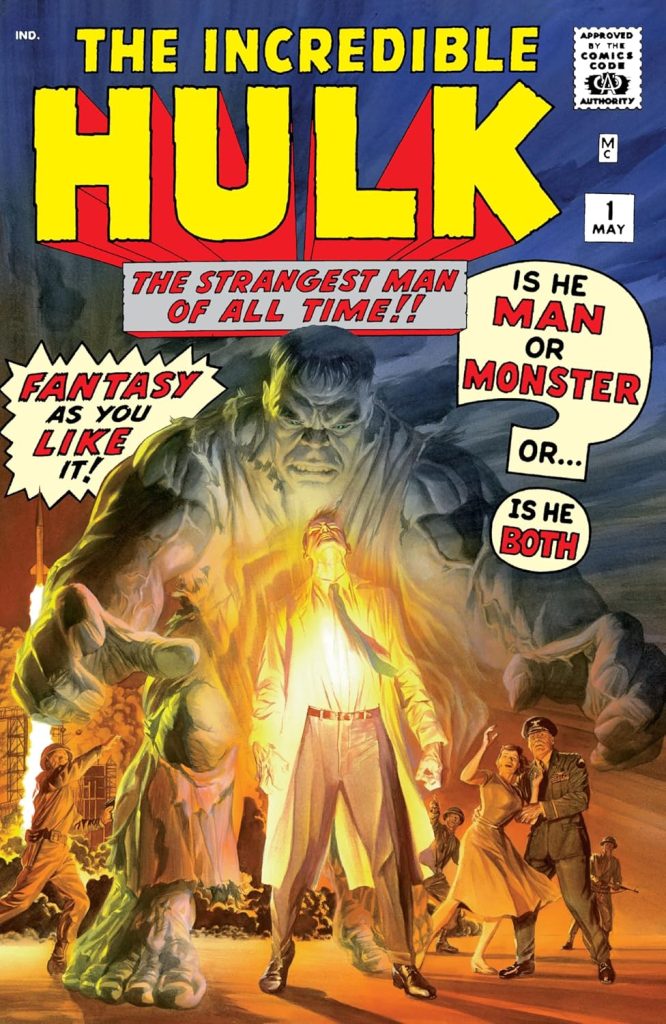
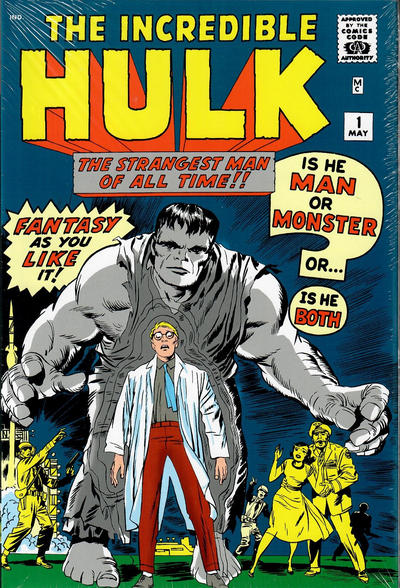
Review by Ian Keogh
Astonishing as it may seem, when first released, The Incredible Hulk wasn’t a hit. His original series lasted just six issues, but Stan Lee had faith in the basic premise of scientist Bruce Banner transforming into a rage-fuelled unstoppable monster. There’s constant tinkering with the formula over those initial issues, turning the Hulk from grey to green for a stronger visual impact, revising what prompts his transformations, and applying different levels of intelligence to the Hulk.
The refinement was still continuing eighteen months after cancellation when the Hulk was restored to his own series, albeit at ten pages per month, but the pivotal concept of the Hulk manifesting when Banner was agitated, angry or stressed was now established. Those intervening eighteen months were spent by the Hulk pestering Marvel headliners in their own titles and briefly being part of the original Avengers line-up. One can’t help but feel Marvel have missed a trick by not having this Omnibus include the first Hulk vs Thing battle, his first fight with Thor and a cameo in Spider-Man for a full chronological experience. They do feature in Man or Monster? alongside the earliest Hulk stories.
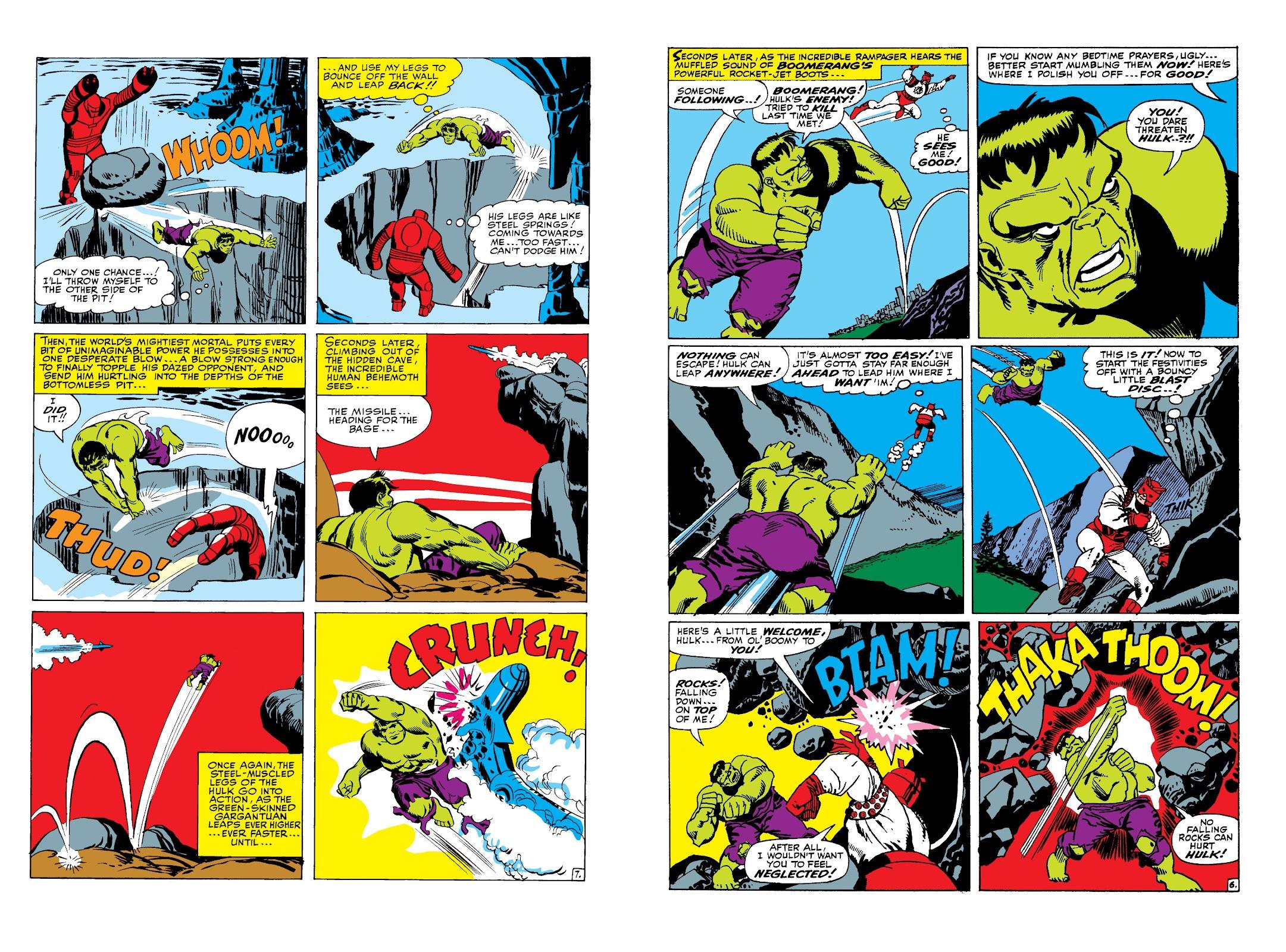
Jack Kirby draws the Hulk’s origin, a starkly illuminated gothic melodrama with an injection of science that still reads very well as a compact five pages, but while Kirby revels in noodling the technology, elsewhere there’s a good case to be made for Steve Ditko drawing a better Hulk story (sample spread left). Ditko isn’t known for drawing characters needing raw power, but his Hulk has that and considerable grace besides. He’s also better at defining the supporting cast, drawn by Kirby with the same magnified emotions applied to the Hulk. Of the other artists seen here, Gil Kane’s work really catches the eye with a more stylised and dynamic version of the Hulk (sample spread right).
It takes a long while before Lee moves the Hulk away from the unspecified location of a military base in the Southwest USA. The seclusion enables the initial gamma radiation research creating the Hulk, and the inclusion of an immediate enemy in General Thunderbolt Ross, always quick to blame the Hulk for whatever misfortunes befall the base. Banner, though loves Ross’ daughter, but dare not say so, and the primary cast is completed with Rick Jones, the teenager Banner saves while himself becoming the Hulk. Later addition Major Glenn Talbot echoes Ross’ views while becoming a rival for Betty’s love.
The downside of ten page episodes is Lee re-running the same scenarios month after month, and extending stories too far. The Leader’s first appearance suffers through decompression and repetition, although the finale is surprising and shocking. By then the Hulk is frequently moved away from the Southwest, but Lee’s mind is often elsewhere. The strongest of the later material here is an encounter with the High Evolutionary and his mania for tinkering with animal genetics to produce beast-men.
Shorthand emotional drama, repetition and a lack of credible foes means the older Hulk stories don’t stand up very well all these years later. The idea is good, but it takes writers other than Lee to bring out the strengths.
In smaller format colour editions ranging from hardcover to paperback to pocket sized, these stories can be found as Marvel Masterworks: Incredible Hulk Volume 1, Volume 2, and Volume 3, while all but the final few stories are available in black and white as Essential Incredible Hulk Vol. 1. Hulk Must Die collects the later material here in the Epic Collection paperback format.