Review by Frank Plowright
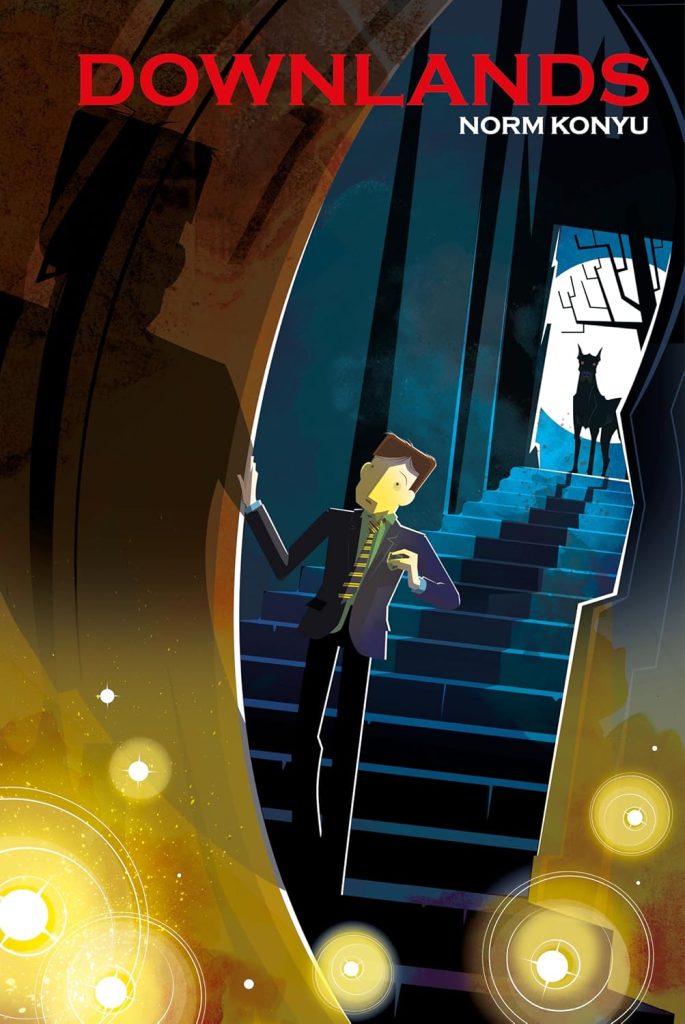
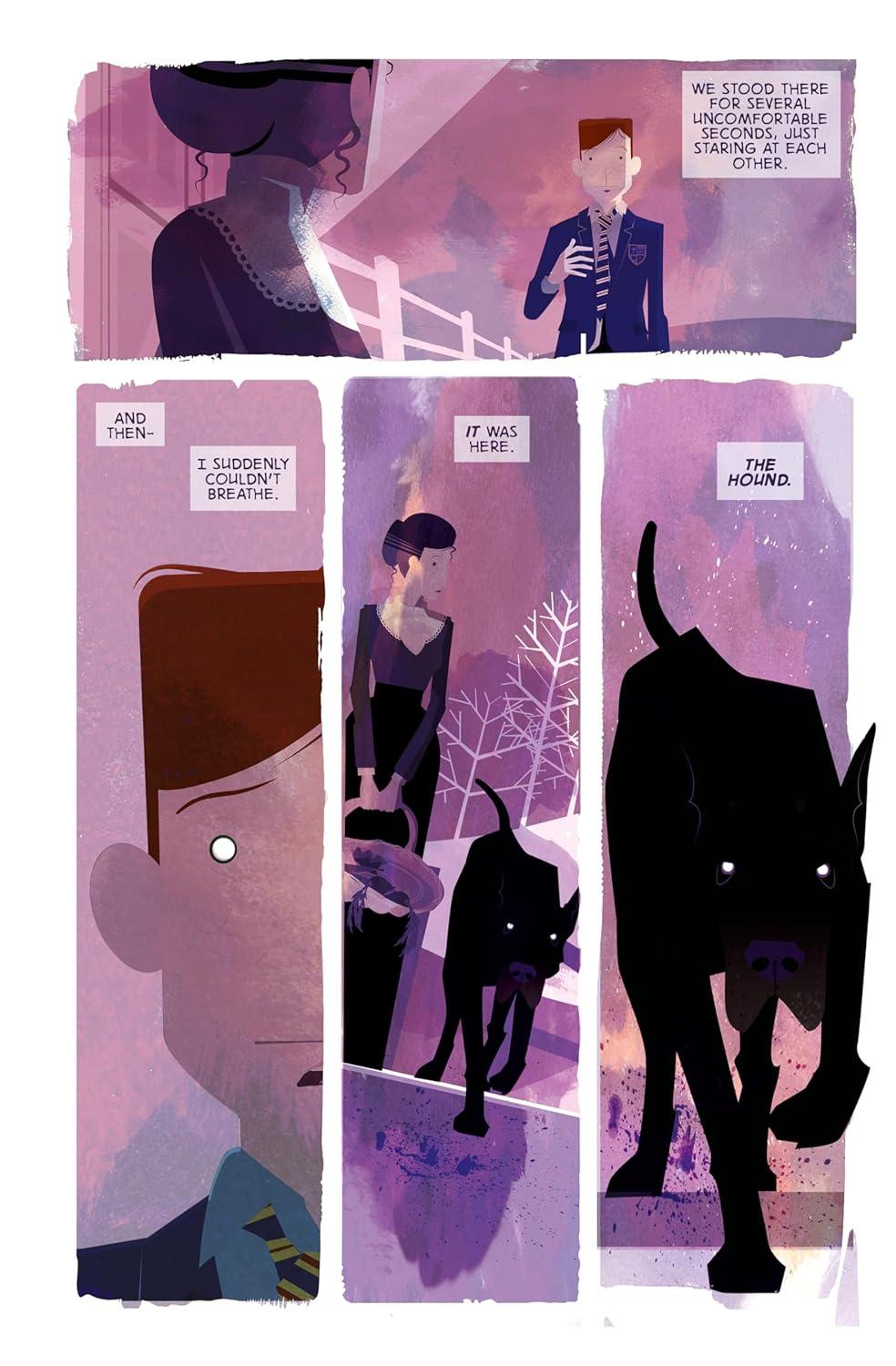
Alfstanton is a small English village with but the single street. What the street has seen over its lifetime is the starting point for Norm Konyu’s Downlands, before a delve into the mystery of people seeing a black dog no-one else notices the day before they die. It’s a subject of interest to James Reynolds, whose fourteen year old twin sister dies in those circumstances.
Although it’s relatively concealed, Downlands at its heart concerns grief and dealing with it. James doesn’t. It’s noted early that he’s been unable to cry about his sister’s death, and while he leaves weekly notes on her grave, he instead immerses himself in researching local legends of the inexplicable. Set in 1996, James’ story is punctuated by a whole series of supernatural experiences across the decades. Although largely distractions, these interludes follow the form of short ghost stories, where the inexplicable occurs, yet presented without comment. Konyu gradually incorporates the idea of the comforting reality society shares, yet there are those whose reality is different and who suffer for their intuition.
What’s at heart a dark and spooky series of events is disguised by Konyu’s attractive digital art being supplied in bright colour. Ghosts are usually half-glimpsed in darkness, but not here. Here they’re saturated by light, presenting as real and solid. There’s no distinction between reality and what most would consider unreality. Despite that, Konyu does instil a sense of the unknown via the stylised locations, particularly tree branches drawn as geometric prongs.
As James continues his investigations Konyu maintains an open-minded narrative, flying in the face of many who presume we know all there is to know. Alfstanton has mysteries to be uncovered, and James uncovers them, eventually drawing together the assorted historical experiences as Downlands is revealed as more than just the broad geographical area in Sussex.
The conflict of the heart and the head is explored as Downlands maintains a mystique while gently pulling emotional strings. It’s subtle and beguiling, and readers will find echoes of their own lives and towns in James’ explorations.