Review by Ian Keogh
Jim works at a petrol station. It’s a dead-end job. The town is isolated and lonely. He sees his parole officer, but there’s no parole. One day a criminal acquaintance turns up. His former partners in crime, who in fact killed him, believe they’ve discovered a way to return from the afterlife.
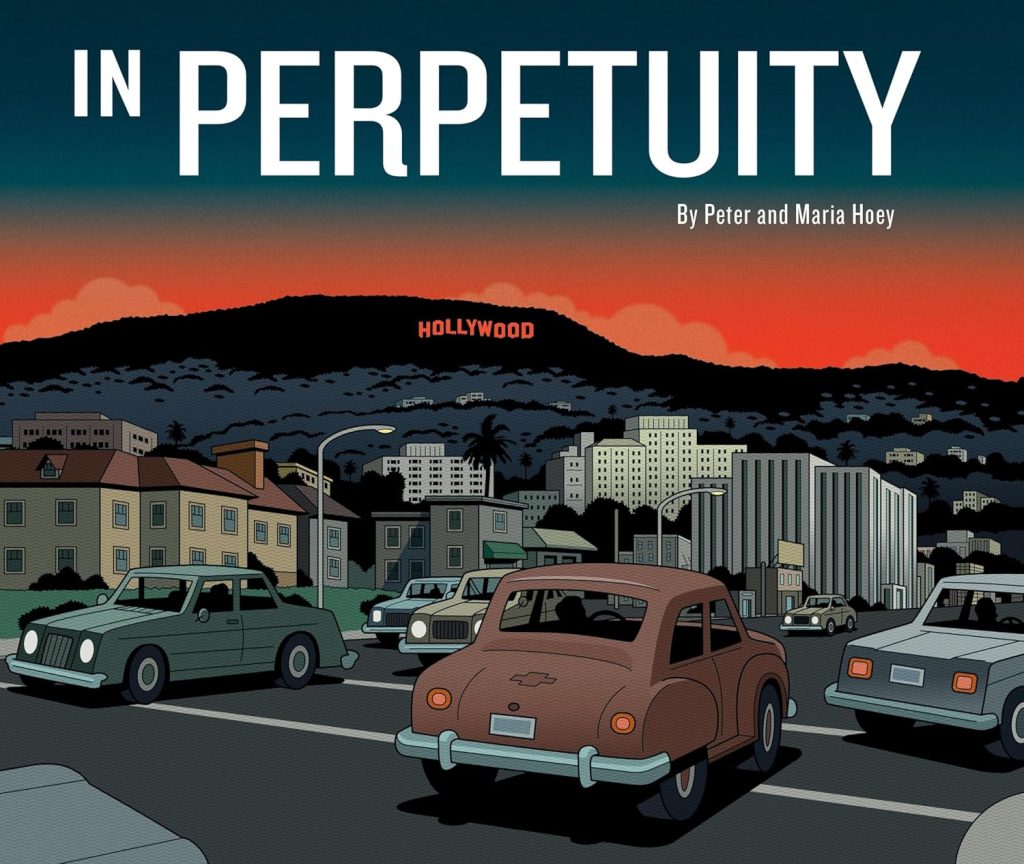
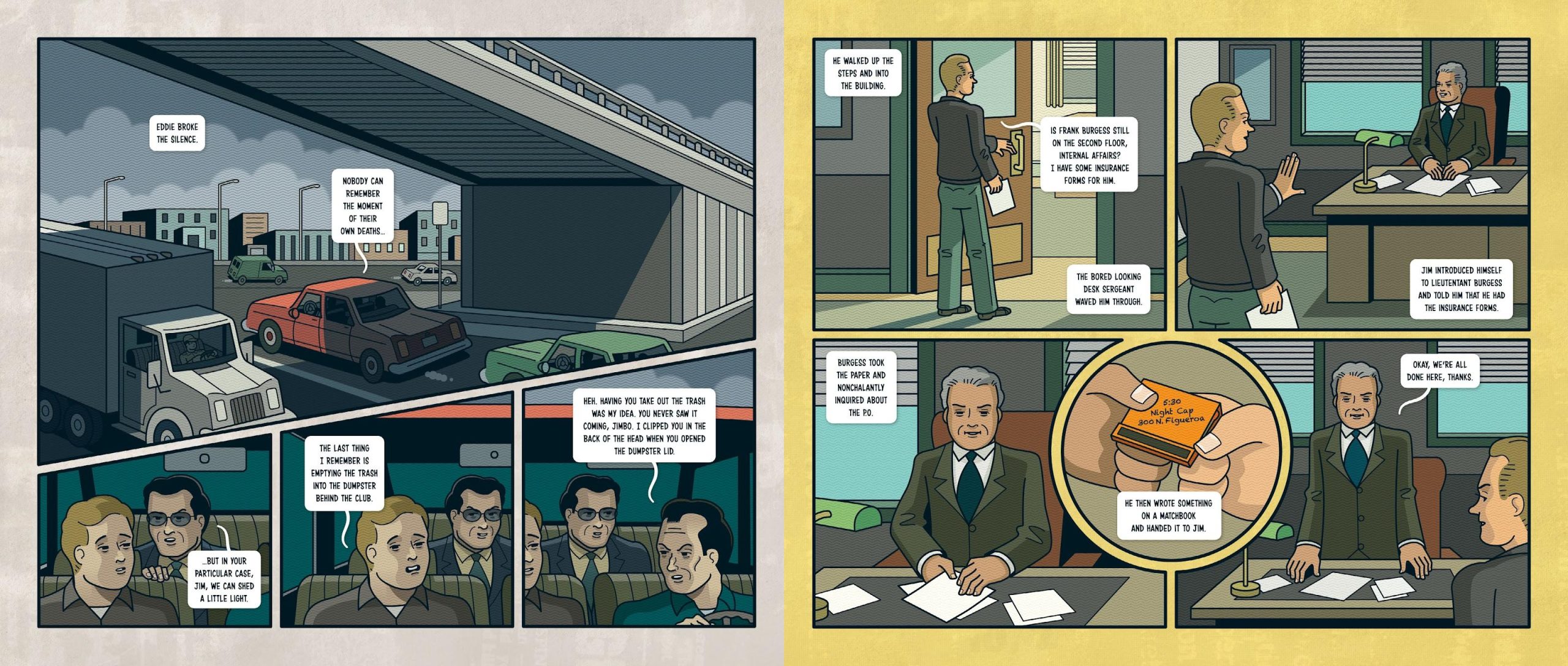
A remorseless stylistic economy characterises the way Peter and Maria Hoey begin In Perpetuity. The narrative captions and dialogue are terse and clipped, never offering more than what’s absolutely essential, so we learn about Jimmy and his humdrum life before discovering he’s dead, as is everyone else he meets. An equally precise and distanced mood is applied to the art, which is almost generically styled to offer a sense of time and place, but no more, and with a stiff and flat two-dimensional quality. There’s an initial thought of this being a comment on the afterlife, but then it’s also applied to present day Los Angeles, only brighter.
That, however, is only the beginning. When the afterlife is supplanted by real life the narrative becomes more expansive, and the characters are fleshed out. There’s deliberately no indication as to division of labour between the creators, but the results impress. A coherent connection between the afterlife and Los Angeles (or A.L. and L.A.) is established, fitting the slightly off-kilter atmosphere that’s skilfully constructed, inducing a constant unease. It’s increased via a growing sympathy between Jim and Olivia, the living woman he contacts to transmit messages and money from beyond on behalf of a gangster.
Once you figure you’ve understood In Perpetuity, the Hoeys move onward. The opening third, as entertaining as it is, only serves as the set-up for the bigger events that follow, introducing a form of transport between worlds and a seductively clever method of financing operations. Jim is told these aren’t criminal in nature, but the evidence of his own eyes tells him otherwise. Just as it seems the decisions Jim makes will determine how things play out, the Hoeys take another turn.
What at first emphasises mundane routine becomes a tense exploration of fate stopping off to consider the little things we take for granted. Hades projecting a perpetual picture of the sun onto a screen in his dingy domain is a subtle example in passing. The introduction of luck as an important factor toward the end is a clumsy revelation, but the compensation is the literalism of the gods a few pages later, and what opens with humanity closes with them.
It takes time to work into the world of the Hoeys and come to terms with their methods, but the individuality is rewarding in what’s a unique form of crime story.