Review by Karl Verhoven
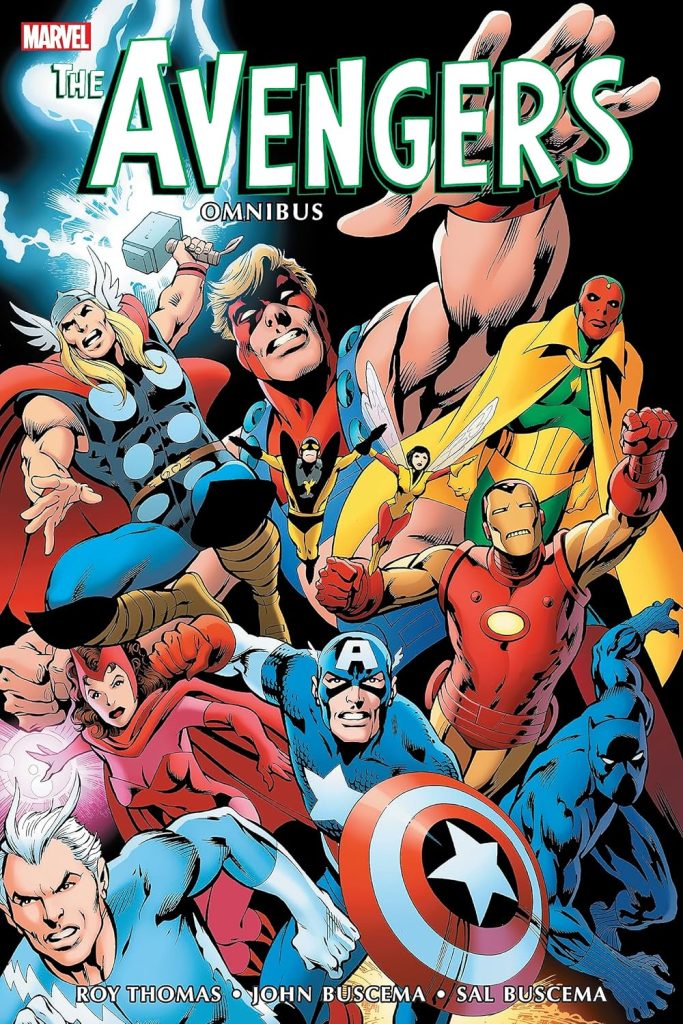
Marvel conceive ever more luxurious formats to sell the same material again and again to the same people as they age. Those who revelled in the Avengers as presented by Roy Thomas, Gene Colan, John Buscema and Sal Buscema will have bought the original comics in the late 1960s and 1970s, the black and white collected versions as Essential Avengers and then considered the hardcover Marvel Masterworks as decadence beyond compare. Couldn’t afford them? Never mind as a bulky colour Epic Collection was next. Now there’s an Omnibus, also hardcover, presenting glorious art on even larger pages, covering the first Avengers series from the début of Yellowjacket as a mysterious new character in December 1968, to a May 1971 collaboration with famed SF writer Harlan Ellison.
That’s actually disappointing, pompously over-written and steeped in the thoughts of the era. Let’s concentrate on what’s good, though, with the caveat that you possibly had to have been there first time around for the full appreciation. Some stylistic tics are now old-fashioned, such as Thomas’ love of the dramatic statement, which is something you’ll either accommodate or hate.
In 1968 it was unheard of for a superhero to take on a new identity, and Thomas drops that twice, while superhero marriages were also relatively rare. So was a cheeky way of having the Avengers face the Justice League of America via stand-ins the Squadron Sinister. They turn up in the company of a mindblowing cosmic entity who plays games for the fate of a planet, and proved popular enough as villains that a year later Thomas returned an expanded line-up as heroes on an alternate Earth. He’d already played with that idea via the introduction of other-dimensional warlord Arkon who’s besotted with the Scarlet Witch. He creates the Invaders, returns Kang and Ultron, bands old villains together and has Manhattan invaded by armoured thugs. Black Knight, Black Widow, Captain Marvel, the Hulk and Medusa guest star.
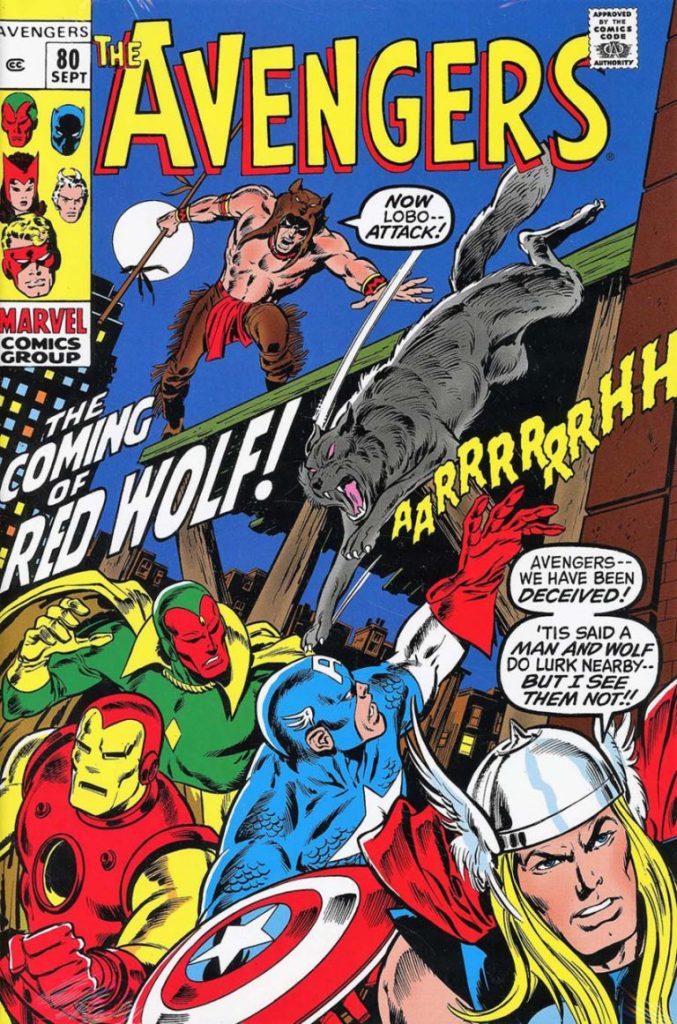
While at the time Thomas was better at incorporating social issues into a commercial package than DC’s writers, it’s this material produced with the best of intentions that’s dated most. Native Americans will know for sure, but the introduction of Red Wolf and his motivations still seemingly reads well (spotlighted on the alternative cover), but there’s no glossing over a hamfisted attempt to raise the issue of women’s rights. And as for Arkon and his “Hah! Ever have I desired a mate with spirit and now I have found her”… oh dear. Sadly race hate group Sons of the Serpent and their TV mouthpiece aren’t now greatly removed from reality.
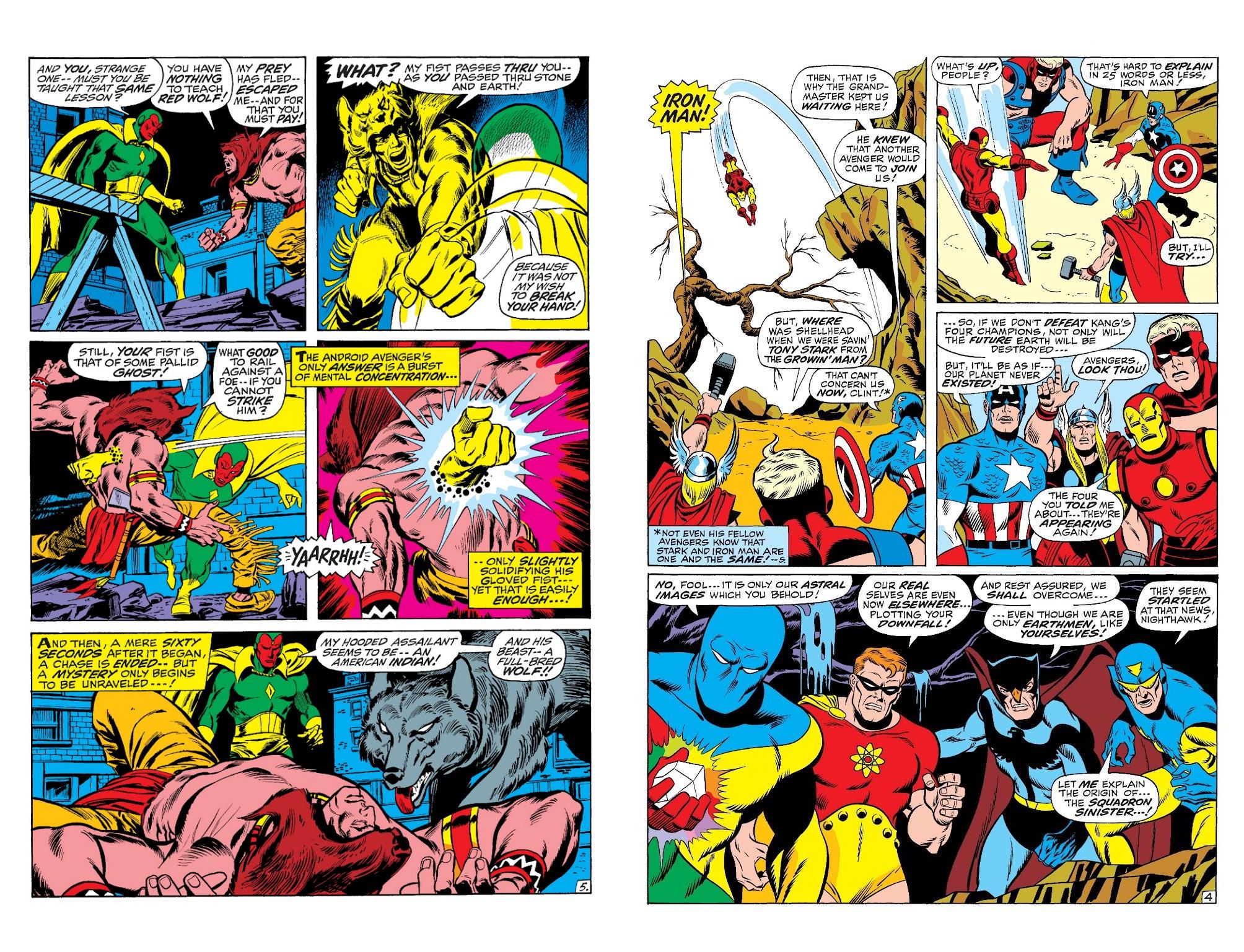
Artistically, this is a great collection. John Buscema has moved into his classic period combining power and grace (sample art left), and Sal Buscema is under-rated as an exceptional storyteller (sample right). Gene Colan’s strength isn’t on teams, but there are still pages to admire greatly, while Frank Giacoia pencilling a story is a treat, complete with thoughtful decorative motifs. Barry Smith isn’t yet Barry Windsor-Smith, and still very much influenced by Jack Kirby without being able to achieve his fluidity of movement.
Not included when the material was previously reprinted is Thomas and Howard Purcell’s Black Knight solo story connecting him with Camelot, and an Avengers pastiche by Thomas and Tom Sutton. They’re welcome, but strictly filler. More interesting are Thomas’ thoughts reprinted from Masterworks volumes.
Most of what’s presented here is well plotted, sometimes surprising, always creative and nearly always well drawn. The presentation surely can’t improve again.