Review by Frank Plowright
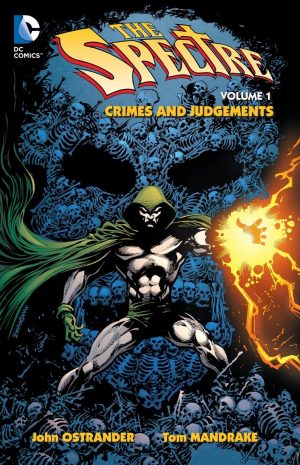
The Suicide Squad actually originated in the late 1950s, but the version now recognised beyond the comic market was devised by John Ostrander in the mid-1980s. Instead of adventurers, he applied the name to career villains sent on covert missions by Amanda Waller, also his creation and discussed in Ostrander’s introduction. If they survived the mission, years would be deducted from their sentences, and their compliance was assured by collars containing explosives that could be set off remotely should they attempt to escape. They’re accompanied by more heroic individuals with ghosts to exorcise, importantly relatively minor characters Ostrander can develop.
It’s a solid concept backed up by a well selected cast, but two factors really propel the series beyond expectation. The first is Ostrander’s talent for constructing a good action thriller holding up on all counts, but perhaps more importantly is the thought applied to the cast’s personalities and how they interact. A standout is the most ridiculous of them all, Captain Boomerang, defined as a whining, cowardly opportunist and used as comic relief counterpointing the prevailing darkness around most of the remainder. Innocent June Moon hosts malign magical presence the Enchantress; Nightshade literally draws on darkness; Deadshot can shoot a fly off a skyscraper from a mile away, so why does he always miss Batman? It’s also notable that the human supporting cast recur and become just as important.
This isn’t an artist’s showcase. Main artist Luke McDonnell’s pages now look staid and old fashioned, but the storytelling is impeccable, he captures the generally downbeat tone and hits the action spots. Much the same can be said of Joe Brozowski’s pages on a Firestorm crossover, also written by Ostrander.
Because each of the cast is so well defined it’s obvious after a couple of missions that they’re going to return, although in the long term Ostrander ensures the outings take their toll. Pity then the boastful newcomer introduced. The content of paperback Trial by Fire and chapters from Rogues still stand up as character-driven action thrillers. Much of what was The Nightshade Odyssey, is just as good, but there are reservations about the title story’s leap into SF.
Associated work by other creators being included in an Omnibus for the sake of completeness generally drags the overall quality down. That doesn’t greatly apply here, not least due to Ostrander’s involvement in much of the additional material. The Suicide Squad were introduced in a series called Legends, included in its entirety, and John Byrne’s art still looks dynamic, notwithstanding the experiment of attempting to tell two stories running parallel for a chapter. A meeting with Justice League International has a witty script from Keith Giffen and J.M. DeMatteis also drawn by Giffen, and the bonus of an extremely tenuous Batman crossover is Norm Breyfogle’s art. If used to his 1990s style, you may also be surprised by a restrained Rob Liefeld on Nightshade’s origin. A highlight among the extras is the backgrounds of Rick Flag and Amanda Waller by Ostrander and McDonnell.
If you have the money, this is the format of choice. It comes with an introduction from James Gunn, director of the good Suicide Squad film, explaining how Ostrander’s Suicide Squad is the single biggest influence on his superhero films. Additionally there are extensive commentaries from the writers about individual stories, original art reproduced and the character backgrounds and histories from the Who’s Who series.