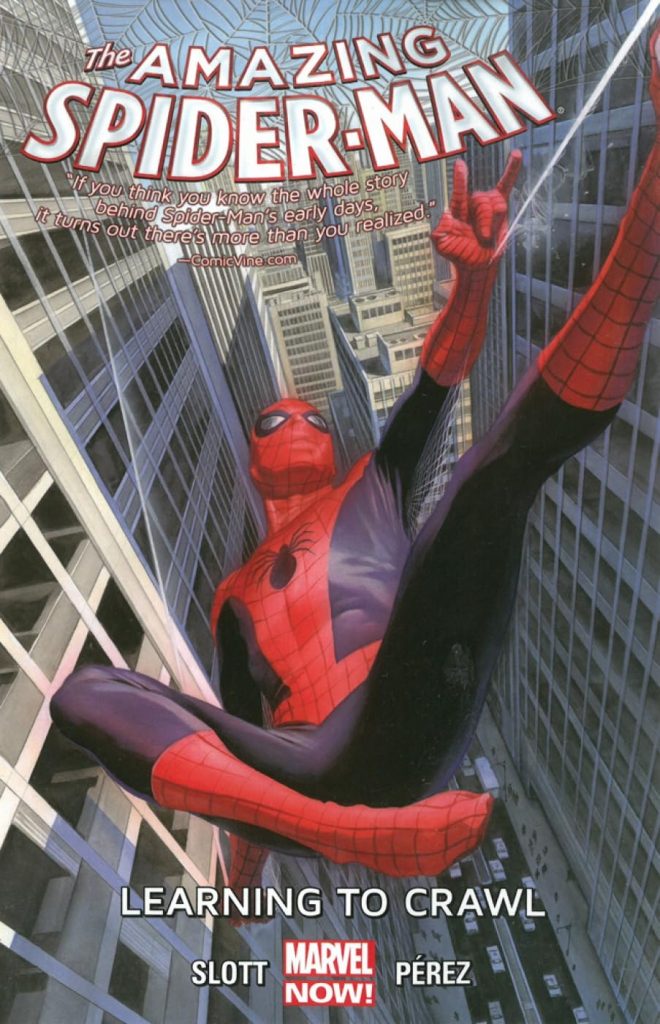
Review by Frank Plowright
At the same time as he was rebooting Spider-Man after Doctor Octopus squatted in his body, for which see The Parker Luck, Dan Slott also took a look back to Peter Parker’s earliest days as a superhero with the continuity implant Learning to Crawl.
Slott picks up after the murder of Peter’s Uncle Ben, but before his funeral and before Spider-Man has met his first villain, the Chameleon. Ben’s death has left the family short of money, and Peter thinks the way to fill that hole is by putting on a couple of shows as Spider-Man.
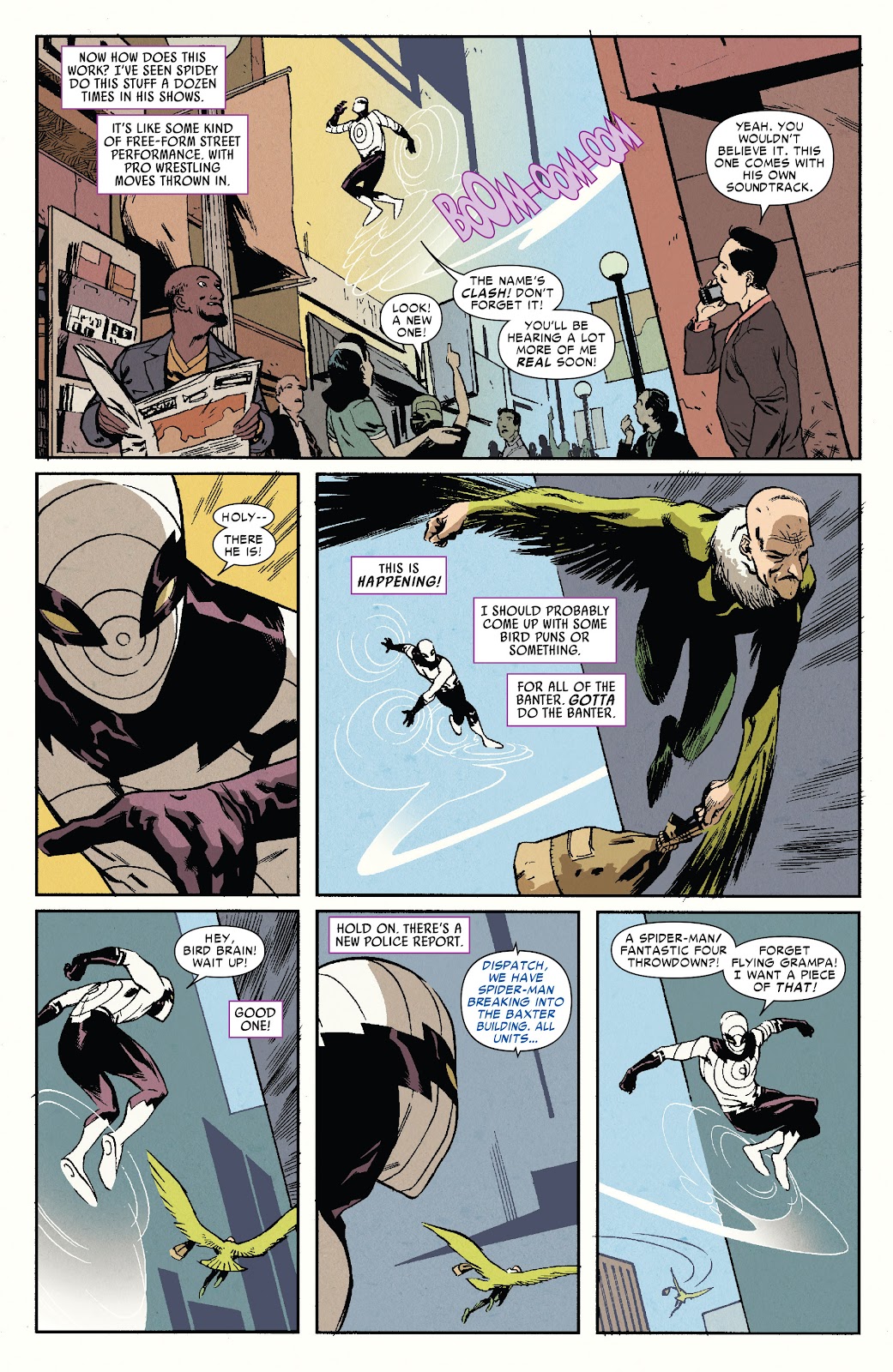
It fits well within Spider-Man’s earliest days. As others have proved over the years, Spider-Man’s origin story was so compressed there’s plenty of room for fiddling around the edges, but Slott is careful, ensuring violations are minimal. Most infringements come from updating the origin to encompass digital technology and social media, while the most obvious addition is the troublesome Clash, seen on the sample art. Slott dances around the earliest adventures adding moments that fit, but without contradicting or altering the original stories. In fact he applies lessons learned as Spider-Man to Peter’s life, and runs a background thread about how the emergence of superheroes is changing views.
To complete the masquerade, Ramón Pérez mimics the style of Spider-Man’s original artist Steve Ditko. Peter Parker is thin, gangly, and geeky in large round spectacles, while Spider-Man is a costumed gymnast and sometimes deliberately posed awkwardly. The colour, though, is something the 1960s Ditko couldn’t have conceived, Ian Herring having digital options able to fade and brighten when necessary. As this is the birth of the Marvel universe Pérez also gets to draw the other early Marvel heroes, and, amusingly, pastiches of them by students at a science fair. The further into the story we head, though, the less Pérez feels constrained by Ditko, and what emerges isn’t unlike a less polished version of Steve Lieber’s art.
While remaining true to the 1960s Spider-Man material, Slott also plays with differing interpretations of his behaviour. The old stories had Peter forever having to make excuses for absence or sneaking away to become Spider-Man, and not everyone is as accepting as Aunt May.
Unlike most of Slott’s other Spider-Man work Learning to Crawl is self-contained. Ultimately, it’s clever and largely entertaining, but in places it can seem an exercise.