
Review by Ian Keogh
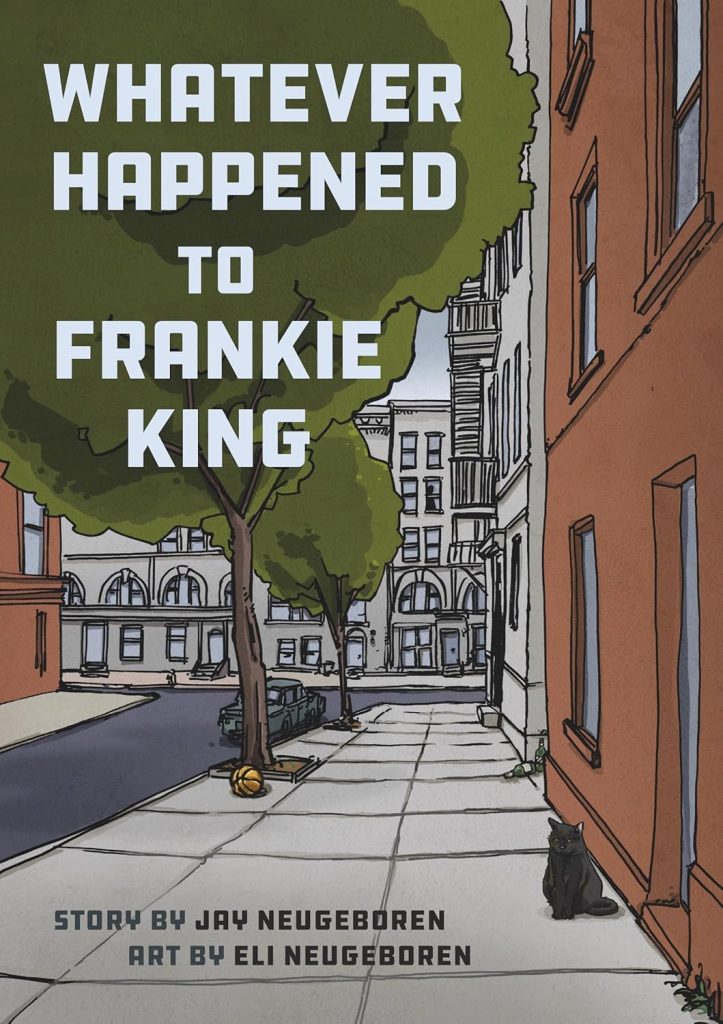
The title indicates a mystery, which for all but a select handful of potential readers will be compounded by their not knowing who Frankie King is. Those curious enough will learn of a person single minded enough to follow their own course in life and not to be tempted away from it.
Frank King’s brief brush with sporting fame was as an exceptionally promising school basketball player expected to excel for the University of North Carolina team, but he never played a game for them. Whatever Happened to Frankie King? opens with him on a Harlem basketball court in 1963, testing himself against the teenager who would later become Kareem Abdul-Jabbar and moves to testimonials from early 1950s team-mates. Even then there are unsolved mysteries, such as a jail term during army service, but the biggest becomes his cutting off all contact with friends for almost sixty years. Rumours abounded, and some are true.
The full truth only emerged after his death. As the mystery concerns King’s reasoning rather than his career, it’s no great spoiler to reveal him as a writer of crime novels with over forty to his name, most under the alias of Lydia Adamson.
Jay Neugeboren is also a writer with a considerable bibliography to his name, and to build a complete picture constructs his story from interviews with family and the friends King left behind. It’s noted that King’s novels are almost always written from a woman’s viewpoint, and the themes are often unusual. It’s only natural for a fellow writer to speculate about whether those themes were personal. The extensively quoted interviews certainly reveal a tormented man never at ease with himself, and additionally afflicted with addictions, yet certainly a man of principle when younger.
A fascinating story is well pieced together, but hindered rather than broadened by Eli Neugeboren’s art. Events are portrayed with little life or character, while dull colours could symbolise a life less lived in many ways, but further serve to diminish the visual appeal.
The eventual picture is constructed by others of a supremely talented basketball player and writer who experienced no joy from either, a vast intellect with a great interest in the wider world he personally shunned. Medical assessment or help with troubles was seemingly never sought, yet although quick to anger he was loyal and generous to those he loved. King’s description of himself as a homeless person in a psychotic world is as near as anyone will get to an understanding of him.
A strained coda attempting to compare King to Odysseus bolstered by quoting literary critic Edmund White betrays an academic at work, but where it counts Neugeboren has solicited strong testimonials. Unfortunately, the art can’t live up to them and sabotages a fascinating investigation.