Review by Ian Keogh
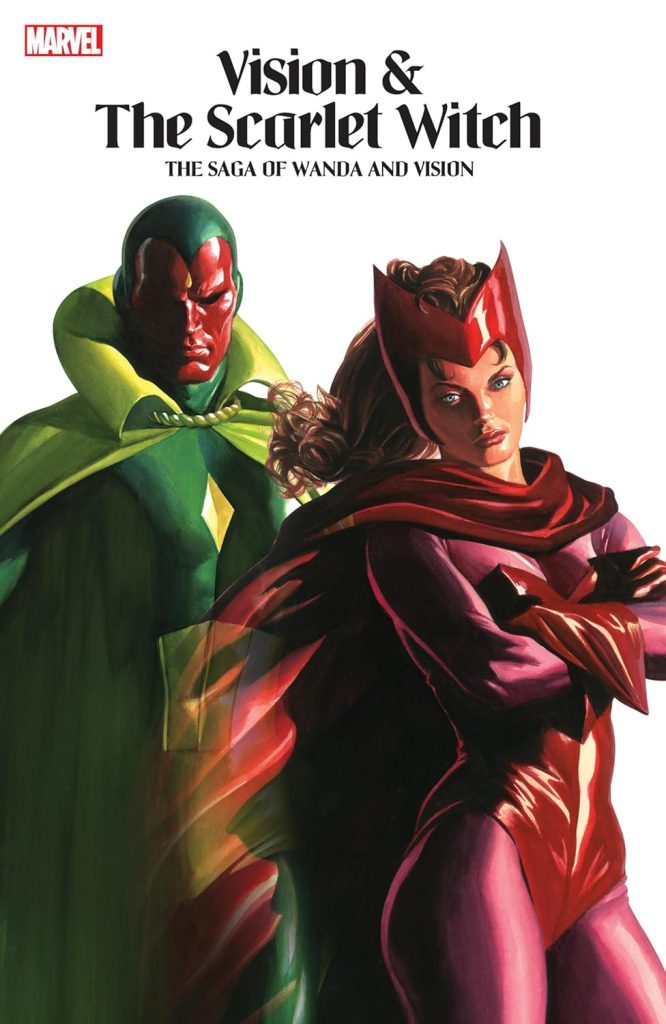
The Saga of Wanda and Vision was issued in advance of the WandaVision TV show, and introduces the concept so well used there of a married AI synthezoid and a mutant witch making a home for themselves in suburbia. However, fans of the sophisticated sitcom TV approach are likely to be bitterly disappointed with a collection of 1980s reprints, melodramatic and largely poorly drawn. It combines previously issued collections under the Avengers title, Vision and Scarlet Witch and Vision and Scarlet Witch: A Year in the Life.
The opening story is from 1975, and while featuring the marriage of the Vision and Scarlet Witch, it’s the culmination of nine issues of ambitious plotting by Steve Englehart on The Avengers, and might make little sense in isolation. Any grandeur has the life sucked from it by Don Heck seemingly drawing everything in a great hurry.
Rick Leonardi produces the best art in this collection (sample page left) on the Vision and Scarlet Witch’s first solo series away from the Avengers. Bill Mantlo conceives the idea of the couple moving to the suburbs, but does little with it, being more interested in exploring the Vision’s complex background and the mystery of Scarlet Witch’s parentage. The big reveal it leads to is diminished by what became common knowledge for decades afterwards. It’s not sophisticated, but anyone with a fondness for the comic versions of the characters ought to still find moments of enjoyment.
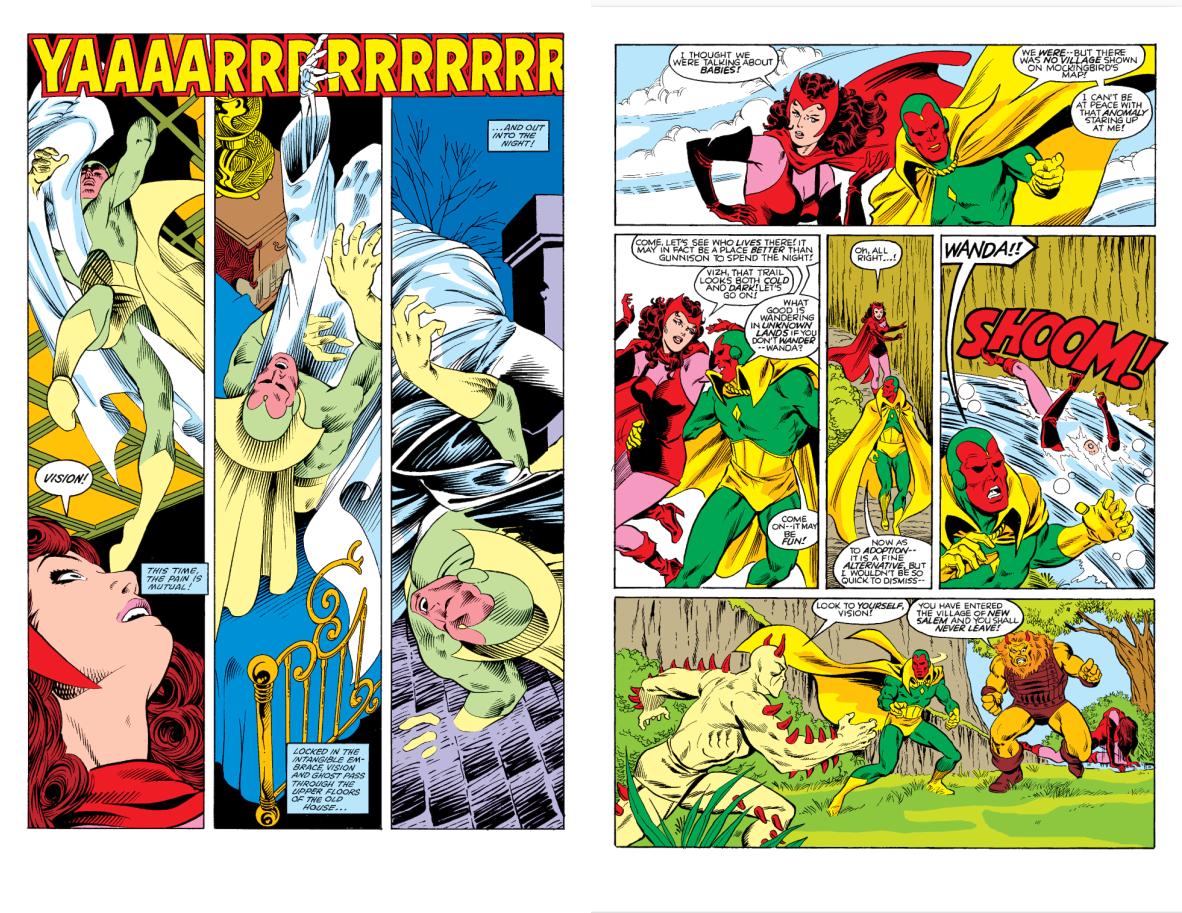
Mantlo and Leonardi’s material is strangely absent from the Marvel Masterworks Vision and Scarlet Witch hardback, which presents the entirety of the subsequent series by Englehart and Rich Howell. Englehart exploits the suburban neighbourhood more explicitly, features numerous guest stars and has several good ideas for the characters, but his work lacks the innovation and surprises of his handling them in the 1970s and his newly introduced supporting cast are dull. It’s also very much handicapped by the art. Richard Howell tells a story well, and makes an effort by preferring to show characters from distance rather than close up, but there’s something fundamentally wrong about the way he draws people. On so many occasions the Scarlet Witch’s face is inflated and flat-looking, which extends to other featured women, as if copying one aspect of Jack Kirby’s style without the remainder solidifying it. The inkers frequently change, and some make more effort than others to fix problems. Howell’s sample page is inked by Jim Mooney, who rectifies the faces.
Englehart and Howell’s best story has the Enchantress arrive in Leonia, New Jersey, to mess with the emotional connections between characters, although a strained family dinner is also notable, and Englehart brings his plots together well at the end. The novelty of the period covered being a year enables Wanda to become pregnant, carry to term and give birth to twins, although the science of that is considerably fudged.
Leonardi’s art is good, and there are some appealing concepts, but overall they fail to reach fruition in a collection that’s emphatically of its era.