
Review by Frank Plowright
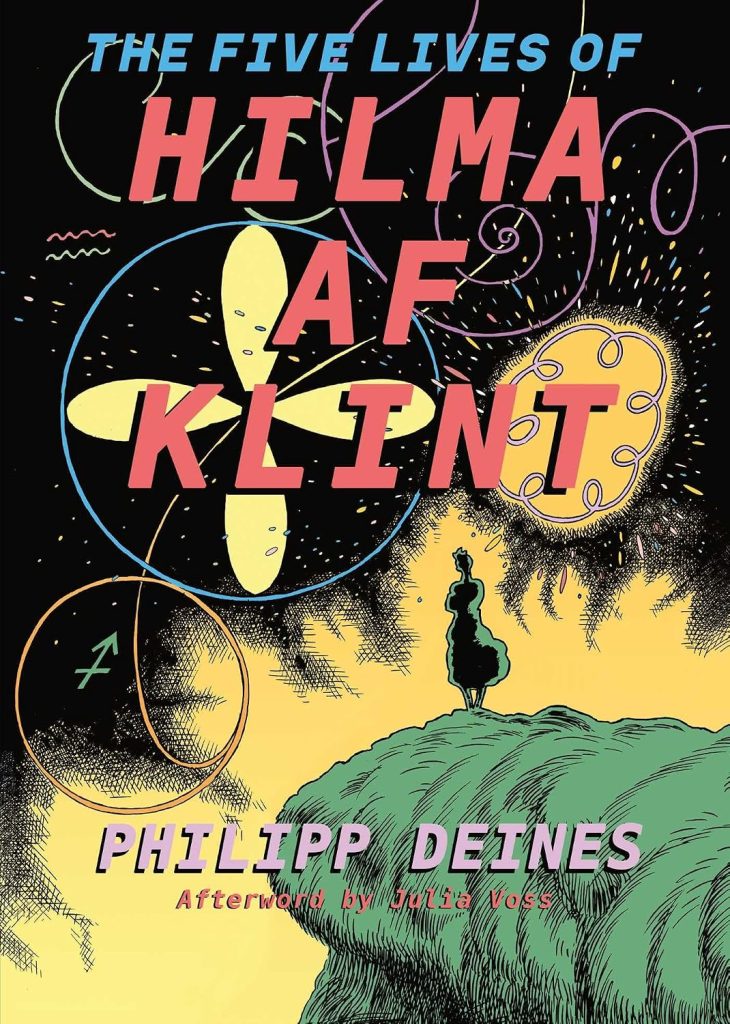
Both the eye-catching cover illustration and sensationalistic title do little to hint at The Five Lives of Hilma af Klint being a biographical work, but that’s what it is, with Philipp Deines channelling af Klimt’s individual sense of design and colour. Even the five lives aspect is true to a degree.
Af Klimt was born to minor Swedish nobility, and led an unconventional life prioritising spiritual concerns even before she returned to painting aged 44. Her large abstracts generated befuddlement and even derision among viewers in the early 20th century, with prejudice against the idea of female painters prominent, yet she pre-dates many men now considered the founders of abstract art. A 2018 career-spanning exhibition in New York became the best attended show in the Guggenheim’s history, and af Klmit’s recognition had finally come.
Philipp Deines became immersed in af Klimt via his journalist wife Julia Voss as they visited locations to research her 2020 biography. It’s apparent in the many precisely illustrated views of Europe’s cities, architecture and landscapes included here, along with neatly produced copies of her work and that of other artists.
That work is universally brightly coloured, af Klint’s desire being to paint what’s generally unseen, believing herself to be guided by spirits, and Deines takes a similar approach to the graphic novel. Even historical scenes relating how the family acquired their titled name are bright and simple, with that interlude a diversion, but ancestry worth relating. The basic drawing isn’t that far removed from Charles Burns, yet the brightness of the pages is his antithesis.
Deines takes a naturalistic approach to the writing, showing rather than telling wherever possible and being completely non-judgemental about af Klint’s eccentric views. They add a different form of colour to the telling of her story, but however much she believed herself to be spiritually guided, the talent was undeniably hers. Deines shows the work as being vividly created, and highlights af Klint’s innovations beyond the paintings themselves. As they were too large to transport in bulk, she created miniature reproductions in notebooks she always carried with her, and sought out people she believed sympathetically inclined to her spiritual views. In the case of Rudlof Steiner, she was initially sorely disappointed.
A drawback to The Five Lives is that it so rarely scratches beneath the surface of af Klint’s motivations, or too often leads readers to draw lines. One example would be the early death of af Klint’s younger sister deepening an already present interest in being influenced by spirits.
As af Klint has only in recent years received her due as an innovator and pioneer, most people won’t have been aware of her painting beforehand, and The Five Lives of Hilma af Klint provides a fine primer to an artist whose reputation is only going to grow.