Review by Ian Keogh
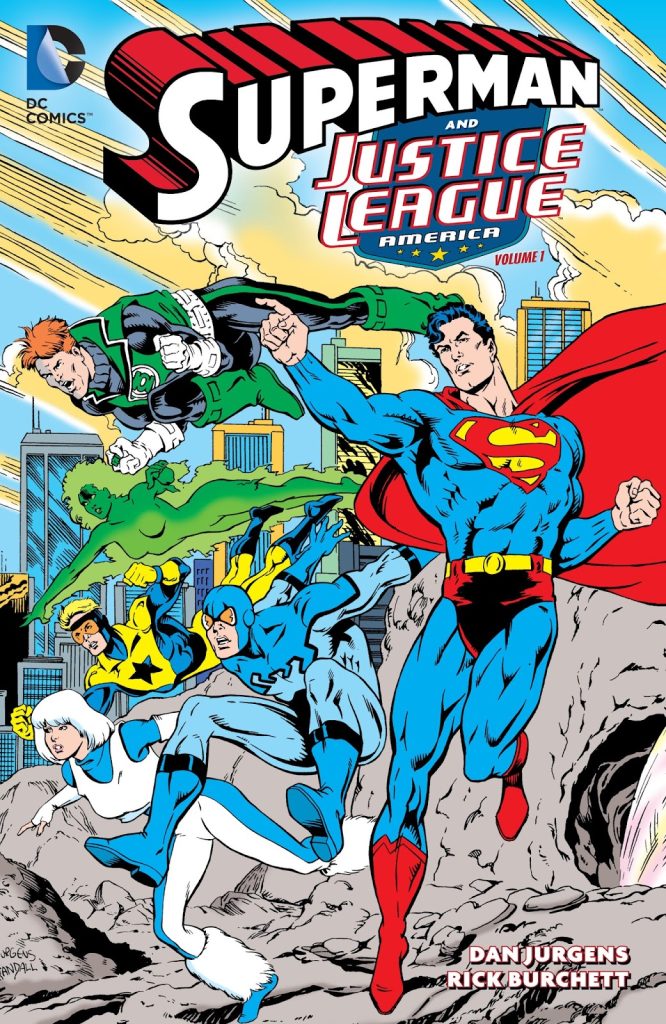
In the mid-1980s turning the Justice League into comedy superheroics revived a decaying feature spectacularly, but by the early 1990s that formula was also tiring. DC handed the Justice League to Dan Jurgens, who took a middleground, applying a lightness without delving so far into farce, at least to begin with.
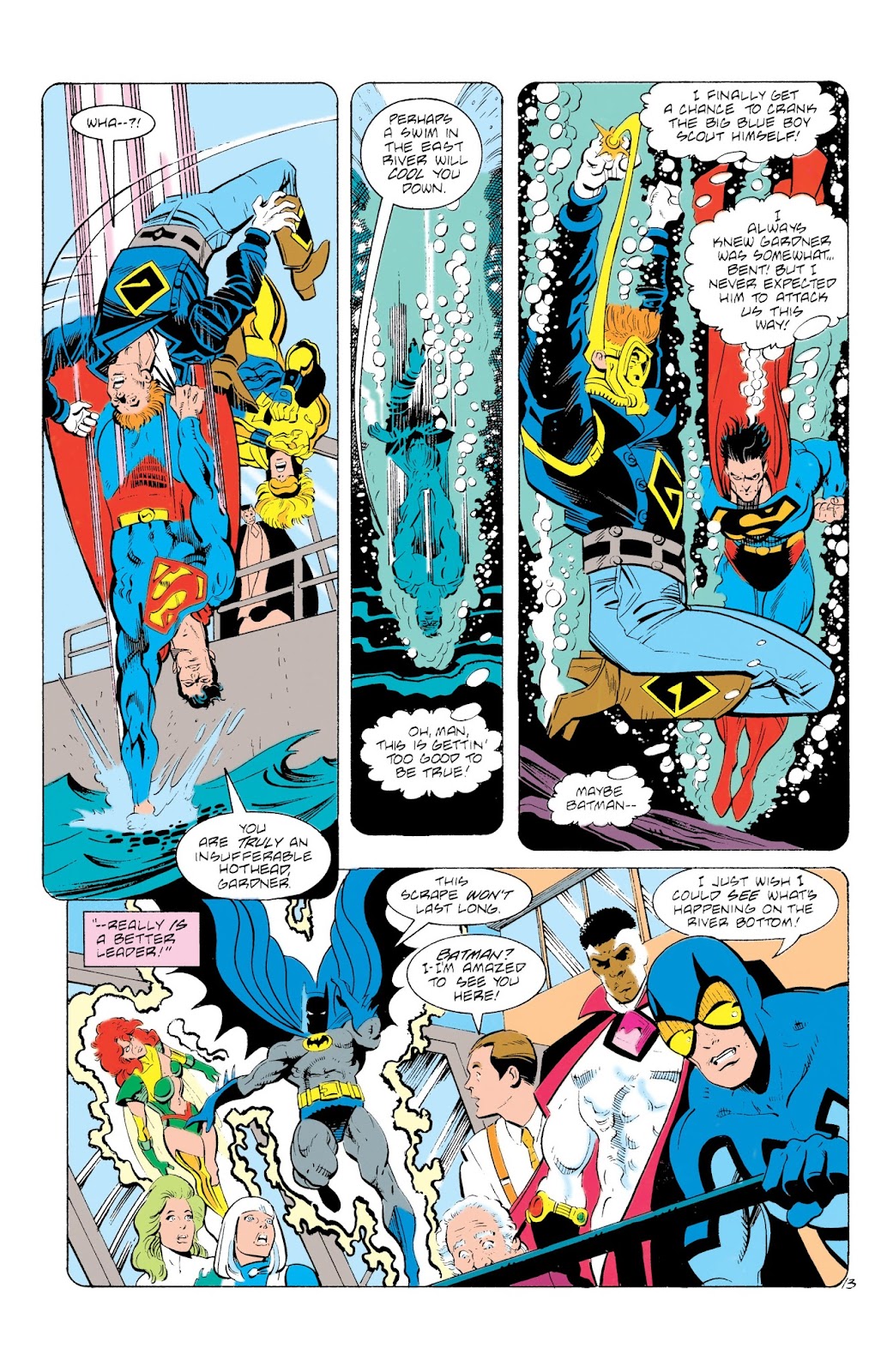
Jurgens starts by reuniting the Justice League under Superman’s watchful eye, restoring the cast who disbanded in stories reprinted in Justice League International Omnibus Vol. 3, uniting what were previously separate American and European based teams. In the opening story the Royal Flush Gang prove more trouble than is credible, and Jurgens continues by upgrading assorted other villains from the Justice League’s 1960s incarnation. They’re bright and colourful, but haven’t dated well. Neither has Maxima, the arrogant alien queen obsessed with Superman. Bloodwynd has a nonsensical name and even worse costume, but a confident mystic with mystique about them has a presence.
Superman might nominally be in charge, but he’s only one of what becomes a large ensemble cast with frequent guest stars, so his headlining status must be a marketing decision. He’s the character Jurgens delivers the best, noble and upstanding with fixed ideas about the right thing to do. Too many other cast members, though, are delivered in broad strokes with no great definition, one or two characteristics constructing a shorthand superhero. The nadir is Max Lord, here more Dick Dastardly, and the sequences in which Jurgens attempts a comedy Justice League fall far short of the best of what Keith Giffen and J.M. DeMatteis provided.
Jurgens the artist is a much stronger presence, for the most part supplying strong layouts for Rick Burchett, although neither is much concerned with backgrounds. On the opening chapter pages by Ron Randall are noticeably more elegant, while Jackson Guice as a guest artist is not the artist he’d become.
All these years on, this falls nowhere near the worst of 1990s superhero excess, but neither is it greatly worth revisiting. Surprisingly, though, things pick up in Volume 2.