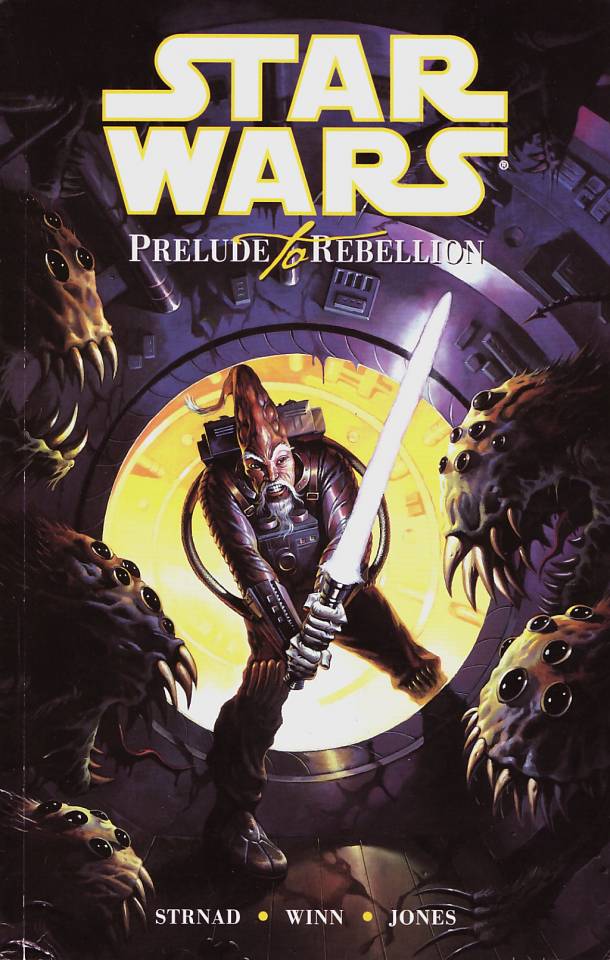

Review by Ian Keogh
Jedi Ki-Adi Mundi lives on Cerea, a planet in harmony with the universe and largely free from polluting technology. They’ve been approached by representatives of the Republic who see only untapped resources and especially a valuable mineral only found on Cerea, and the vision of a technological future and the riches it will generate is very appealing to the younger generation.
Jan Strnad very much bases his plot on real world techniques with vested interests promising the world yet those succumbing to their overtures finding reality very different. It’s not long before readers might begin to suspect that Ki-Adi is being manipulated in a manner to ensure his opposition is discredited. Strnad takes an interesting path, though. All too often when Jedi are featured it’s for the spectacle of a lightsaber battle, which admittedly makes for great visuals, but Strnad engineers circumstances depriving Ki-Adi of his weapon, then sends him into a dangerous location. It means other Jedi skills are required. They may not be as visually stimulating, but the change is welcome.
Cereans are very distinctively designed by Anthony Winn with elongated heads coming to a point, as is prominent villain Ephant Mon as a form of pig, but much else about the art is ordinary for a long while. Initially the story is told, but without the dynamism the circumstances could prompt, but Winn seems to be learning on the job, and the art for the final chapter is far stronger than his work on the first. Unconventionally used blocks of space appear throughout, though.
Ki-Adi’s constant motivation is attempting to save his daughter, whose misguided behaviour causes much trouble, but toward the end Strnad escalates matters further by endangering a greater amount of people. Tension is heightened via readers having been shown one character’s true intentions while those trapped alongside them still believe he’s their friend. However, with new supporting characters, all of them forms of droid, and a different situation it reads as if two plots have been fused together.
At six chapters Prelude to Rebellion is too long. Better reading would have been provided with fewer escapes and fewer chapters, but Ki-Adi’s nobility and concerns transmit. This can still be read as an individual adventure, but the plot unravelled ties into bigger events, so it’s collected with associated material as part of the Epic Collection Rise of the Sith Volume 2, and is also found in Rise of the Sith Omnibus, both the Dark Horse version, and the subsequent Marvel hardback.