Review by Ian Keogh
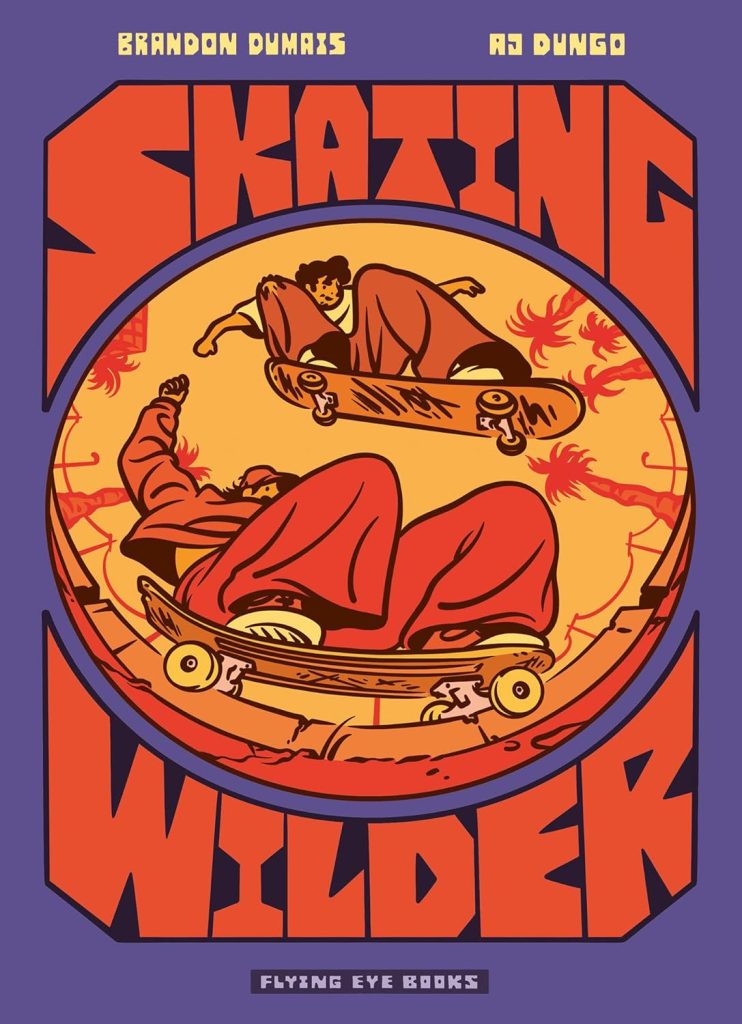
Considering the artistic crossover it’s surprising that graphic novels placing skateboard culture at their centre are so few. Skating Wilder, though, does far more than fill a gap as it considers the history of skateboarding alongside the personal experiences of both writer Brandon Dumais and artist AJ Dungo.
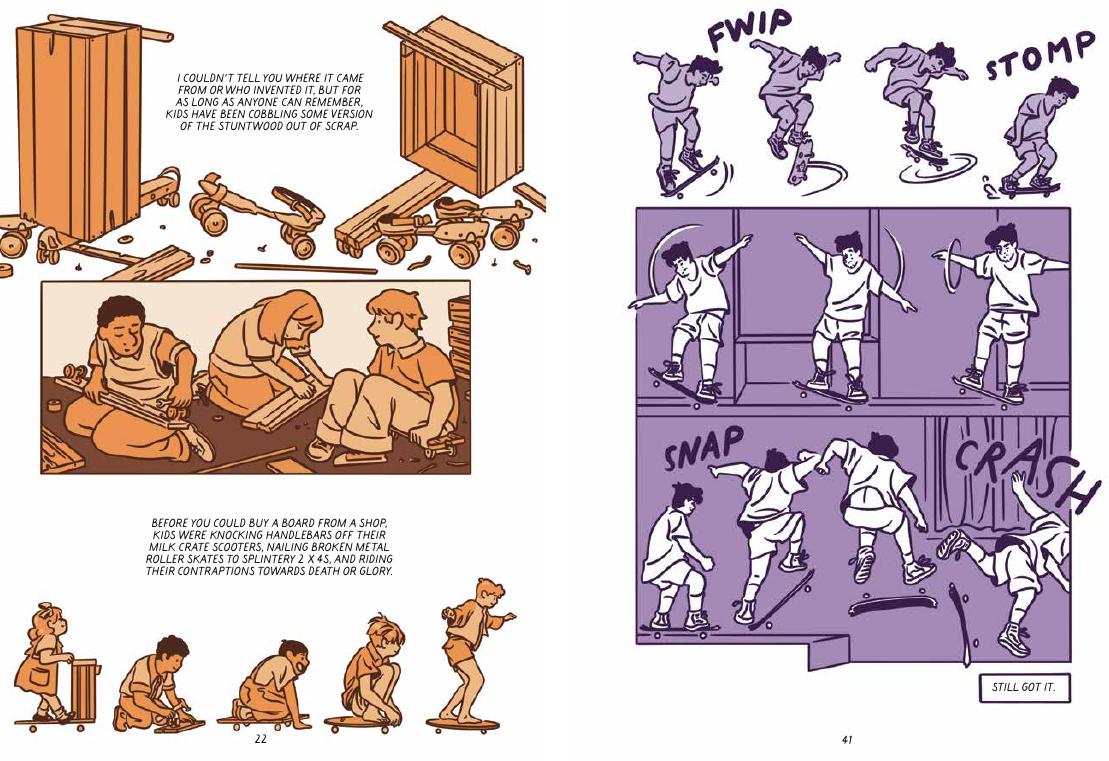
While homemade variations of plain carts on wheels date back a long time, the first specifically manufactured skateboard was issued in 1959, although it took until 1965 before anything approaching popularity was reached. However, primitive design and resulting accidents led to frequent city bans, a situation that lasted until the 1972 invention of the polyurethane wheel able to negotiate small pavement obstacles causing wipeouts on clay or metal wheels. Subsequent leaps in the sport are detailed, and to those unfamiliar with the history the most remarkable aspect will be the ground level DIY aesthetic.
Dungo being a skateboarder himself adds an empathy to an already attractive illustrative talent, and he’s excellent at either selections of small panels showing movement or the richer experience of full pages and spreads. While restricting the colour to black and white with a single additional shade might seem counter-productive it’s sensible in ensuring attention is focussed on what’s essential. This is particularly useful with the more diagrammatic illustrations of technique, and one showing how the street skateboarder views the world.
For his part, Dumais emphasises how important group bonding was in perpetuating skate culture as friends pushed each other further into experimentation, and the bonus was them being there to cover injuries as well. Skating Wilder is framed around Dumais clearing out his room and discovering the memorabilia of youth, times shared with Dungo.
There is some mythologising among the history, along with a melancholy recognition of evolution meaning the small private counterculture clubs are consigned to memory. However it’s minimal among a book the creators themselves would have worshipped at fourteen. One slight drawback, though, is a cover not making it explicit how well this covers skateboarding history. It cries out for a subtitle.