Review by Frank Plowright
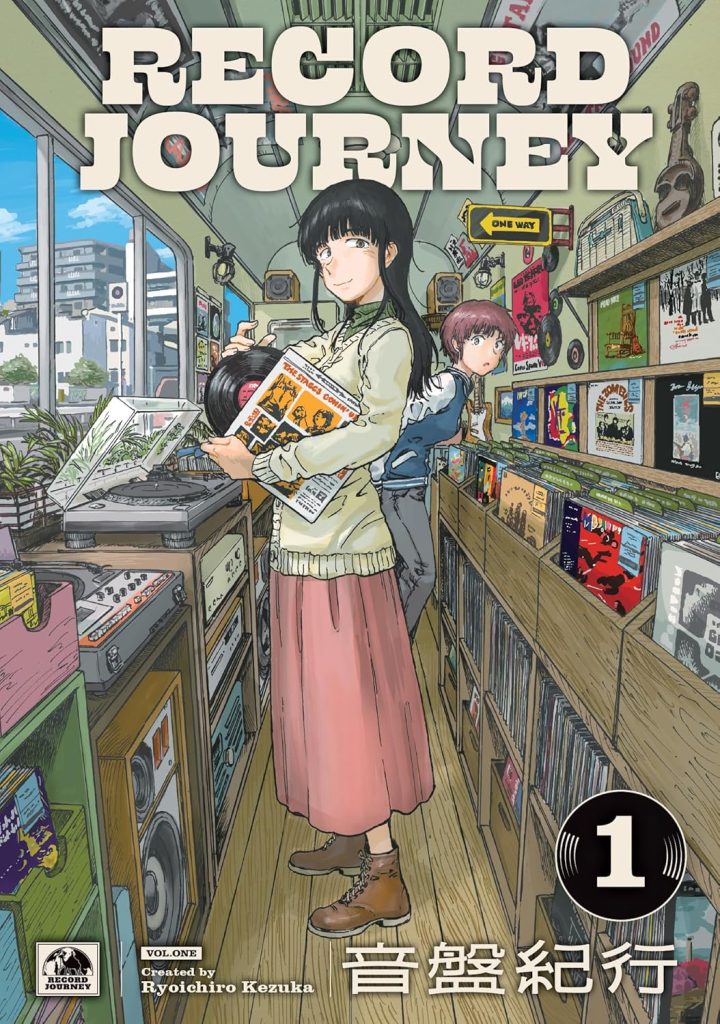
When Mayama’s grandfather dies she sells his vast record collection. Among it is a record bearing her name as the song title, the music unknown to the enthusiastic Koyomi Miyana who’s buying the collection for her shop.
Ryoichiro Kezuka discloses early that the name and style of music originates in his fictional Asian country of Pajal, and over the first chapter Miyana and Mayama develop a friendship as Mayama learns both about her family and herself. She regrets she’d never talked more with her grandfather about his past. Just when you figure Record Journey is going to take a trip into Mayama’s family history, Kezuka completely pulls the rug by opening the second chapter in the past in what seems to be an Eastern European country under Soviet control. There we meet a young waitress who listens to Western rock groups banned in her country.
Over the remaining short stories we meet others to a greater or lesser extent obsessed with music, spread over different nations, with a rock band called The Staggs a common denominator to some. They’re personally spotlighted in the third chapter during the height of their 1960s fame, forced to stopover in Japan, but Record Journey is more about how people absorb music and how it reached them in the days before the whole history of music was available online around the world. We therefore learn about the jukebox, pirate radio and music that’s not recorded.
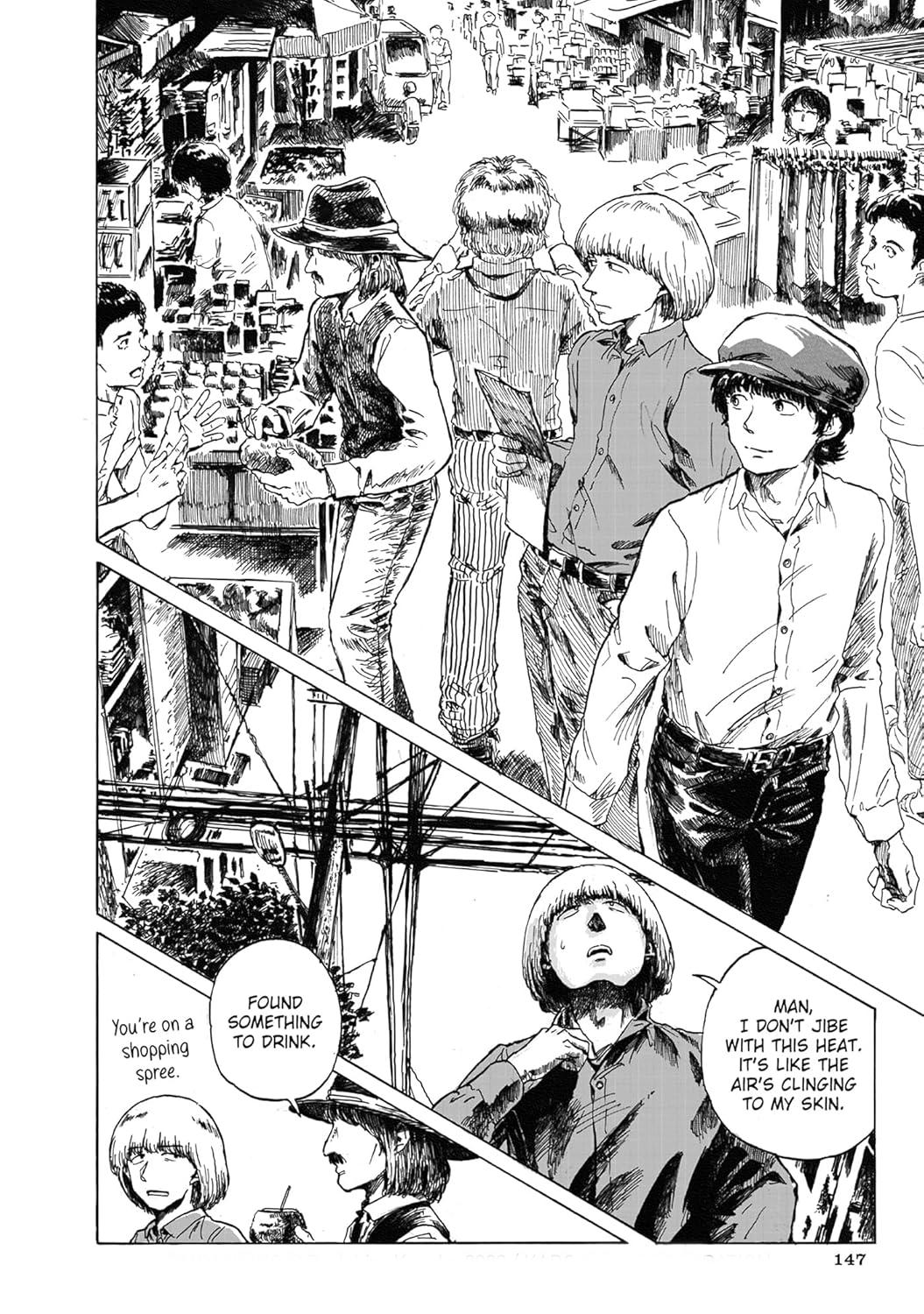
Delicate and conveying feeling sympathetically, Kezuka’s art gives a good sense of time and place to all stories, and he draws some great cluttered record stores. His people all look very similar, though, distinguished by clothing, hair and accessories rather than individual features.
While supplying intrigue throughout and danger in some chapters, there’s also a gentle, good-natured spirit to Kezuka’s stories. They’re people-focussed in exploring music’s capacity to inspire, but Kezuka knows his music history, and fellow travellers will love the references he drops. It’s unobtrusive, but the effort will be appreciated, as should the fact of all stories featuring women.
Capturing what music means to people is no easy task, and Kezuka only experiences a slight blip during the final story’s awkwardness about a young woman unable to express emotion. She’s surrounded with enough other enthusiasm to patch over the cracks. It completes a touching and well considered collection that will obviously hold greater appeal for music fans, but anyone ought to connect with the feelings music inspires.