Review by Ian Keogh
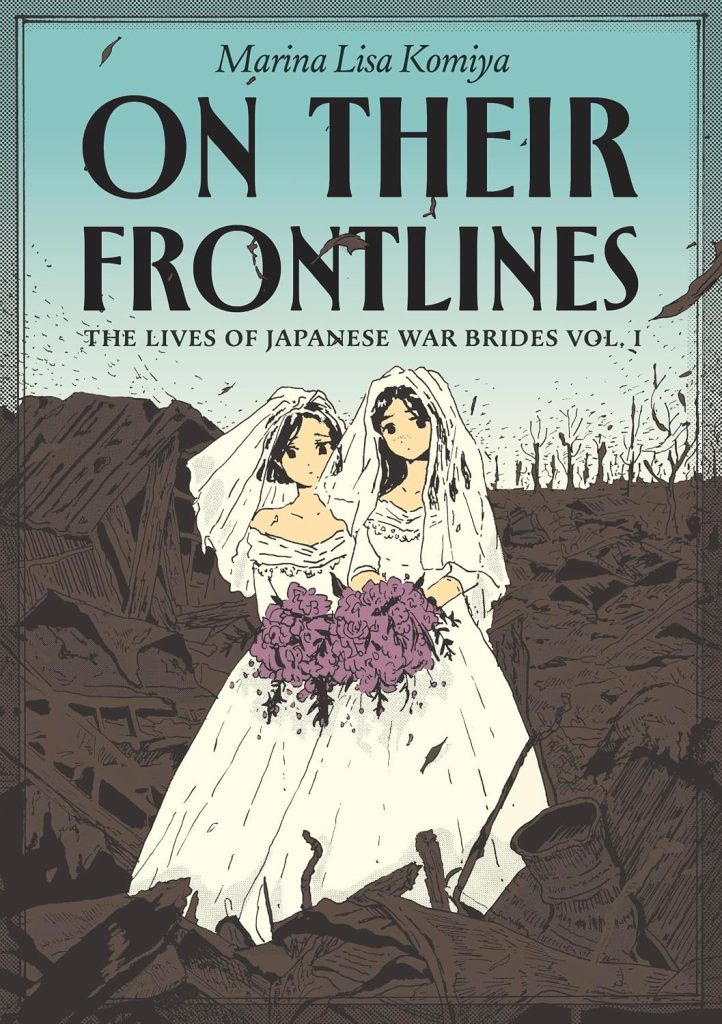
An admirably straight-speaking introduction from Marina Lisa Komiya sets the tone for On Their Frontlines, stating this isn’t a story of empowerment and woman overcoming prejudice and repression, but of survivors.
In 1948 Murata Yoriko returns to Tokyo searching for former friend and presumed lover Sudo Haru, the chaos still evident in the wake of Japan’s US occupation after World War II. Disappointment awaits, but we do see Haru, except only in flashback. We also meet Arthur Jiro Hashimoto and Scott Charles O’Connor, two American soldiers stationed in Tokyo. Both are atypical, neither the type to take advantage of desperation in the way their colleagues do, and in Arthur’s case also carrying internal scars.
There’s been considerable thought to the structure and to the way chapters connect at the beginning, each having a different focus, yet introducing the activities of the character whose spotlight follows as we piece together their lives over a five year period. Events are distressingly true in highlighting the limitations women lived under in post-war Japan, but Komiya only addresses the diminished options available in the late 1940s rather than placing them in broader historical context. This is nonetheless a considerably nuanced portrayal, bringing out social attitudes and tensions alongside the experiences of the four central characters.
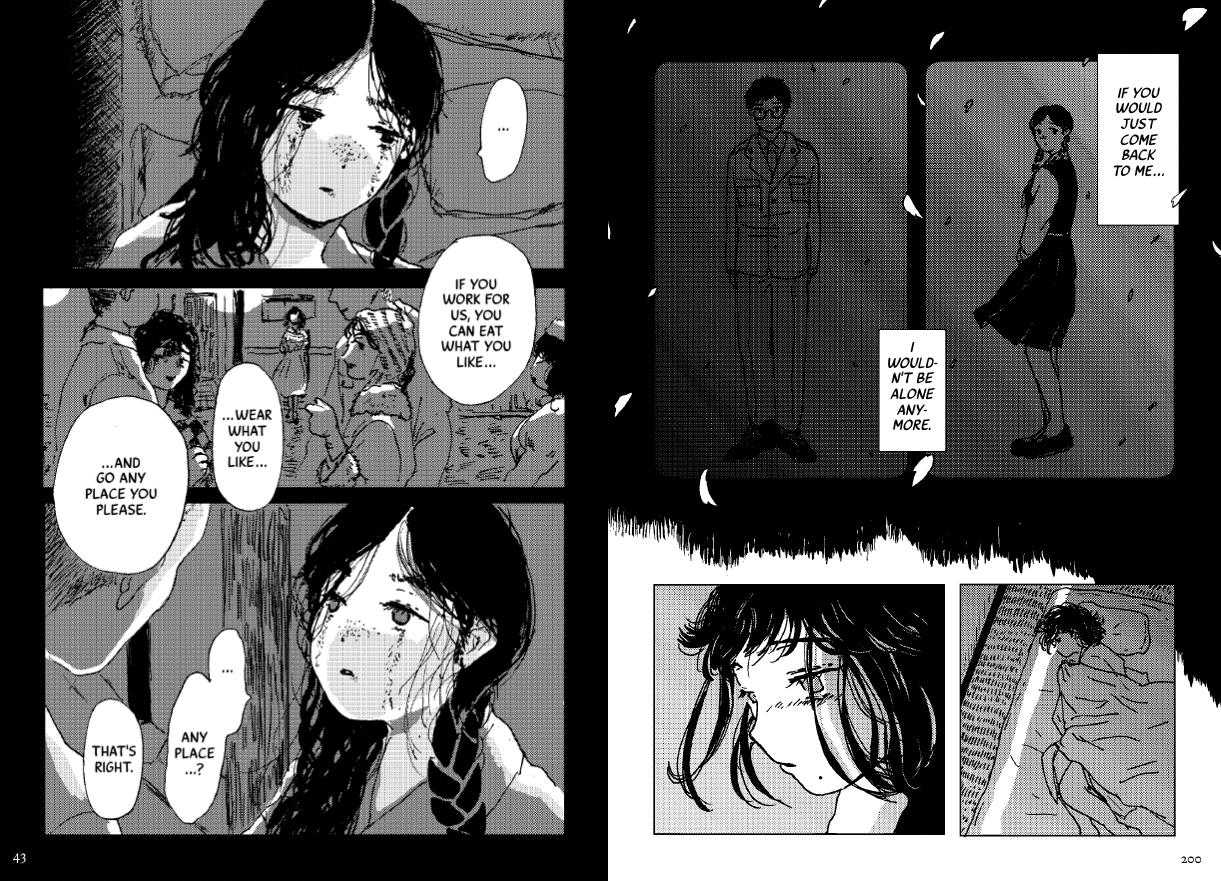
Yori suffers the most. We see her descent from the confident woman anticipating the freedom to pick up her old life to the broken person barely earning a living via her body. The others may not suffer as Yori does, but it’s hardly a joyous period for anyone, with pain frequently evident. Komiya details this via simple, grey toned artwork focused on people, with backgrounds spartan due to their living conditions. The pages resemble the heavily shaded realism of Yoshiharu Tsuge.
Despite the ongoing downbeat mood, moments of kindness and understanding break through, and Komiya surprises with her narrative choices. A particularly understated chapter has Arthur visit his Japanese relatives, humanity managing to trump nationalism.
To begin with it seems the approach is too heavily decompressed, but Komiya knows what she’s doing, and the leisurely pace allows for consideration and for small moments that would otherwise be missed. This opening volume is emotionally draining, but humane and observant. It closes in 1951 with a following volume picking up in the USA.