Review by Karl Verhoven
“I never wanted to be a bastard, it’s just all I’ve ever been good at”. That summing up of John Bannon instantly connects, and writer Jordan Thomas duly gives it prominence in his opening chapter. Bannon is characterised as the guy seen torching the Queen Vic, smart enough to stay out of trouble himself while ensuring others are dropped squarely in it, your go-to scumbag if you want the job seen through. That only carries him to a certain level of the shark pool, though, keeping him safe as long as he doesn’t float any higher and as long as he stays away from Brighton. His problem becomes the abduction of his teenage niece, with the finger pointing at local mob boss Harry Woods, a known face high above Bannon’s operational level and indicating it’s connected with his past.
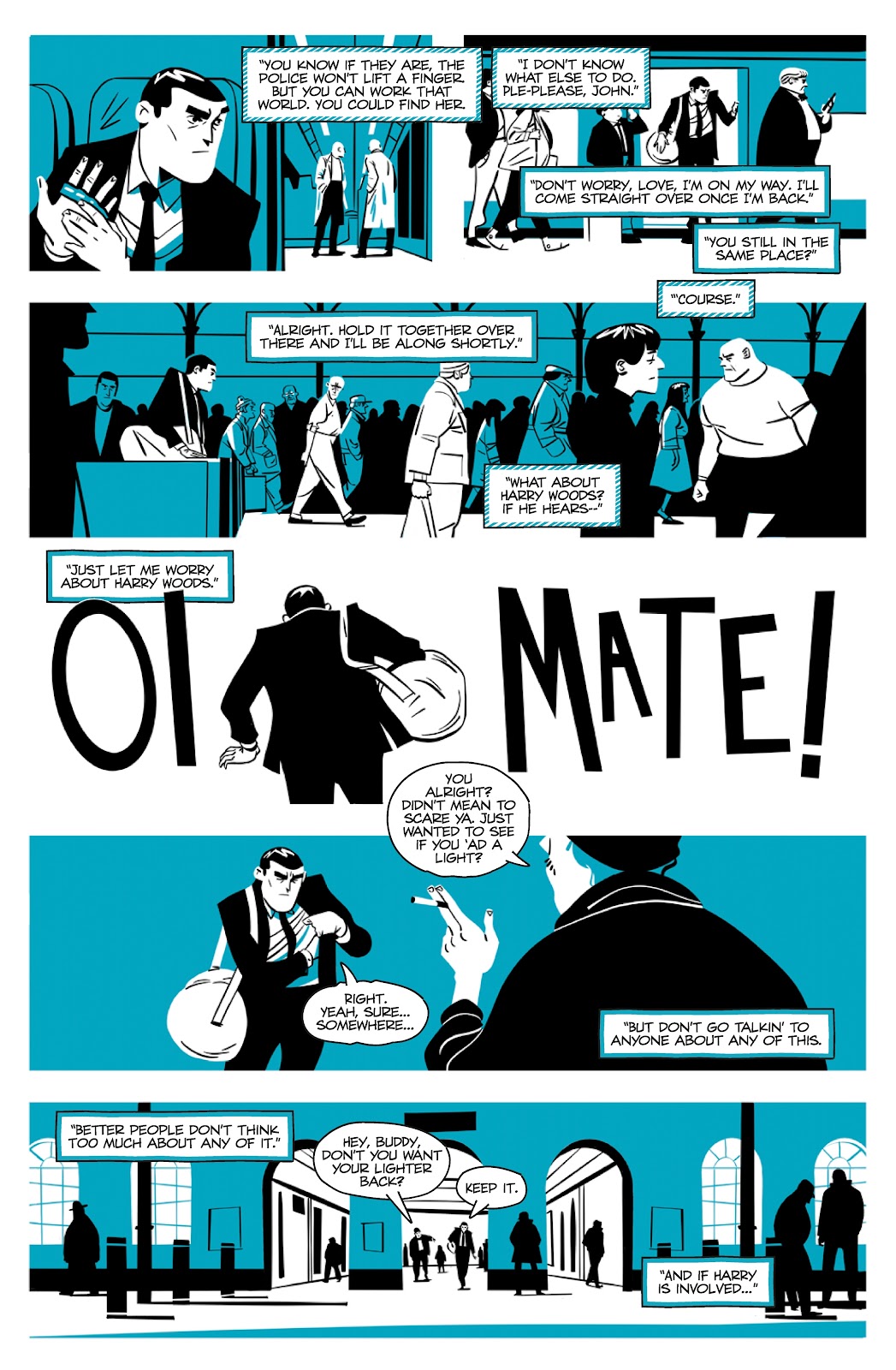
For a writer with a track record, but not high on anyone’s radar Thomas is extremely impressive. The way he lays important conversations over other scenes reflecting what’s being talked about and a fine way with a visual metaphor cement Mugshots from the start. Other characters might not be delivered as instantly as Bannon with a line of dialogue, but there’s rapidly no mistaking who they are and what some are capable of. The characterisation never goes any deeper, but it’s all that’s needed to service events.
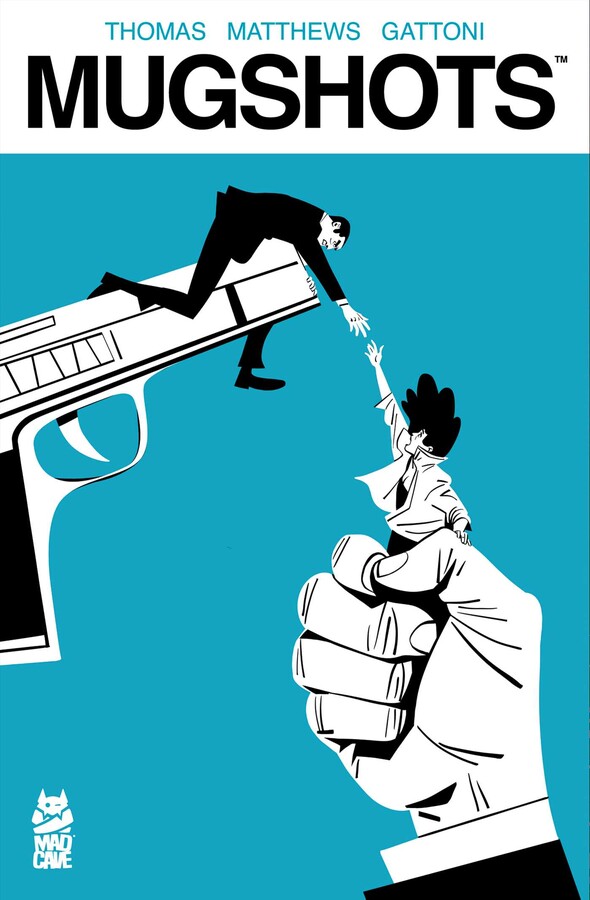
Under Chris Matthews Mugshots looks nothing like the traditional crime story. Pages using black, white and different single colours are stylishly designed featuring instantly recognisable people. These aren’t your stock pretty boys either, but folk who’ve been around the block a time or two. As eye-catching as the design is, it’s almost as admirable that Matthews never lets it obscure the story, and he’s good at passing off subtle touches setting up later moments.
It all combined to ensure Mugshots is a proper crime story overflowing with grim elements, rooted in the activities and jealousies of the past. With Bannon back in Brighton all hell breaks loose, although that’s partly coincidence as Woods is scared of Albanian gangsters moving in on his territory and that contrasts Bannon’s search for his niece. The activities of the Albanians have a part to play, but when not connecting with other characters they’re no more than a violent distraction artificially prolonging matters. They need to feature in a surprisingly rapid ending, though.
Thomas and Matthews supply a memorable twist on the template of the loner bringing about violent change. Anyone who likes their protagonists as hard as a brick wall should investigate.