Review by Graham Johnstone
For those excited by the animated TV series, this is where Mister Miracle began.
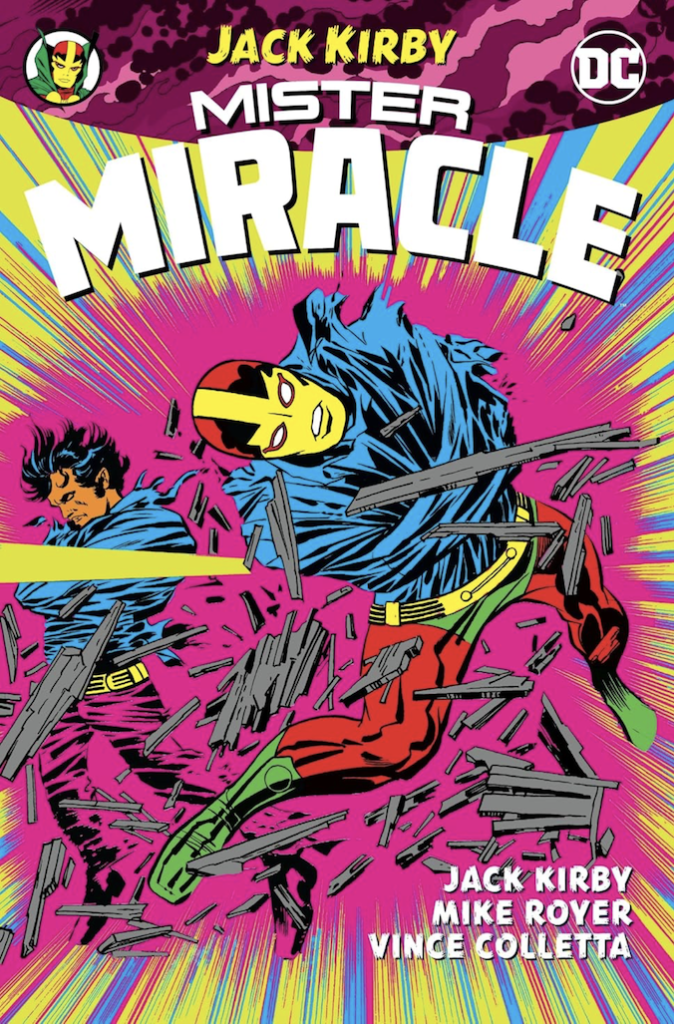
Jack ‘King’ Kirby’s 1970 move to DC enabled an ambitious multi-series narrative of warring planets, including Mister Miracle, New Gods, and more, collected together as The Fourth World. Marking the 2017 centenary of Kirby’s birth, this is the first single volume collection of his Mister Miracle.
At Marvel, Kirby had shared writing credit with editor/scripter Stan Lee, so how does Kirby fare without him? He begins with Scott Free’s (Earthly) origin story – assuming the identity of murdered escapologist Mister Miracle. It stretches plausibility, and the escapes, while thrillingly delivered, are too often solved by previously unmentioned gadgets. Lee might have strengthened the origin, or glossed over such weaknesses, however, Kirby’s scripting is effective, explaining as required, while maintaining the energy rush.
The best episodes involve Scott’s earlier backstory, with friends and foes arriving on Earth, before a climactic return to ‘home’ planet Apokolips. It’s here Kirby showcases his world-building, and near-mythological sense of narrative. Scott revisits his upbringing under the brutal (‘Cruelty Breeds Respect’) regime of Granny Goodness. Suspicions that Kirby is channelling his experience at Marvel, are reinforced by relentlessly upbeat Lee-lookalike Funky Flashman, and confirmed by Kirby staffer/biographer Mark Evanier. Ironically, Lee wouldn’t be so heavy-handed, but few will grudge the under-appreciated Kirby letting off steam. Creatively, though, Jack thrives without Stan.
Sales figures ended The Fourth World within a year, surely a brutal disappointment for Kirby. Mister Miracle lasted a further seven issues, with Kirby dropping the Apokolips macro-narrative for more standard menace-of-the-month stories. Kirby was still bursting with new ideas, almost too many for each story. If his feelings about Marvel had offered a clear target, by this stage the foes are harder to pin down. Mystivac, for example, is presented as a third world idol, then seems to be a robot, and later an alien, but all along is the tool of of an idle rich ‘sportsman’. The Quick and the Dead’ and ‘Insectosapiens’, similarly involve foes revealed as illusions. In the latter, and ‘Murder Lodge’, the whole environment is hostile, with walls opening for adversaries to attack. The stories do fit the escapology theme, but the imagined subtext of Jack’s ever-shifting nemesis feels poignant. When Mister Miracle ended Kirby (also series editor) was able to at least write a charming conclusion with Fourth World guests.
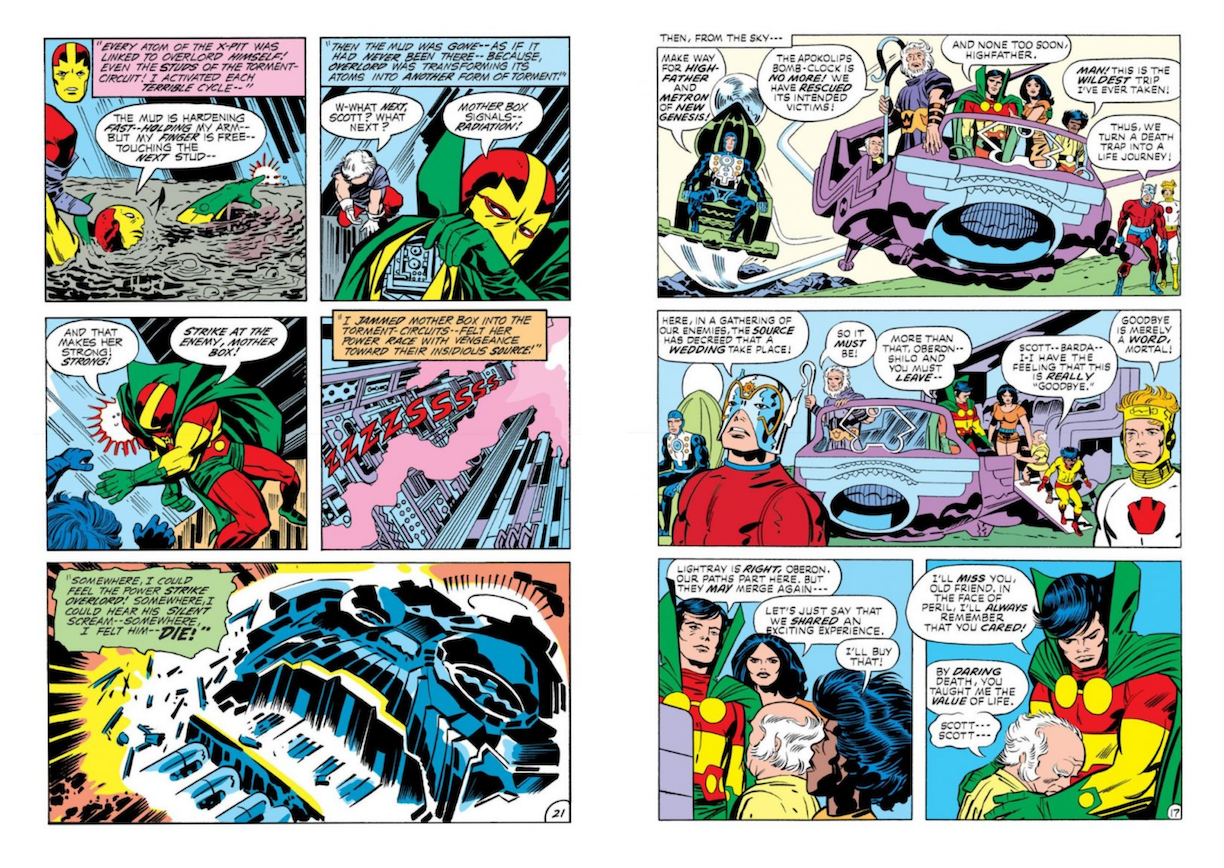
Kirby the artist is on top form. He’s a master of pictorial composition and movement, with an amazing energy to his work. The early chapters are inked by Vince Colletta, whose feeble lines undermined Kirby’s art on Thor. Here, Colletta, (with uncredited assistants?) turns in some decent work, though better on the sensational effects, than human details like faces. Mike Royer, soon takes over, his (pre-digital) impossibly sharp and fluid inking, more true to the pencilled pages, so creating the definitive Kirby look.
Despite story flaws Mister Miracle offers much to enjoy, and has the highest proportion of the superior Royer inked pages.
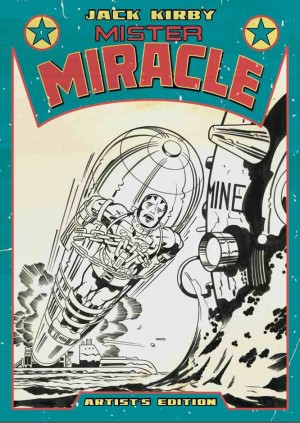
The series was previously reprinted in greyscale over confusingly titled first and second volumes, with several episodes in a deluxe Artist Edition. The current volume loses an illuminating introduction by Mark Evanier, but adds sympathetically restored colour, making it the obvious best buy.
The book is included in The Fourth World box set, with the content also spread over multiple Fourth World collections.