Review by Ian Keogh
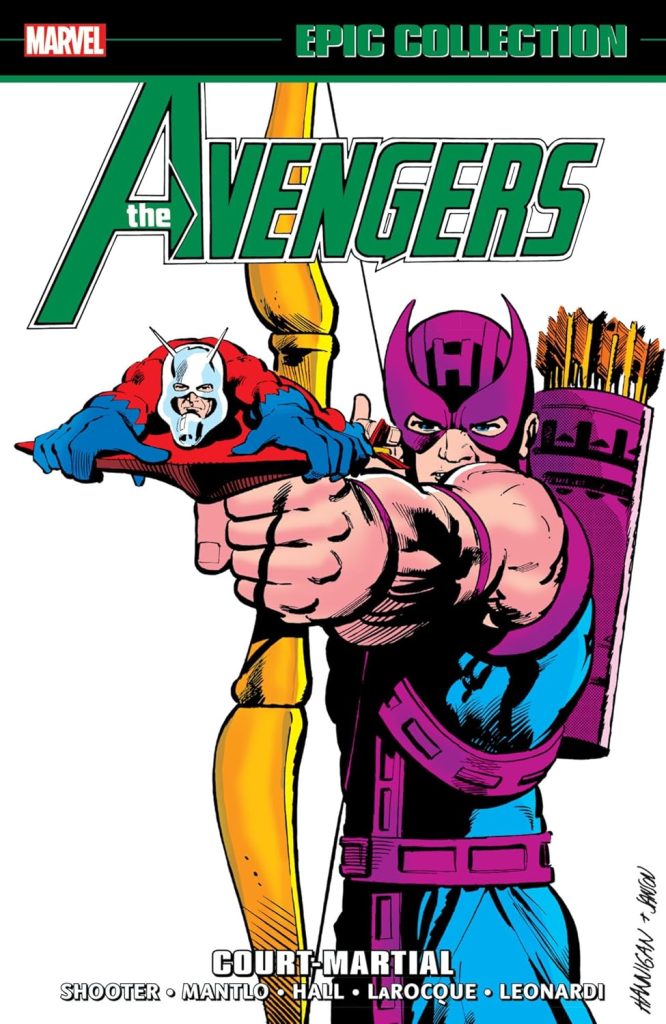
Court Martial is a sort of hybrid combination of two previous releases of the same material. It misses the final few issues presented in The Trial of Yellowjacket, but includes the entirety of the Vision and Scarlet Witch’s first solo series, which accompanied much of this content in Marvel Masterworks: The Avengers Volume 21. Whatever format you choose, however, mediocrity is guaranteed.
That’s down to Jim Shooter in two respects. Firstly, his job as Marvel’s Editor-in-Chief restricted time writing the Avengers, so this run barely has anything both plotted and scripted by Shooter. He collaborates with various writers on the plots and due to being unable to properly commit, fill-in issues abound. His other drawback is very strict ideas on how superhero comics should work, which include introducing every character every issue as if no-one knows who they are. It’s not necessarily a poor principle, but the execution is woeful, with cast members constantly over-explaining.
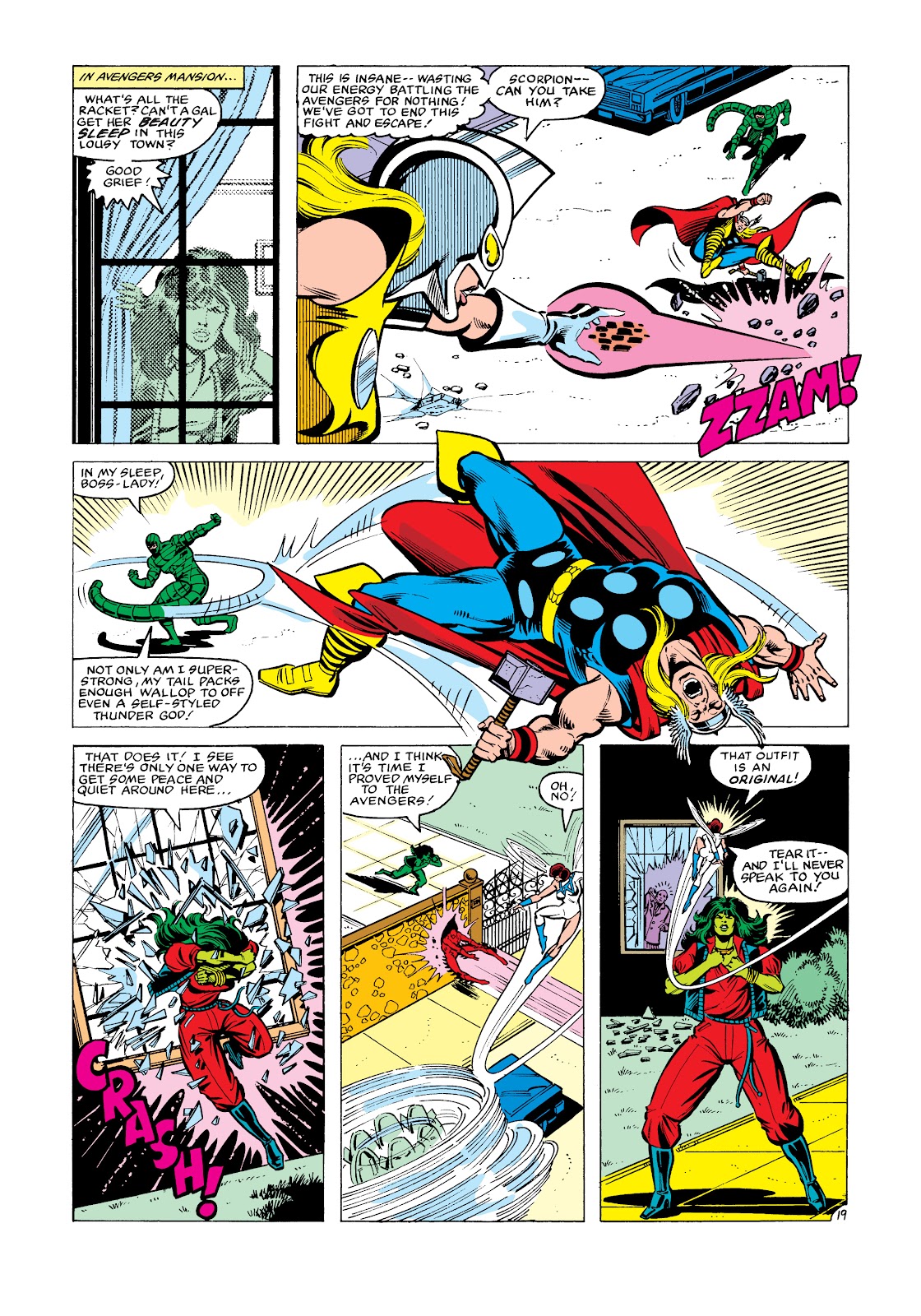
Shooter’s vision extends to the art also, where clarity takes precedence over visual spectacle. Gone are the dynamic large panels that characterised Marvel for so long, replaced by characters squashed into a tight grid. The storytelling is clear, but page after page under a number of different artists are plain dull looking. The sample art is the work of Greg LaRocque, better than most at introducing some form of visual interest within an imposed structure, but not as good as on other projects.
When not interrupted by fill-ins, the main story concerns the decline into mental illness of founding Avenger Hank Pym, Yellowjacket. Crucially, though, the sequence doesn’t finish until the start of following volume Seasons of the Witch. Had it been handled with some subtlety this might have been a viable plot, but nuance is an absent friend and everything is exaggerated and overwritten.
The best that can be said for the remaining material is that a lot of different Avengers feature, some like Black Knight, Moondragon and Wonder Man not seen for some time.
That would also apply to the Vision and the Scarlet Witch whose four chapters are better than pretty well anything else here if only for the consistent creative team of Bill Mantlo and Rick Leonardi. Mantlo delves deep into the backgrounds of both characters, including all the relevant personnel associated with them while originating the idea of their living in suburbia and coming up with an improved verification of who Wanda’s father really is. What was a strong revelation at the time is greatly reduced for having been in place for decades afterwards and so no longer the surprise it was in 1983. Leonardi’s art shines and is notable for being able to feature multiple characters yet have a place for them all within a panel.
Were it not available as part of several Vision & Scarlet Witch collections it might be Court Martial’s saving. Unless you’re desperate to have a complete run of The Avengers in the Epic Collection format, this is a book to skip altogether.