Review by Lewis Savarese
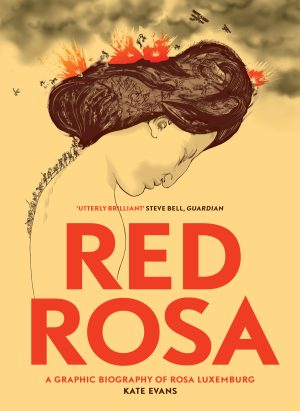
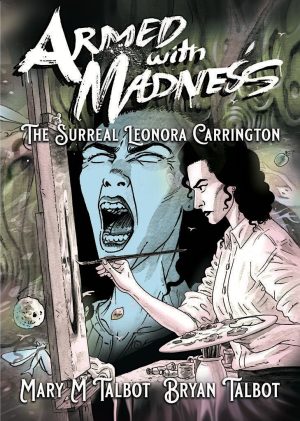
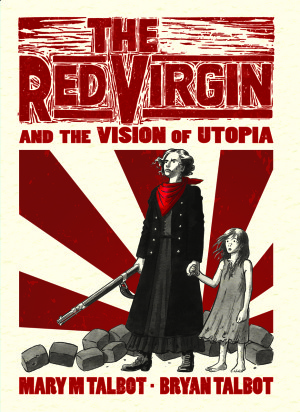
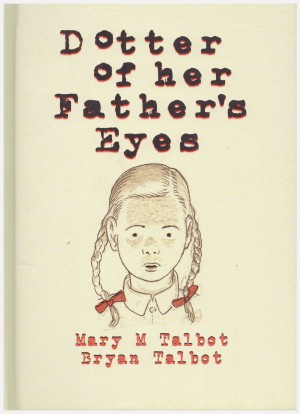
Lo! An Amazon! The Interesting Narrative of the Life of Mary Wollstonecraft marks the sixth collaboration between spouses Mary and Bryan Talbot. This graphic biography of the pioneer feminist philosopher follows their previous works of women’s history (see recommendations). The Talbots manage to distill Mary Wollstonecraft’s life into a compelling narrative with minor faults.
Ten chapters, cover Wollstonecraft’s childhood to her untimely death after giving birth to her second child, Mary Wollstonecraft Shelley. Each features two or three meaningful moments or events, flowing from one to the next at a measured pace. A slim page count is spent on Wollstonecraft’s childhood, but the influence her father’s abuse and financial ruin had on her views of marriage are clearly established. Bryan Talbot employs watercolour washes with various tints as a way to convey the mood or tone during different stretches of time. Wollstonecraft’s childhood is tinted a warm gold as she develops two pivotal friendships, with Jane Arden and Fanny Blood, that supported her during this time of tumult. In her early adulthood, the tint shifts to a solemn grey when Wollstonecraft travels to Lisbon to be with an ailing Fanny. After Fanny’s death the predominant tint is a shade of copper that morphs into a pink hue amid Wollstonecraft’s courtship with husband William Godwin.
Mary Talbot’s portrayal of Wollstonecraft and her philosophies is well-rounded, and primary sources such as personal letters inject authenticity into the narrative. Wollstonecraft comes off as conflicted in many of her personal relationships, but steadfast in her conviction for women’s rights. Unfortunately, text from Wollstonecraft’s published works is largely absent. Early on there are text boxes that feature quotations from An Historical and Moral View of the Origin and Progress of the French Revolution while Wollstonecraft wanders the abandoned halls of the Palace of Versailles. Later, as she writes A Vindication of the Rights of Woman, we see quotations from it in text boxes along with her handwriting superimposed over one of William Blake’s drawings of Adam and Eve. These fleeting examples of Wollstonecraft’s works leave you wanting more. There is a scene where Wollstonecraft is breastfeeding her first child, Fanny Imlay, which is accompanied by text from the baby’s birth certificate. In Talbot’s annotations she mentions that Wollstonecraft intentionally did not employ a wet nurse because of her deeply held beliefs regarding child-rearing. Wollstonecraft wrote about this in Thoughts on the Education of Daughters and text from this publication would have been more elucidating than the text of a French birth certificate.
The art style that Bryan Talbot has adopted for these past few collaborations with his wife is well-suited for Wollstonecraft’s milieu. His washes evoke the color and texture of aged paper and the aforementioned tints liven the proceedings. Bryan’s fashion choices chip away at the book’s verisimilitude however, especially when multiple outfits scream Victorian era. No doubt a holdover from his Grandville days. Lo! An Amazon! Is a worthy depiction of Mary Wollstonecraft’s life and the supplemental material will appeal to those looking for more.