Review by Frank Plowright
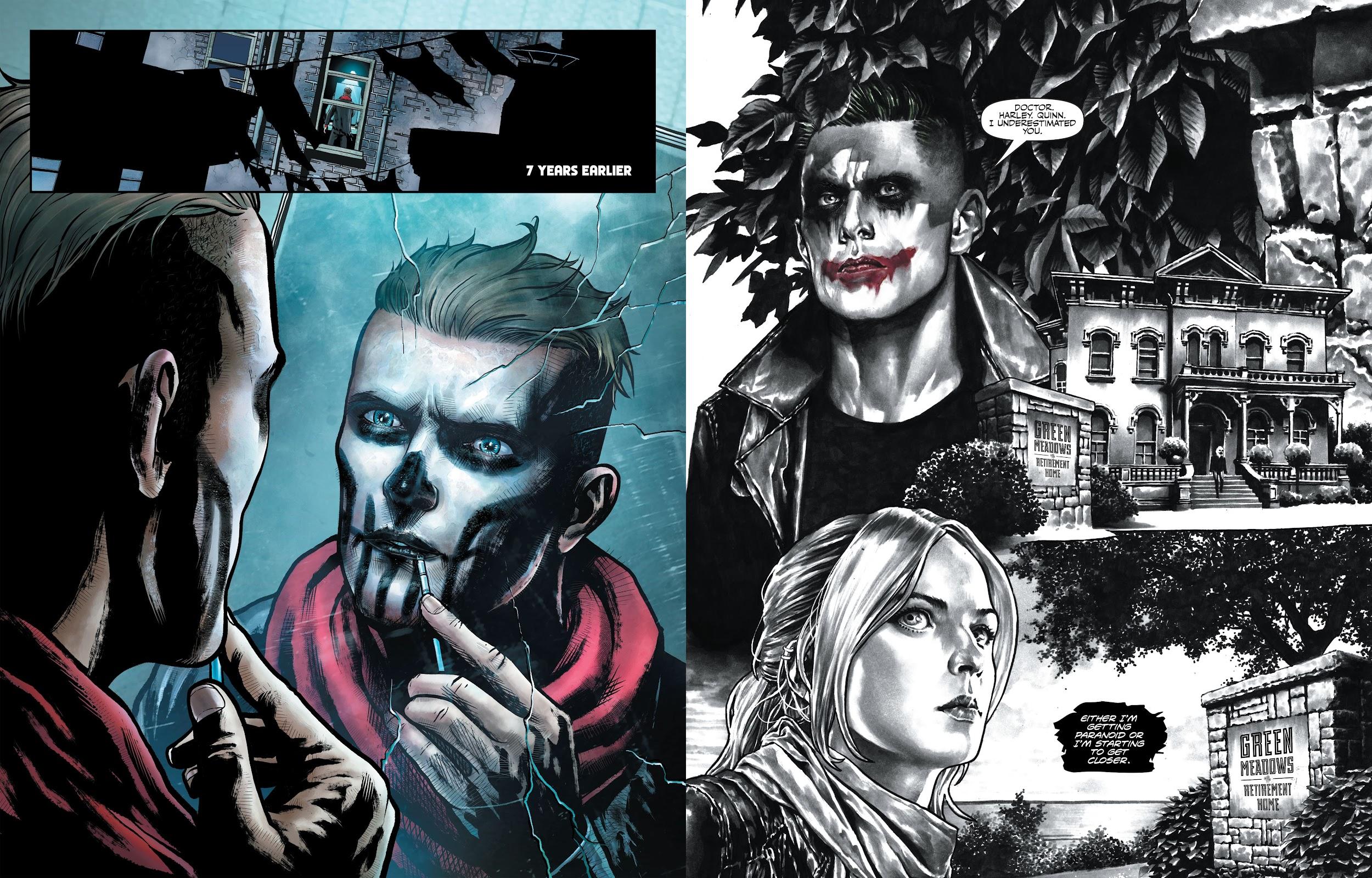
Forensic psychiatrist Harley Quinn works with the Gotham police as a criminal profiler, personally motivated by the murder of her best friend several years previously. Her friend’s killer has a distinctive style, and as the story progresses the police discover corpses surgically altered to resemble works of art.
Kami Garcia is best known for young adult novels, and her comics to date concentrate on that market, so the perpetual darkness of Criminal Mind is very much a surprise. An alternate take on Harley and the Joker removes them from the more fantastical personalities we’re used to and treats them as a real world combination of profiler and serial killer, to the extent of Garcia consulting extensively with Edward Kurz MD. He actually does the job created for Harley, so giving her credibility and gravitas. It’s presumably his influence that ensures the unconvincing leaps of logic applied to similar characters on TV shows are absent here. He contributes greatly to a middle chapter presenting Harley’s files with a few distinctive illustrations from David Mack.
It’s a slim plot, driven by character and atmosphere. There’s no mystery as to who the Joker is, but considerable bolstering of why he is, while Harley’s dedication is equally understandable. Even with all that in place, though, would Criminal Sanity be as successful without the phenomenal art?
Breaking with tradition for works combining past and present, colour is largely restricted to the past and Mike Mayhew’s photorealism. Much of Criminal Sanity is disturbing, and Mayhew’s approach makes the violence more upsetting than usual. It’s complemented by Jason Badower’s layouts for Mico Suayan, also edging toward realism, but slatherered in black ink to sustain the dark mood. It’s also incredible art, and Badower’s text essay closing Criminal Sanity notes he and Suayan considerably revised the art from the original comics, noting around ninety redrawn pages. Those don’t start until the second chapter, and many are largely cosmetic, amounting to a different way of conveying the story. The most prominent example, though, concerns the design of the Joker’s face, and the graphic novel revision is a definite improvement, resulting in a more sinister killer.
Transposing the characters to a more realistic world and removing the triviality, Garcia also flips the relationship dynamic. Here the Joker attempts to impress Harley, whose expertise and viewpoint he respects. Anything involving serial killers can’t avoid some element of sensationalism, and Garcia’s interpretation of the Joker viewing himself as an artist certainly ticks that box, but otherwise realism is prioritised. This is viscerally disturbing and definitely adult in nature, but also in the best dramatic definition of the term. Can Harley dive into the abyss and emerge unscathed?