Review by Ian Keogh
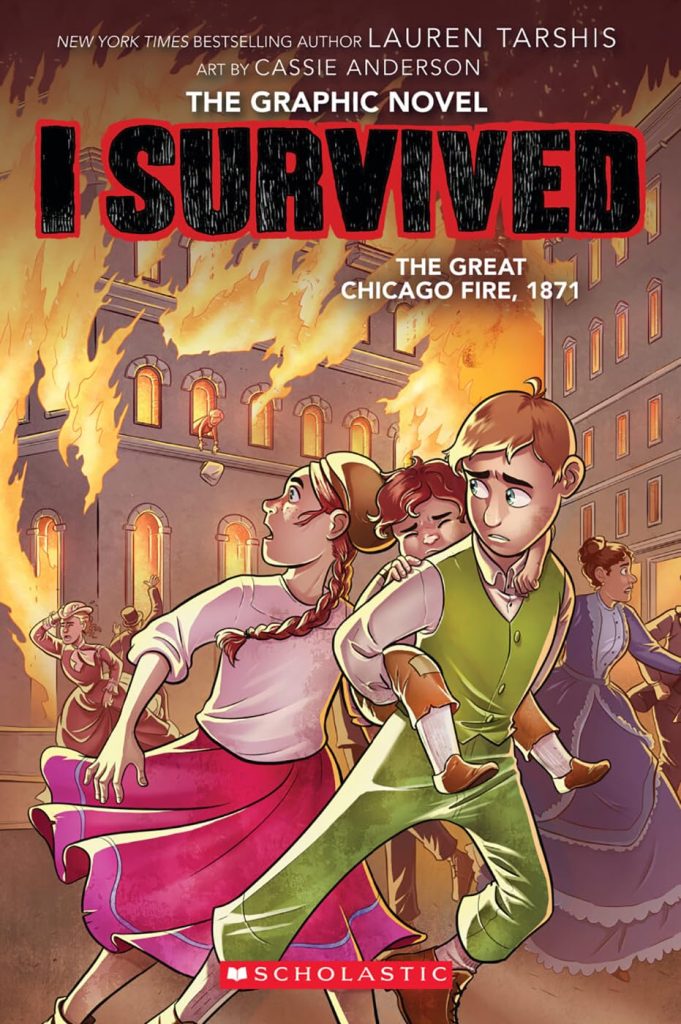
I Survived the Great Chicago Fire follows the series template of placing a youngster at the scene of a historical disaster, in this case Oscar. The title being I Survived offers some comfort from the start, but we rapidly learn Oscar’s already experienced the tragedy of his father dying in a blizzard. A couple of years later his mother married a painter from Chicago, meaning they moved to the city, and it’s very different from the quiet farmland Oscar’s known his entire life.
Georgia Ball once again adapts the original novel by Lauren Tarshis without cover credit, and takes time to establish the kind of place Chicago was in 1871, with the family luggage stolen on arrival. This is well handled, with Oscar discovering the poverty driving such thefts before becoming aware of the fire. He’s able to compare it with a prairie fire he’s seen when younger.
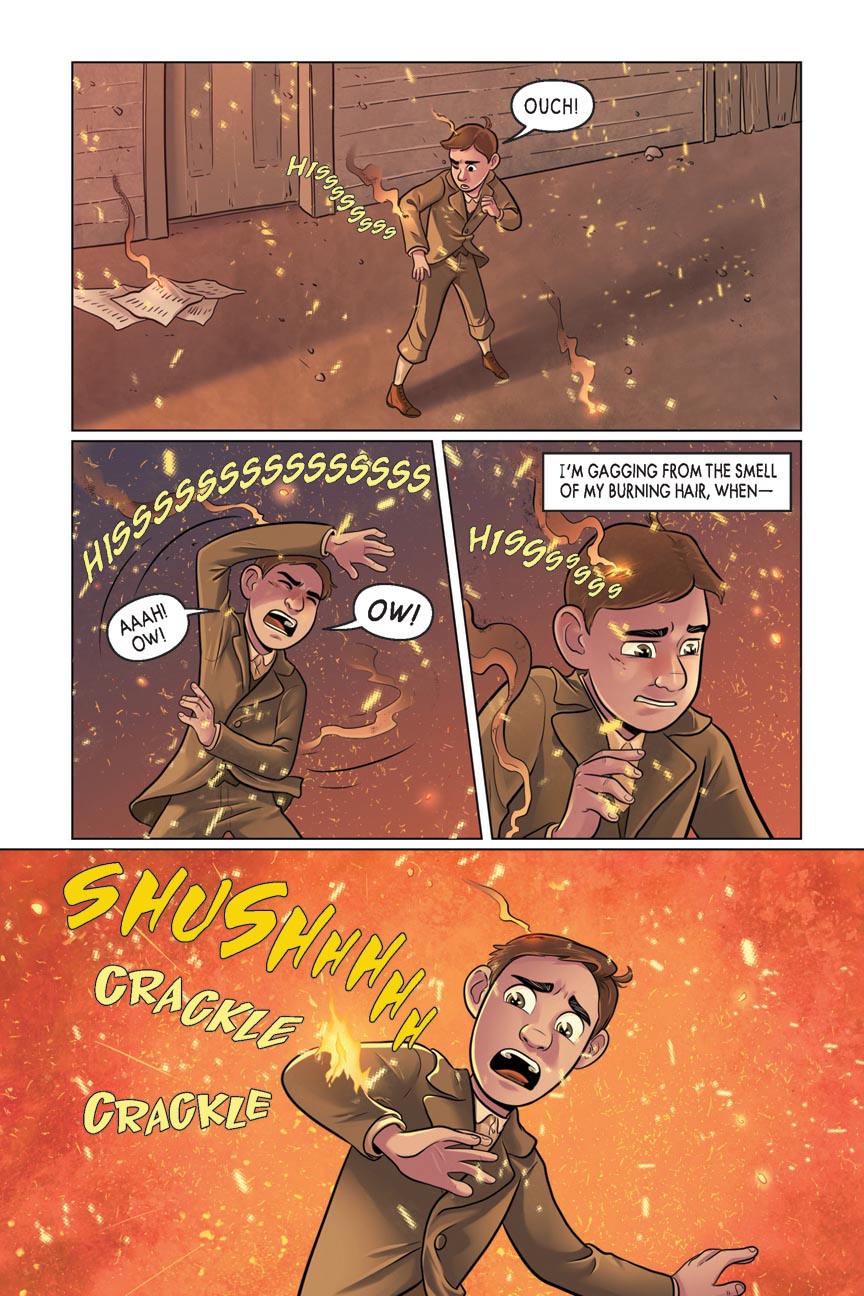
There’s a posed stiffness to Cassie Anderson’s art, but the backgrounds are detailed and she’s able to draw largely cheerful people despite their circumstances. When the fire hits, the expressions on people change accordingly, and she’s able to deliver the sheer panic that must have been associated with an unprecedented event along with the atmospheric conditions creating strange forms of fire.
The 1871 fire Oscar survives remains one of the worst in US history in terms of deaths and sheer area destroyed, and clearly told historical facts after the story deal with the less personal aspects of how the city was, how the fire began and how it spread. Most people probably aren’t aware the Chicago Fire Department had spent the night before the fire successfully dealing with another fire, and most were exhausted.
As terrifying as events detailed in previous books have been, most can be easily understood, but a fire on the scale of the one Chicago experienced is well beyond general comprehension when so few wooden buildings remain in modern cities. The effects are well explained here, and frightening. Tarshis, however, isn’t in the business of horrifying young readers beyond a certain point, and ties her plots together satisfyingly in seeing an old score settled.
The series continues with I Survived the American Revolution, 1776.