Review by Frank Plowright
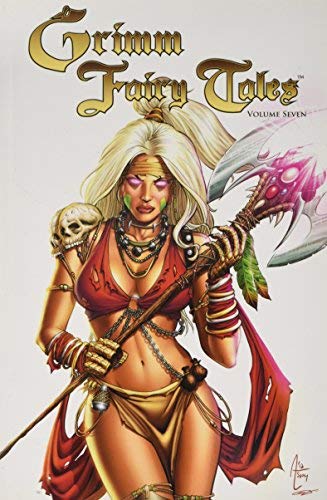
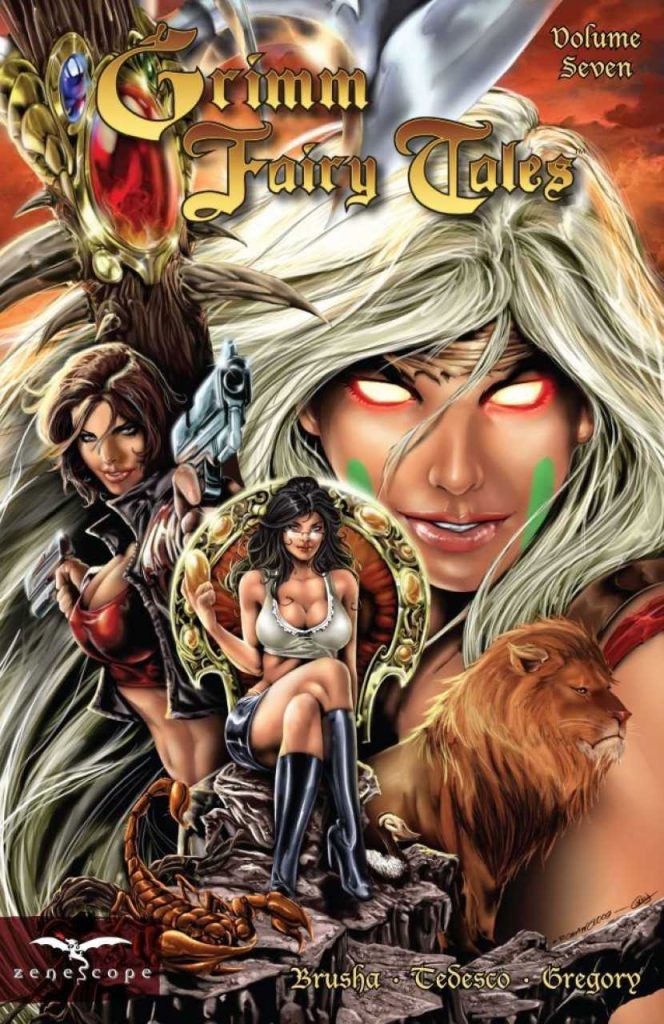
With a third volume maintaining the distinct upturn in quality it can be said that Grimm Fairy Tales has turned a corner, and the improvement continues in this collection.
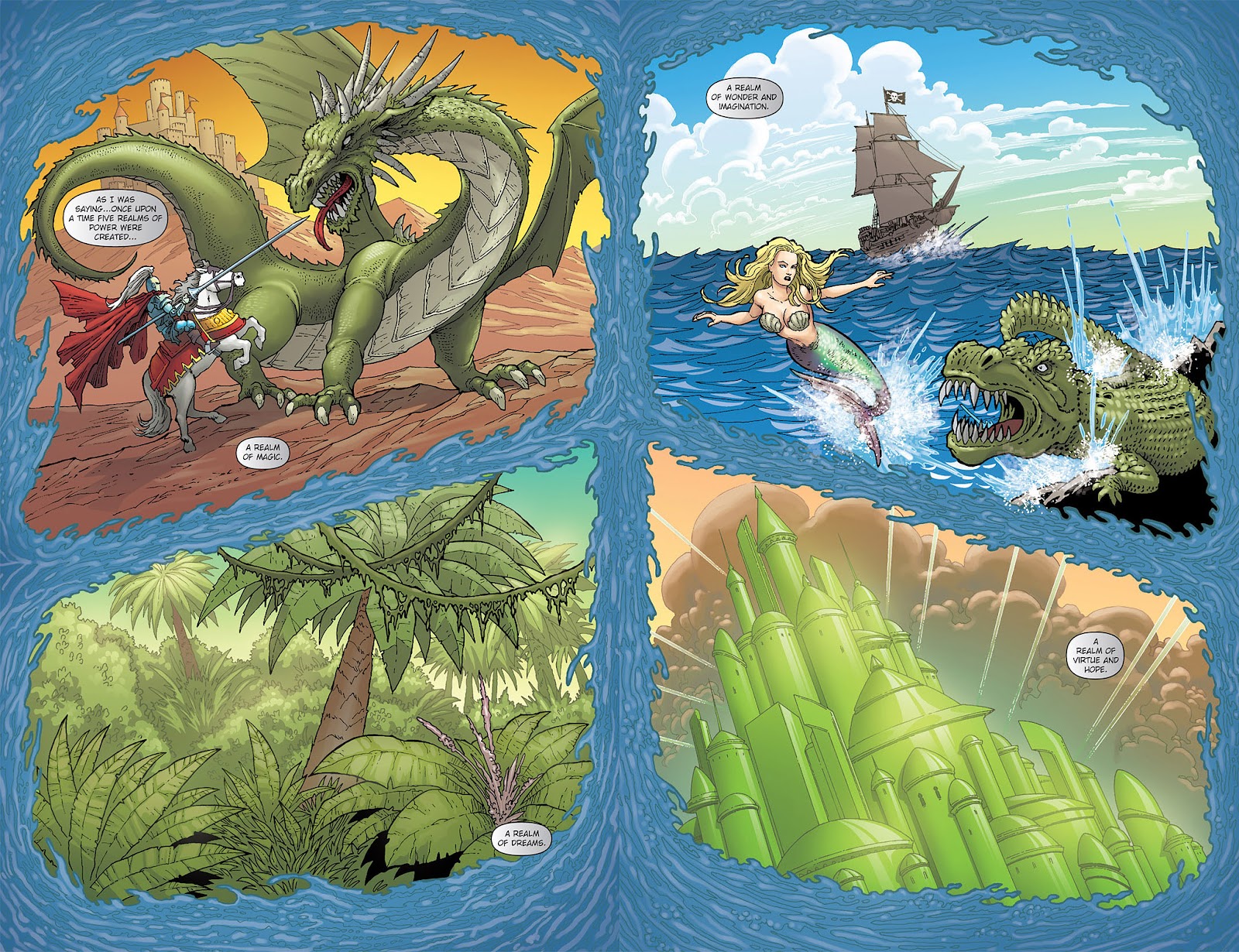
When last seen in Volume Three, Little Miss Muffet was revealed as Sela Mathers, and the traditional rhyme about her used as an accompaniment to who she is. It seems Joe Brusha has had additional thoughts about that, revealing her mentor wasn’t completely honest before, which is hardly a foundation for trust in the writer. Brusha uses that, though, as a background to bring greater cohesion to the series, separating activities into different worlds, some seen on Clint Hilinski’s sample art. Earth is revealed as the gateway to six other realms, and Sela is revealed to have greater influence and power than she knew. It’s a clever reconfiguration making some sense of what have been largely isolated events to date, and acts as a prelude to a major conflict.
As is the way of Grimm Fairy Tales, that doesn’t follow immediately, or indeed in this volume. What follows immediately is a couple of tales from Ralph Tedesco incorporating ancient fables, but following the series formula of them having some real world relevance to the framing sequence, and another from Raven Gregory.
Those writers combining their talents were responsible for one of the best individual stories in the series to date when they introduced Mercy Dante in Volume Five, and Gregory picks up on the now haunted Mercy here. It’s another excellent tale leading into Grimm Fairy Tales: Inferno. This time it’s Gabriel Rearte on art, and he slips into cheescake illustration, but it’s crucially not a return to the bad old days.
A big problem with the opening three volumes was art not just substandard, but also appallingly exploitative. Anthony Spay and Jean-Paul Deshong could use more practice, but only Eduardo Garcias maintains that tradition here, and his pages are shown up by the excellence of Dave Hoover in the same story of the goose and the golden egg. Hilinski’s art is well considered and decorative, and such is his talent he’s presumably left comics well behind, and Cliff Richards arrives on Grimm Fairy Tales with a considerable track record.
This is more solid fantasy entertainment setting up much to come, some of it in Volume Eight. The first eight volumes are also combined as the Grimm Fairy Tales Omnibus.