Review by Ian Keogh
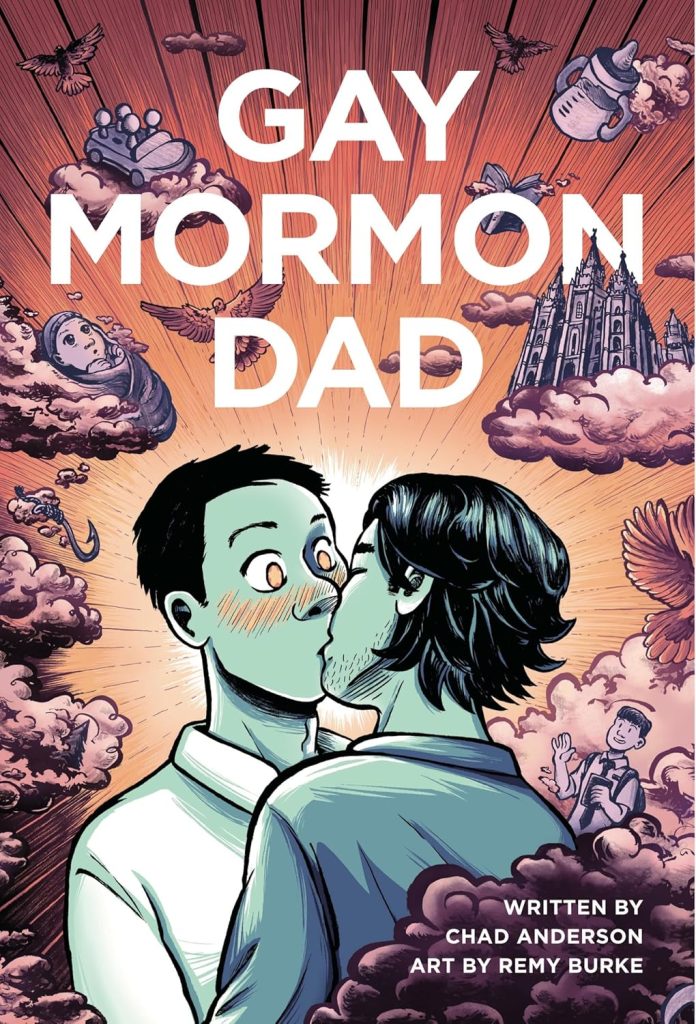
Gay Mormon Dad is about as direct as titles come in explaining the premise. Chad Anderson was born to a caring religious family and raised in the Mormon faith, eventually marrying and having children, only admitting to what he’d known for a long time aged 32. Whether you’re Christian or not, it’s around half a life wasted, except views will differ on which half. Both groups would benefit from the understanding of how the other half lives, except the suspicion is of entrenched views proving a limitation.
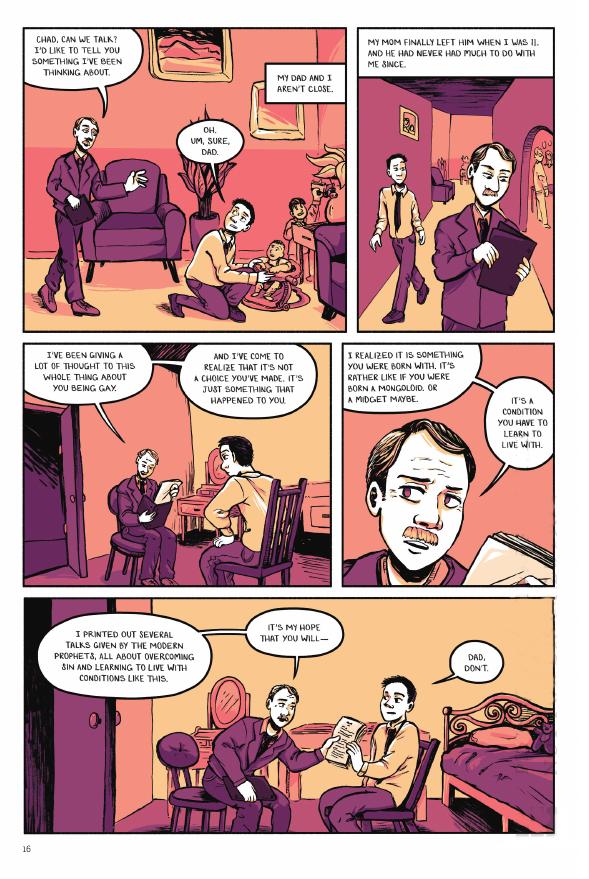
If coming out as gay can be traumatic among non-churchgoing families, Anderson relates how that’s multiplied when religion is involved. Deeply held beliefs about how a life should be lived within strict parameters mean friends are lost and there’s the additional guilt trip about having betrayed God. There’s an element, though, of that being easier than the guilt Anderson lived with every day for years, which is well brought out in a sequence about his early teens when he confides in the bishop. He’s given a book where a chapter discussing homosexuality is titled ‘A Crime Against Nature’ and notes “there are sins so serious we know no forgiveness for them”. Compounding Anderson’s problems when a teenager is his mother remarrying, and the new husband turning out to have an abusive streak.
Remy Burke’s art doesn’t gel immediately due to the strangely proportioned people, but the style is consistent, and the neatness and precision of the cartooning eventually becomes second nature accompaniment. People are well embedded in their environments, and Burke knows when to use repetition or larger illustrations for emphasis.
There’s a clever method of quoting scripture and the words of religious officials intended as comfort, but actually pointed criticism, and Anderson takes the unusual step of including pages of his poetry. Some was written when younger, and reveals a conflicted state of mind, but Gay Mormon Dad would have been better for sticking to the single artform.
While seen with his children frequently, Anderson seems reluctant to introduce his wife, and we never come to know her. Anderson admits he’s gay, yet they marry anyway. It’s a relationship crying out for deeper explanation than is provided. In other places Anderson seems to have hit a dead end, but on almost every occasion he pulls things back on track, with a scene about his sister Sheri exceptionally strong.
Ultimately, many fine moments characterise an inspiring personal story, but Anderson choosing to mix past with present rather than a linear chronology leads to Gay Mormon Dad being too fractured.