Review by Ian Keogh
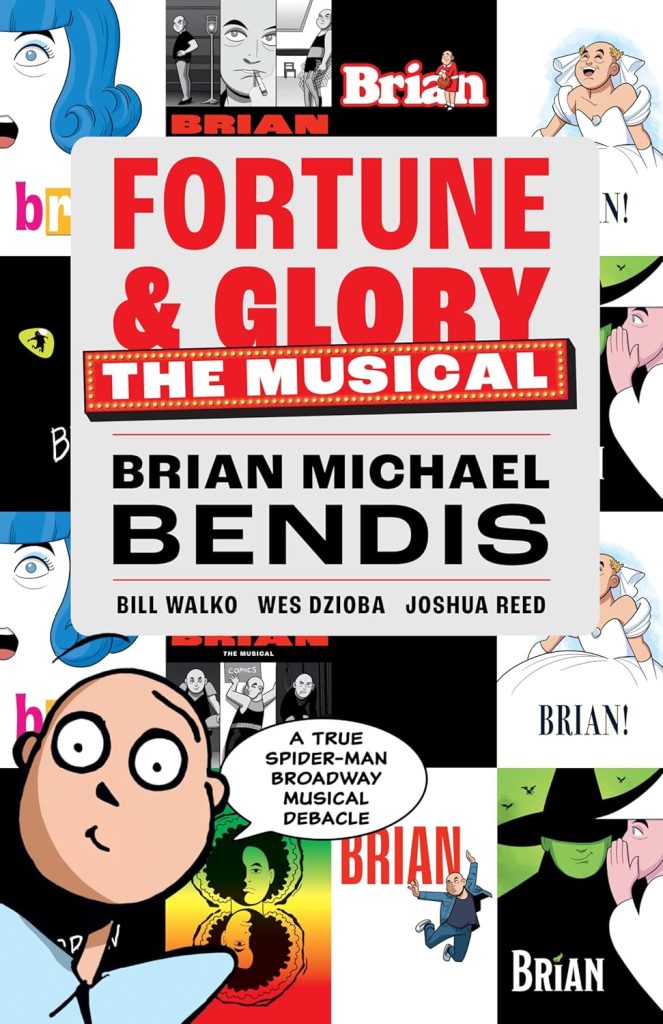
In 2004 Brian Michael Bendis was well into his imperial period, having re-booted Spider-Man for millennial buyers. He’s told theatre director Julie Taymor has read Ultimate Spider-Man and sees it as the basis for a stage musical to follow her Lion King. Bono from U2 is going to write the music. Bendis will script the spoken word sections linking the music based on her ideas.
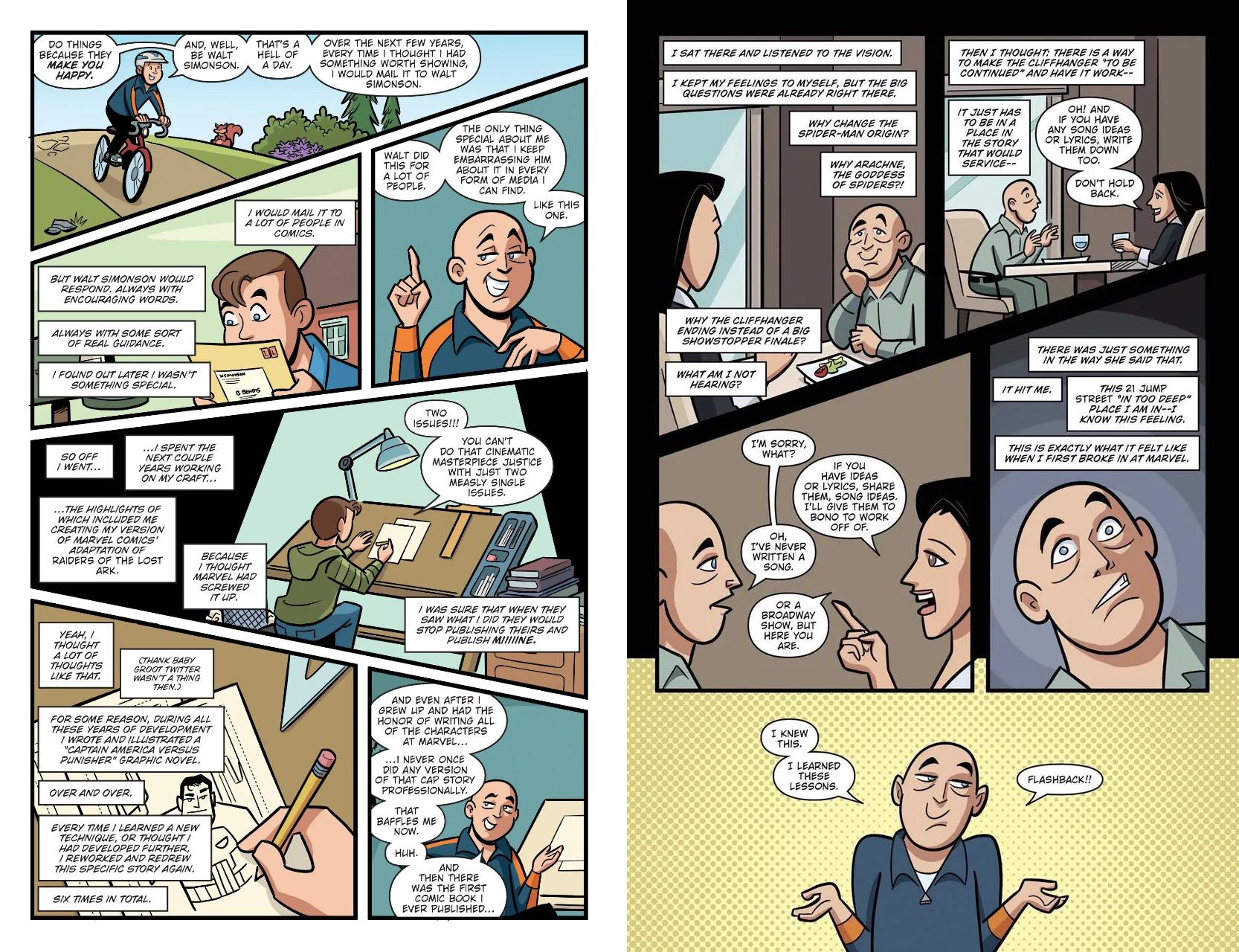
One wonders at which point in this story of attempting to turn the idea of Spider-Man into a musical Bendis realised he had a sequel to his surreal experiences with the film industry. Perhaps the alarm bells should have begun ringing in that first conversation when he’s also told he’s the second choice as an accomplished film director and writer has already walked from the project. Perhaps taking on a musical, a genre Bendis he admits he has no sympathy for, is a mistake. He’s told early that Taymor intends to change Spider-Man’s origin and end the musical with a cliffhanger and the phrase “to be continued”, yet still he signs up.
And so will readers, as Fortune & Glory’s first volume is such a constant delight in pointing out the absurdities of the film business. The sequel is cut from the same cloth in using Bendis as a raconteur, and it has its moments, a highlight being a theatrical friend explaining to Bendis why there will never be a stage show of 101 Dalmations, but working on the musical doesn’t deliver enough material. It means two-thirds of Fortune & Glory: The Musical concerns Bendis’ childhood devotion to superheroes and how he eventually broke into comics. Because he has a way with an anecdote and Bill Walko is a top cartoonist, this material is better told than it might have been by other creators, but there’s little about it much of the content not echoing the experiences of so many comic fans who didn’t become professional creators. This wouldn’t be a bad thing under other circumstances, say were the project titled Fortune & Glory: How I Broke Into Comics, but it isn’t.
Walko’s art is excellent. He takes the style Bendis used on the original Fortune & Glory and delivers a more refined version, with Bendis’ caricature telling the story with expressions and hand gestures as well as the dialogue. It’s neat, focussed and entirely appropriate, and there’s the occasional page where Walko can step out of the discipline to supply something different and surprising.
After the introductory tease, pages about the potential musical interrupt the personal reminiscences before hovering back into focus for the final stretch. It’s a good anecdote, one worth telling for both the humorous effect and the life lesson, but it’s not enough to hang an entire book on. If you really really loved the first Fortune & Glory perhaps this will scratch an itch, but otherwise your interest is going to have to be in Bendis personally, not stage musicals of Spider-Man or the background of theatre productions.