Review by Ian Keogh
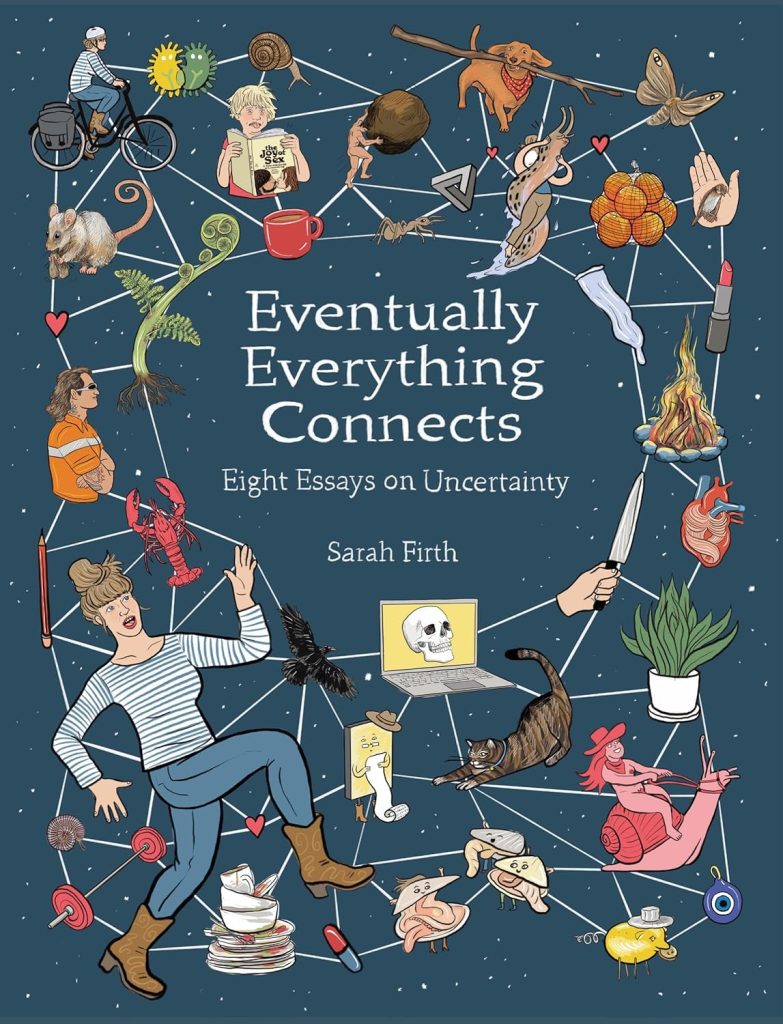
There have been very few graphic novels to which Everything Eventually Connects can be simply compared, with the subtitle of Eight Essays on Uncertainty definitely relevant. Sarah Firth has a contemplative free-ranging imagination applied to suggestions such as what would her life have been like two hundred years in the past, or what would the possibilities of two hundred years in the future be? Other matters considered in the first of eight chapters is whether cynicism actually protects from pain, how to enjoy life’s repetitions and the paradox of joy. These aren’t the topics under consideration in a Batman graphic novel.
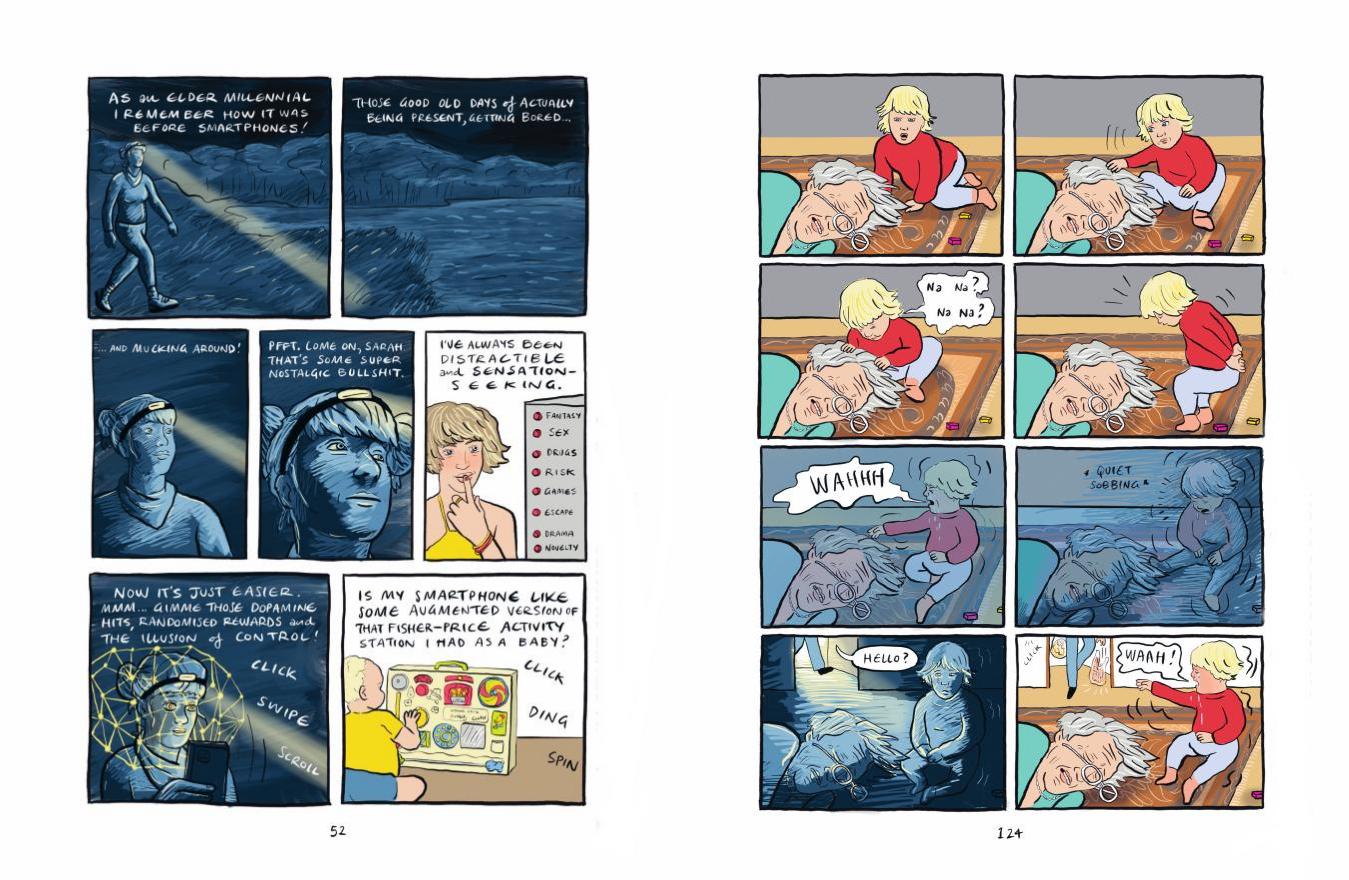
In the spirit of the title, Firth finds connections that serve as viable metaphors. Perhaps moths attracted to flames that harm them and people are constantly checking their phone is obvious, but other thoughts are more original. She considers the big issues from an individual perspective, constantly asking questions and probing her own priorities and principles. At what point does our benefit tip over into cruelty elsewhere? Is individual moderation in a nation of excess a pointless sacrifice? Is there a completely right way of doing anything? Fears, perceptions and comparisons with others all fall under the spotlight, and Firth’s musings are accompanied by quotes, so incorporating the thoughts of professional thinkers as she grapples with existential questions.
The resulting rambles are highlighted by attractively imaginative illustrations, almost always brightly coloured and frequently creative interpretations. The art varies according to need from cartooning to a form of realism, but the quality is consistent. Be warned, that some art may offend, especially during the chapter exploring sexual dreams.
Because genuine thoughts and fears require intimacy they’re revelatory, and we learn much about Firth herself along the way, and about those she’s connected with, but in novel ways as this is no conventional memoir. What she relates about losing her virginity is that it occurred in a room covered with topless pin-ups, but that precedes a torrent of unusual sexual memories exemplifying the constant curves Firth throws.
Although thoughtful, funny and engagingly presented, not everyone is going to be fascinated by Firth’s musings, but they ought to have great appeal to the reader prone to considering life and its mysteries and mulling on their past. Especially recommended to cat and lobster lovers.