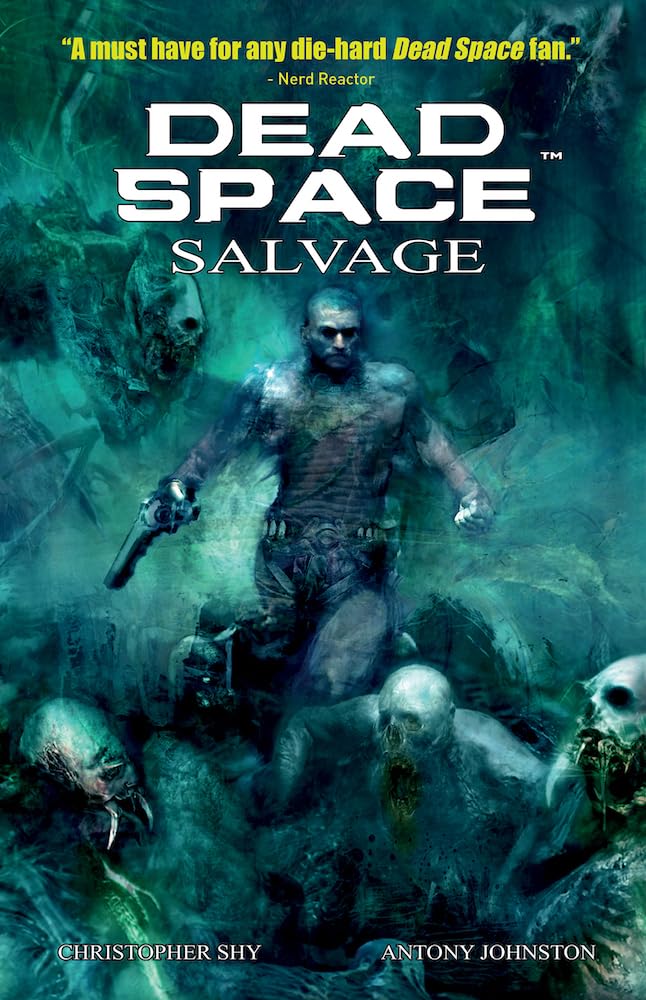

Review by Ian Keogh
In a seldom travelled area of space the Magpie salvage ship locates a target of considerable value. They’re in the process of strip-mining all valuable items when a massive spacecraft manifests. It’s seemingly without crew, and it’s damaged. The salvage crew investigate.
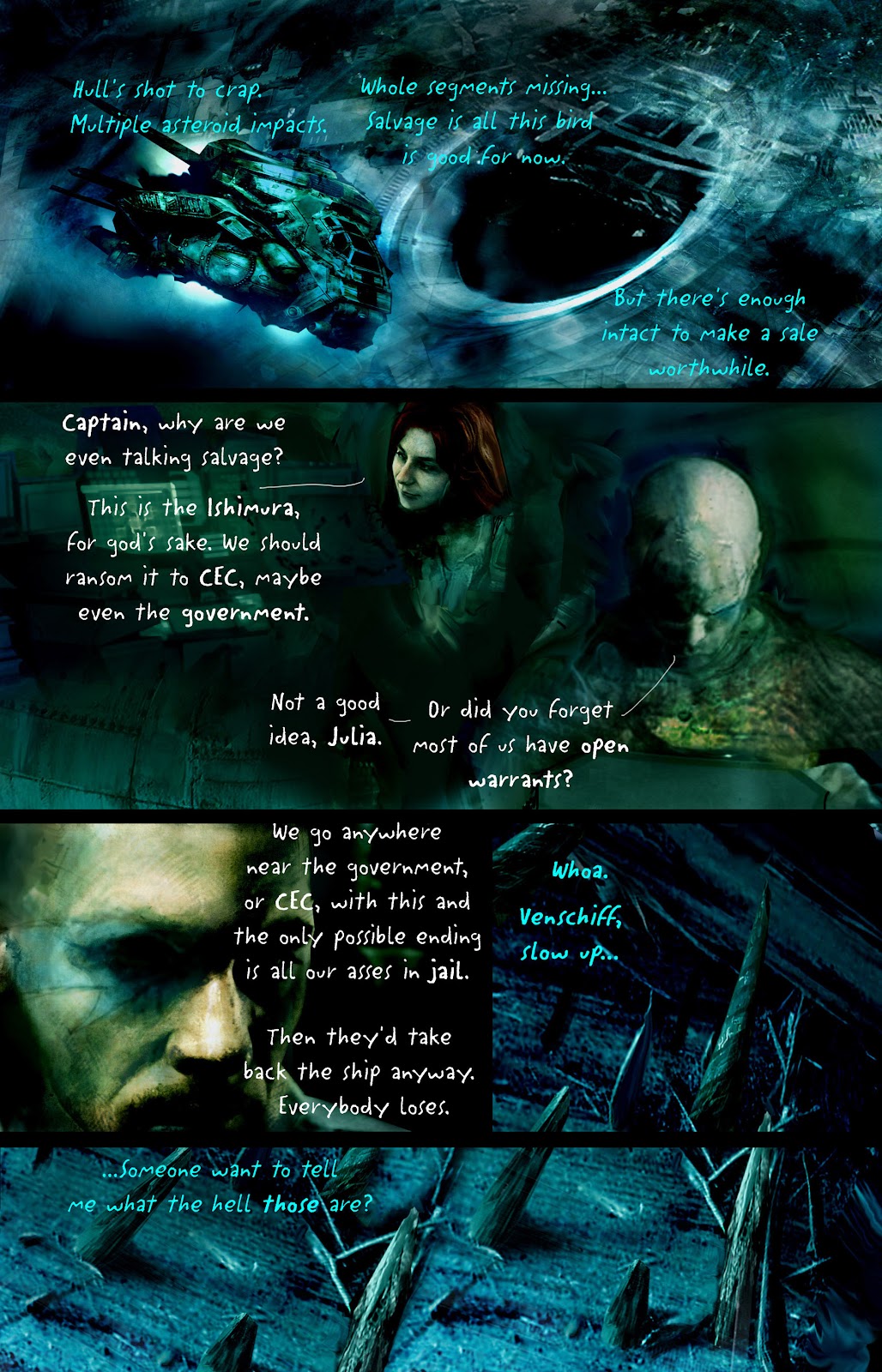
Salvage looks very different from the first Dead Space graphic novel, which was characterised by Ben Templesmith’s sketchy illustrations with watercolour wash. Christopher Shy’s approach is the polar opposite, working digitally in bright colour, primarily green and blue. Individual panels are impressively illustrative, especially those of spacecraft, but Shy also supplies what often appears to be floating heads, while backgrounds are rarely defined. It can be atmospheric, but it’s no way to tell a story.
A continuing benefit of Shy’s artistic approach, though, is dialogue resembling hand written text rather than contained within the usual balloons. It’s a distinctive aspect serving to distance Dead Space slightly from what’s a standard space horror plot.
The spaceship that’s manifested is the Ishimura, and players of the Dead Space game will know it’s where horrors lurk and that as soon as the Magpie crew step aboard their days are numbered. It’s the type of space horror plot by the numbers that’s been very familiar since the first Alien film, and we don’t get to know the victims well enough to develop any kind of sympathy as they’re duly picked off one by one. Those unfamiliar with the game and who haven’t read Johnston’s first graphic novel aren’t given much help either. The background of long-lived religious conflict breaks out into violence between crew members, but without explanation here.
Johnston’s plot complication is political interference, which leads to a fine ending, but there’s not enough substance to Salvage. The series continues with Liberation.