Review by Sabrina TVBand
The mid eighties were a transitional period for DC as the company rebooted its continuity with Crisis on Infinite Earths and revitalised its line of comics. Unlike Superman and Wonder Woman, characters whose entire continuities started again from square one, Batman only underwent a soft reboot, mostly reflected in a change of editorial.
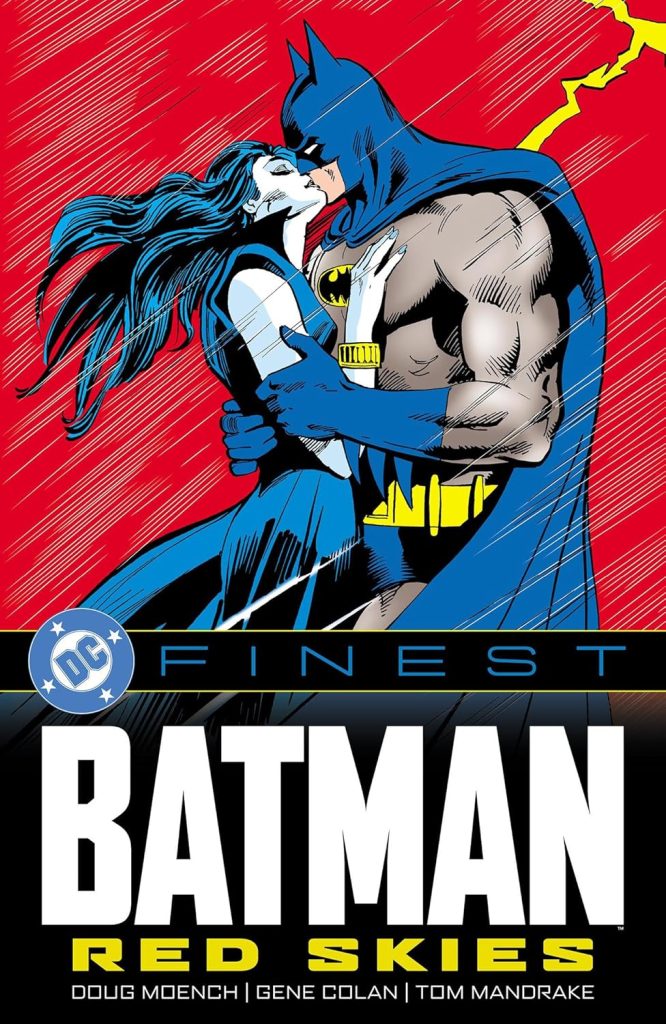
DC Finest: Batman – Red Skies collects the last year (September 1985 – October 1986) of Batman comics under the editorship of Len Wein, before Denny O’Neil ushered in a new era for the character. Excluding two one-offs, the entire book is written by Doug Moench, who’d been writing Batman and Detective Comics since 1983.
Following the example set by preceding writer Gerry Conway, Moench’s Batman was highly serialised, featuring a mixture of one-shots, two-parters, and some lengthier arcs, with a large supporting cast adding continuity. This creates some awkwardness with the titular Red Skies arc, which appears towards the beginning of this volume, because a character named Nocturna features heavily, clearly building off of prior stories. These stories were released when writing always included enough exposition to situate new readers, and so nobody will be entirely lost reading Red Skies. Thankfully, the remainder functions much better as standalone reading.
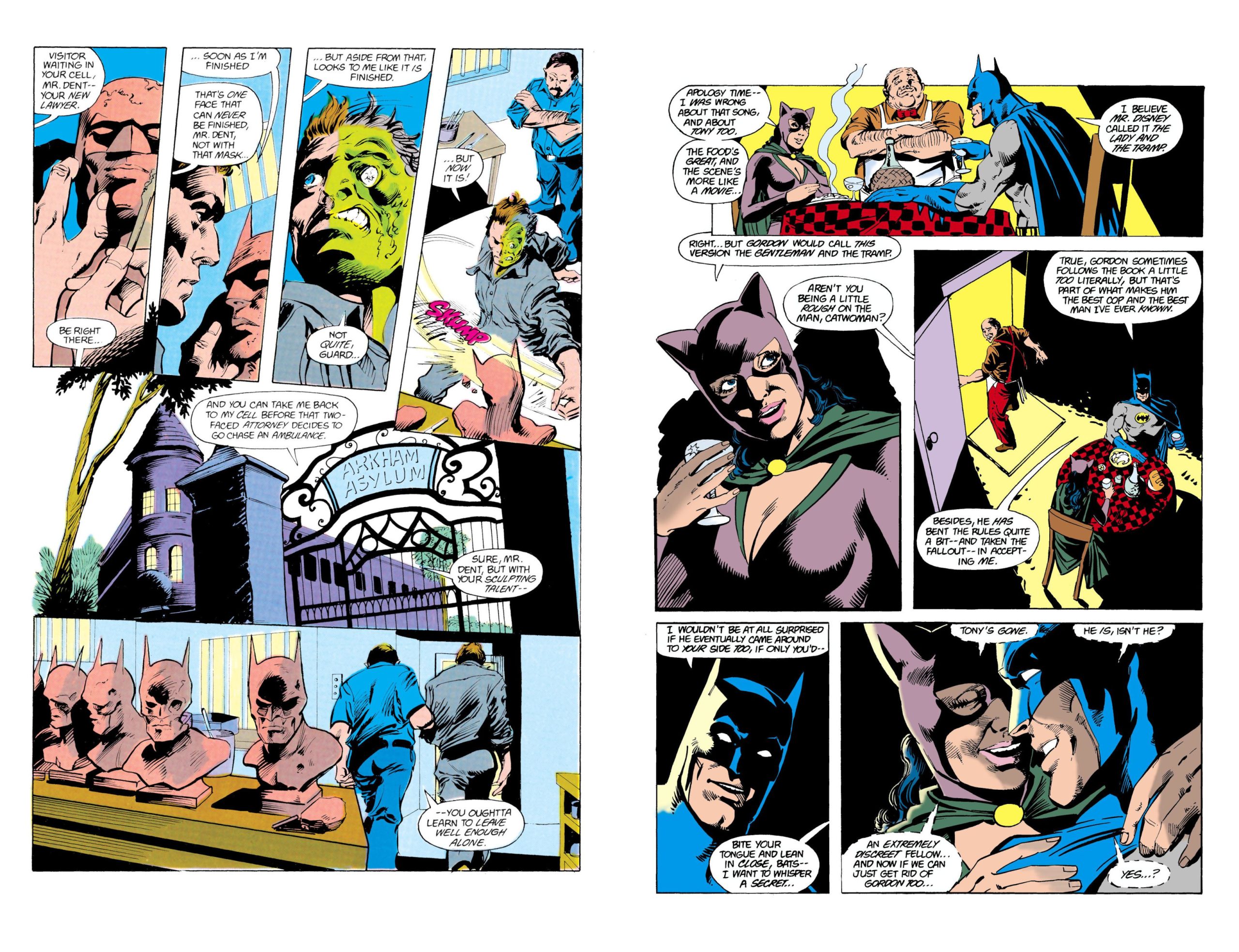
Moench’s writing is enjoyable. He masterfully juggles plotlines, with the evolving relationship between Batman and Catwoman forming the emotional backbone, and his work has a politically conscious element. In one story Green Arrow argues with Batman about his legalistic approach to crime fighting. The Master of Kung-Fu creative team of Moench and Paul Gulacy reunite for a two-parter in which Batman talks with a Soviet agent about how the US government defunds art programs when it needs money. Everyone in Moench’s Gotham seems to be a cinephile, with filmgoing being everyone’s preferred recreational activity, culminating in an arc featuring a new villain named the Film Freak.
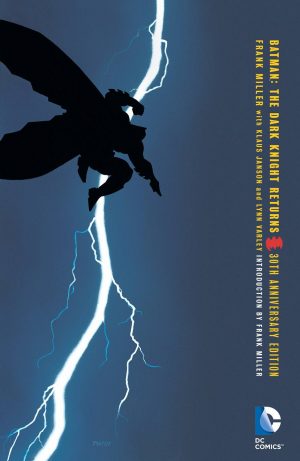
History has it that Frank Miller’s The Dark Knight Returns revitalised Batman, yet this material lacks the camp of 1950s and 1960s Batman, and the Gotham cityscape is appropriately moody and gothic. What The Dark Knight Returns really did was set the stage for a new kind of Batman who’s less well-adjusted than the Batman of Red Skies, who comes off as a far more well-rounded person than the more emotionally constipated vigilante of subsequent eras.
Most artwork is by Gene Colan and Tom Mandrake. Colan pencils with a gradient-heavy style that often troubles inkers, and indeed there are some awkward compromises on his pages, but he also brings a lot of dramatic angles to his work, and it’s surprising how simpatico Mandrake’s artwork feels. Considering how idiosyncratic Colan’s art is, the level of visual continuity is admirable. Klaus Janson, who draws the issue opening this volume, also slots in nicely.
Towards the conclusion a retelling of Earth-2 Batman’s origin story is included, written by Roy Thomas with period-evoking artwork by Marshall Rogers. It’s a solid tribute to a version of Batman that had months prior been erased from DC continuity.
This volume ends on a slightly awkward note. Many of Moench’s ongoing plotlines abruptly conclude, or rather, stop, for the anniversary celebration of Batman 400. It’s an action-packed, if shallow, send-off to a Batman about to be rebooted. It’s followed by a comedic one-off about a Gotham that doesn’t need Batman, penned by Harlan Ellison with art by Colan. It functions as an oddly poignant conclusion to this era of Batman comics.
DC Finest: Batman – Red Skies is both an enjoyable volume in itself, but also a time capsule that most fans of Batman should find interesting.