Review by Frank Plowright
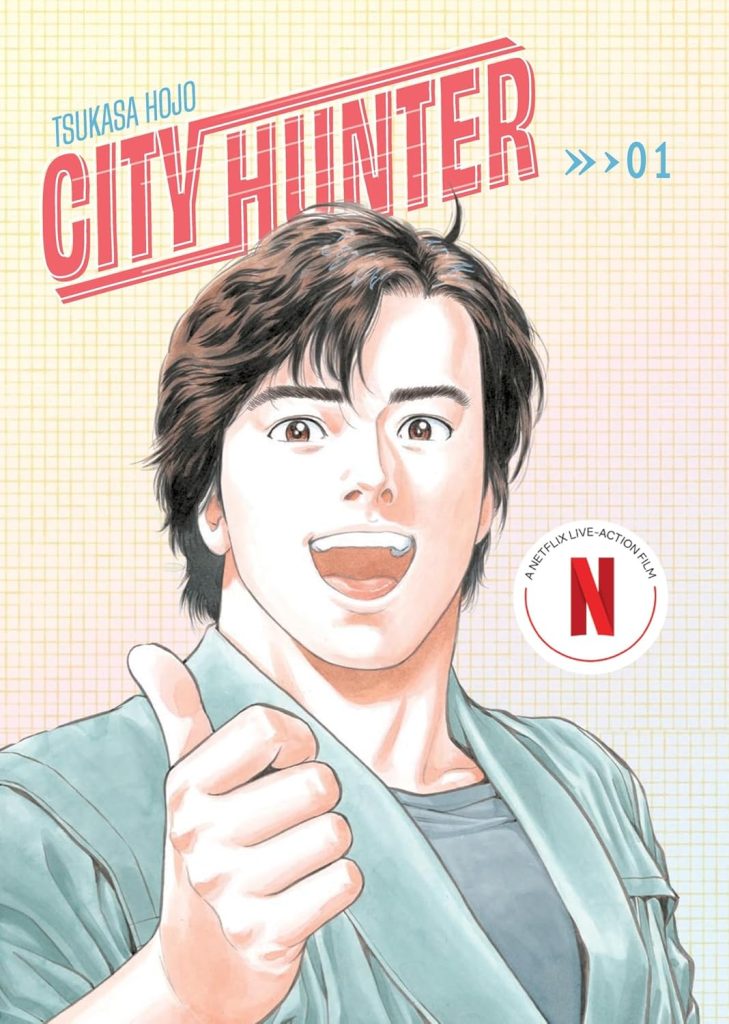
City Hunter was a massive success in Japan during the 1980s, but has never been given an official English translation before now. It’s a peculiar fusion, as the influence of the era’s American cop and detective shows like Miami Vice is very apparent, if transferred to Tokyo, but with some very Japanese sensibilities. Crockett might have been a ladies’ man, but he’d never have introduced himself to a client by groping her breast as Ryo Saeba does.
That’s in the first of 25 sometimes connected episodes showing Saeba going about his business. At first it’s as an assassin for hire, but as the series continues from its 1985 beginnings Tsukasa Hojo softens Saeba around the edges. He’ll still kill, but it’s no longer the starting point as he becomes an investigator and problem solver. Hojo embeds Saeba in Tokyo after dark, the title indicating the city is as much a character as Saeba, supplying the crime and sleaze, every location lovingly rendered and building a picture of the time and place. This aspect stands the test of time far better than Saeba’s personality crossing the line from playful to offensive. After the first few stories, though, this is slightly offset by the introduction of Kaori as a manager and sometimes assistant, and she’s more than capable of setting Saeba to rights.
Hojo disguises Saeba’s capabilities beneath a boastful jocular facade, so frequently surprises with his ingenuity and his excess in getting the job done, which over the opening episodes keeps the series fresh amid largely repetitive plots. To give Hojo some credit, the similarities wouldn’t have been as apparent when serialised on a monthly basis, but there’s little depth with pretty well any emotional matter sidestepped once it’s set up a story. The prime example is the death leading to Kaori featuring as a regular character, underlined by a distasteful piece of comedy once the action stops.
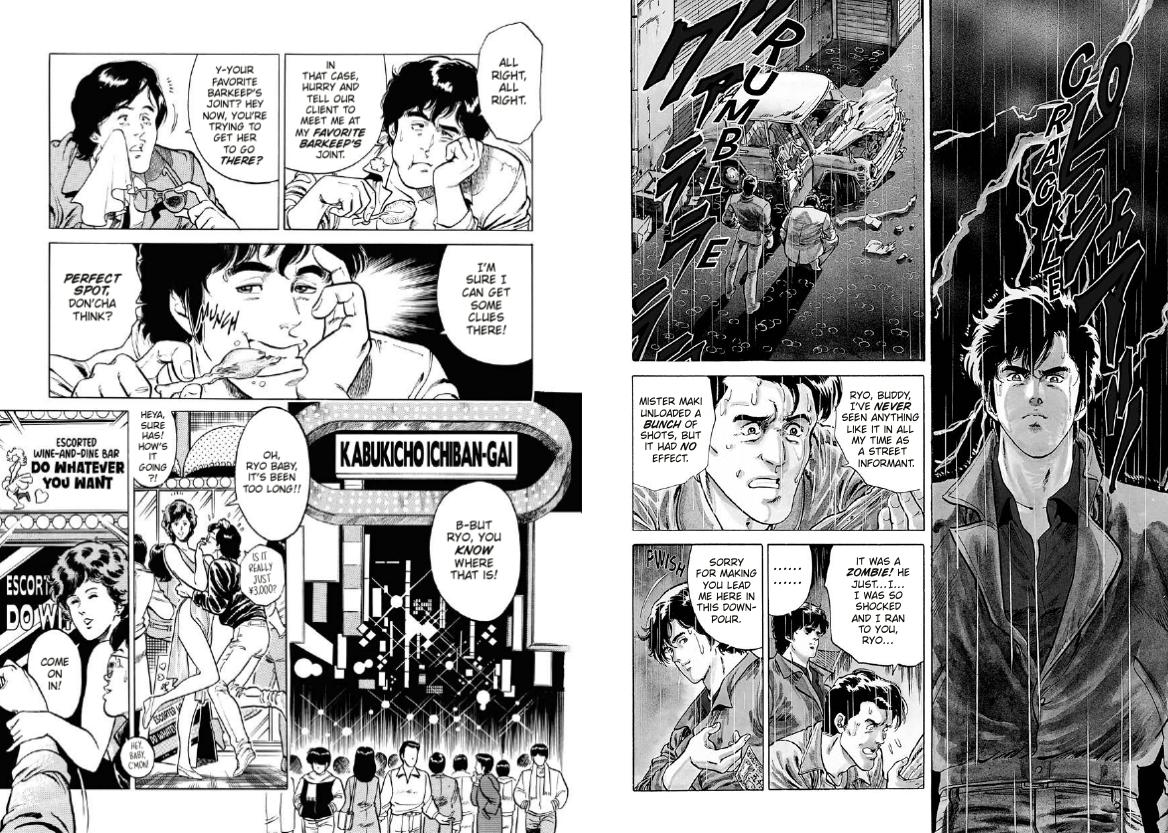
Over the first half of this opening volume the writing is slim, but the art is lush. Hojo brings Saeba and his world to life in elegantly designed and detailed pages, accentuating the locations and with distinctively designed characters. There’s finesse to his comedy exaggerations and a smooth flow to the action. However, the deeper into the collection one dives, the more impressive City Hunter becomes. Hojo knows his cast by halfway through, and by then the comedy of Moonlighting is the greater influence. There’s banter between Saeba and Kaori, and more complex plots, such as five chapters of Saeba having to masquerade as a mild-mannered tutor to protect a ganglord’s wild daughter, while a trick that never tires is the joy of Saeba pulling an impossible rabbit from a hat. The set-ups become ever more audacious as well. One story has Saeba seemingly negotiating alone with a gangster, but when things go south a bunch of a gunmen emerge from the swimming pool in scuba gear.
With time having moved on, it’s weird to see Angel Dust frequently used as a plot device, turning thugs into raging threats impervious to pain. Furthermore, although it’s toned down from the beginning excess, a queasiness about Saeba’s behaviour never entirely disappears, and if Saeba seems to have settled down, Hojo ensures we don’t forget his nature by having him sport an erection for a while over the final story.
That reservation apart, City Hunter remains a series deserving its reputation. It’s smart, funny, well thought out and dynamically drawn, and presumably there’s better to come in City Hunter 02.