
Review by Frank Plowright
Lilico’s family moves from Osaka to New York, but there seems to be little in the way of induction processes for a Japanese girl now attending a US school. She’s left to fend for herself while at home her parents are too occupied with their own projects to find time for Lilico.
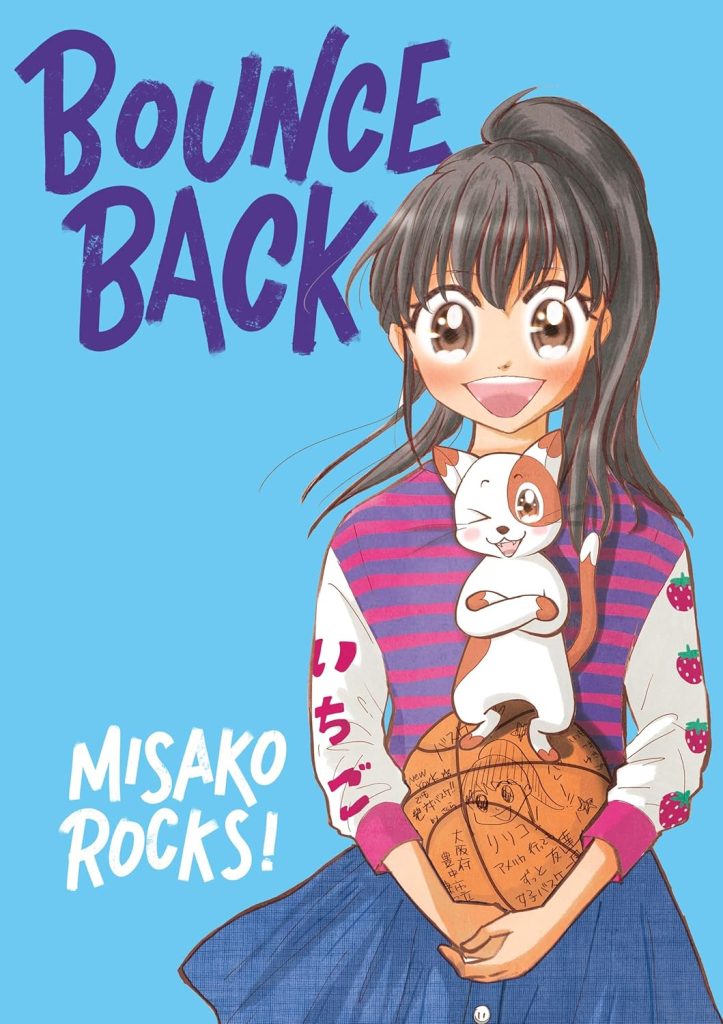
Creator Misako Rocks! delivers the cross-cultural awkwardness well, with Lilico’s dialogue formally phrased and with slight errors at the beginning, and while there’s upset at the start it’s diminished by the friendly cartooning. It’s manga styled with large eyes and few backgrounds, but designed to supply the necessary emotional concern without exaggeration. After an awkward few days Lilico meets Henry and Nala, two kids with a passion for Japanese culture delighted to have an actual Japanese girl at their school. Contrasting them is Emma, one of those girls so common to young adult fiction who considers being popular means putting others down.
What at first seems a straightforward school drama takes a strange turn once the characters have been introduced and absorbed. Nicco the cat also features on the cover, and that’s because they’re a major character. Nicco is not any old cat, but a guardian spirit, there to help, but with an eccentric view of the world. It’s the right choice on Rocks’ part because there’s no shortage of graphic novels about kids navigating the school system, and the wild card of Nicco establishes a distance from them while still being able to deal with the same themes. By then Nala’s started wearing Lilico’s old sailor-style Japanese school uniform, and Rocks is upfront about the influence of Sailor Moon.
Basketball is a theme from the start, obliquely providing the series title, which also refers to Lilico overcoming difficulties. Her aim becomes joining the school basketball team despite Emma being the captain, with Nicco almost taking the part of a life coach after being introduced. They’re part comedy relief and part commentator, pointing out to readers when Lilico’s in danger of making mistakes.
Once the surprise is dropped, Bounce Back follows a predictable path, with the emphasis changing from whether Lilico will ever be able to fit in to how her basketball games will go and whether she’ll be able to maintain existing friendships. A few early moments passing on Japanese phrases and traditions to readers drop by the wayside.
For all the predictability, a basic good nature to the storytelling takes Bounce Back a long way, and an audience has obviously been found as two sequels have followed, beginning with No Such Thing as Perfect.