
Review by Frank Plowright
In 2008 a Russian couple arrive at the American embassy in the Dominican Republic and ask to meet with the CIA agents stationed there. They’re seeking asylum and have considerable information of value.
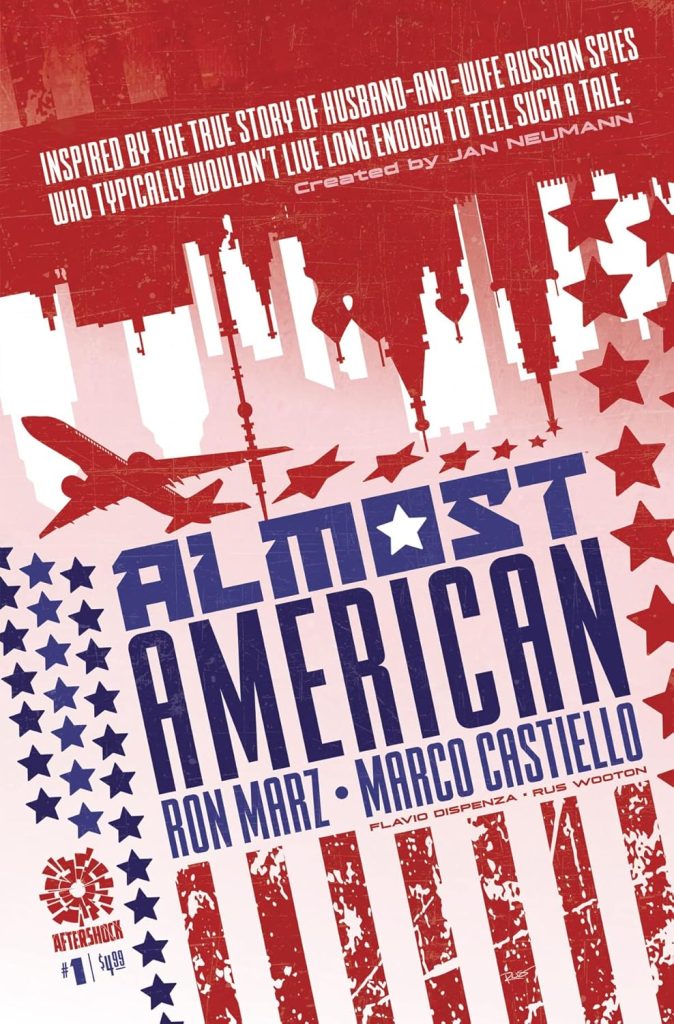
The conventional spy story would be attempting to figure out whether or not they were genuine, or an attempt to implant spies in the USA. Almost American, though, fictionalises the story of Janosh Neumann and his wife, names not assumed until relatively late on, before which they’re Alex and Victorya, but also referred to by their given identities of Andrey and Maria Bogdan. Both worked for the Russian security service FSB, in Andrey’s case continuing a family legacy.
Because he’s adapting a true story Ron Marz doesn’t take the dramatic licence he might otherwise with events as they happen. It’s a case of remaining faithful to the truth while simultaneously diminishing interest, as there’s very little suspense in a chronological retelling of what follows their 2008 defection. It’s a rare scene not from their point of view, and while the lives followed aren’t ordinary, neither are they compelling. Much of the interest retained is due to Marco Castiello’s thoughtful artwork. Almost American is heavy on conversations, so he ensures those conversations occur in visually distracting surroundings, or are counterpointed with something else going on. Under Castiello, though, everyone’s drawn as if a model.
We see the CIA and the FBI squabbling over control of the couple, each wanting to maximise the the information they can obtain, while Janosh and Victorya become frustrated with the limitations they live under. It’s only with the cliffhanger ending to the fourth chapter that any tension manifests.
By then, though, Beni Lobel is handling the art and the quality drops with stiffer people and less background detail. The frustrating aspect really falls into place during a summing up toward the end when Janosh addresses readers directly, listing experiences not featured, which frankly sound more interesting than much of what is supplied. The list of thanks that follows, each with a portrait, seems more contractual obligation than anything to interest readers.
There’s a point early on when American spies consider they’re just not getting enough information to make their investment worthwhile and readers of Almost American may well feel the same.