Review by Frank Plowright
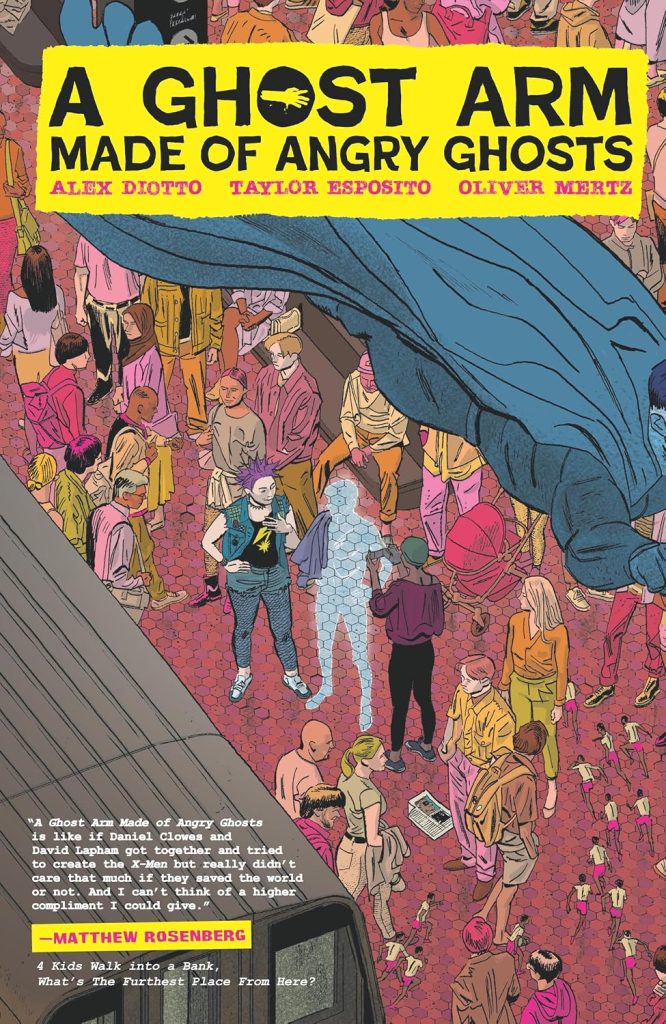
Ari lives in a society where the super-powered have been known for most of the 20th century. Rather than being acclaimed, as in most superhero stories, folk with super powers are just part of the scenery and few of them bother with costumes. Plus, a lot of the super powers are, well, crap. Ari’s father, for instance, is constantly dying of cancer, but when he actually dies he’s somehow revived, but in the same state. Ari himself turns invisible with little warning, shedding his skin as he does so. This is in 1996.
Oliver Mertz contrasts Ari’s mundane life with short interludes debunking what’s considered historical fact, and it should be said that what’s dull routine to Ari, such as choosing the weather, is all pretty fascinating stuff for readers. That’s all well and good, you, might think, but what does any of it have to do with a ghost arm made of angry ghosts? Well, that’s still a long way off, as we’ve a couple of deaths to experience first, and they have consequences.
Bringing the extraordinary down the level of the mundane is, as Matthew Rosenberg notes on a cover quote, something Daniel Clowes managed, but Mertz counters that with moments of memorable whimsy, just not when it comes to superpowers. Imagine a band of outlaws who’re also a great music band. It’s like something from Amelie, but it’s also just mentioned in passing during a six page trip to the Wild West of the late 1800s.
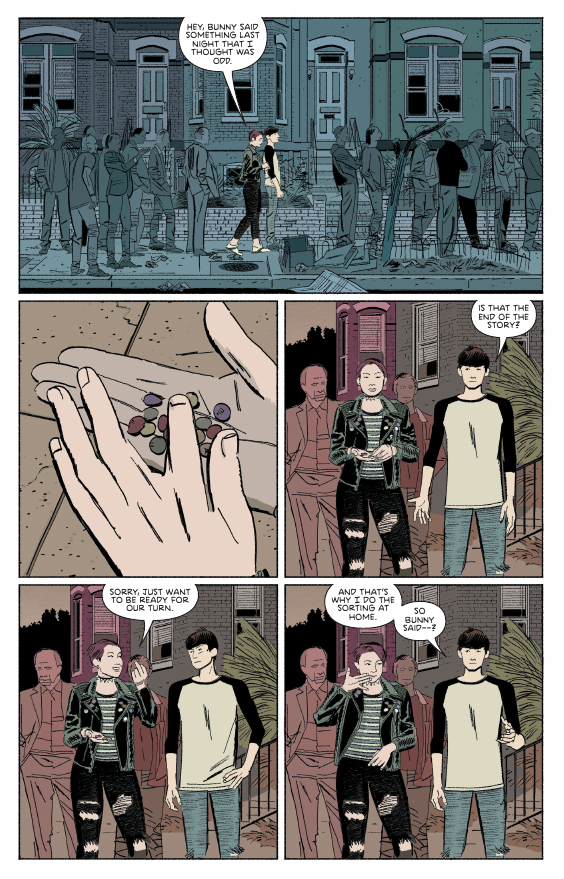
That sort of switch is par for the course, and artist Alex Diotto has a style equally suited to any genre necessary here. The ordinary moments are transmitted as such to the nth degree, Diotto deliberately understating throughout, while the moments of magic are more valuable for being generated from them. A varied cast adds to the visual appeal.
Rosenberg’s cover quote is no coincidence as Mertz works a very similar game, creating his timescale, then cutting it into bits to be rejoined jumping back and forth through time, which will frustrate the hell out of anyone who likes their stories linear. Stick with it, as there’s insight and worthwhile commentary even if Mertz’s film references aren’t as smart as he thinks, and the title is going to polarise. There’s no reason any project should have a literal title, and that intriguing title is going to pull readers in. They should be well satisfied, but should forget about the angry ghosts. Likewise, the ending won’t be for everyone. It pulls everything together, is true to the prevailing tone and to reality. Is it what we want, though?
However, for all the quibbles, Mertz and Diotto deliver something relatively original and worth revisiting.