Review by Lewis Savarese
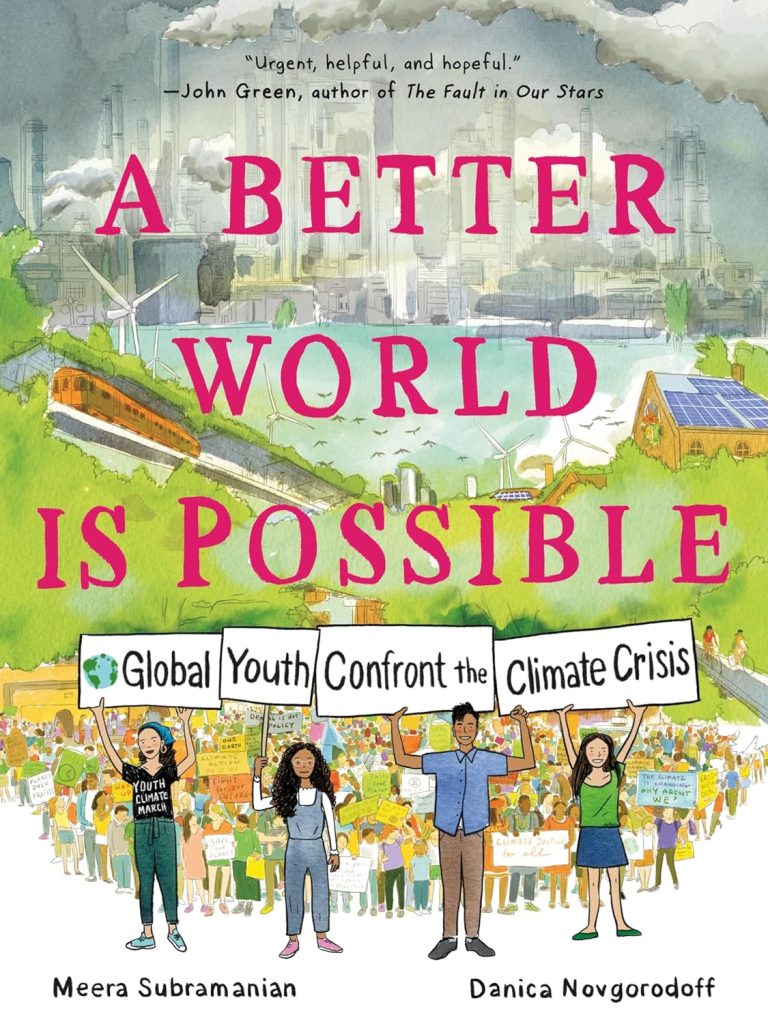
The existential threat of the ongoing climate crisis is difficult for most people to fathom. It’s a global ecological crisis not affecting us all equally and is denied outright by many. In our current media landscape, attempts to effectively communicate its severity to an audience often walk the tightrope of asserting either alarmist or pollyannish predictions. It can be a challenge to convey the various nuanced scientific and sociopolitical concepts, especially to laypersons. In A Better World Is Possible: Global Youth Confront the Climate Crisis, Meera Subramanian and Danica Novgorodoff integrate the didacticism inherent in a non-fiction comic about climate change with the personal testimonies of four youth climate activists. The passion these young activists exhibit, Novgorodoff’s evocative watercolor art, and Subramanian’s background as an environmental journalist coalesce into an accessible, mobilising book filled with hope for the future.
A Better World is Possible is structured around the 2019 climate strike at Battery Park in Lower Manhattan. At this rally we meet youth climate activists Xiye Bastida, Jamie Margolin, Rebeca Sabnam, and Shiv Soin, key organisers of the strike, in addition to illustrator Novgorodoff who was in attendance. As each is introduced, we learn how their life experiences impacted either directly or indirectly by the climate crisis, led them to climate activism. These personal narratives are thoroughly realised, each given ample page count. They are complimented by interludes where Subramanian pops in to explain relevant concepts, including the spread of wildfires like those across Jamie’s home state of Washington or environmental injustice Rebeca faced while growing up in Bangladesh. Subramanian and Novgorodoff manage to deftly organise these distinct narrative components, balancing weighty emotional and intellectual topics.
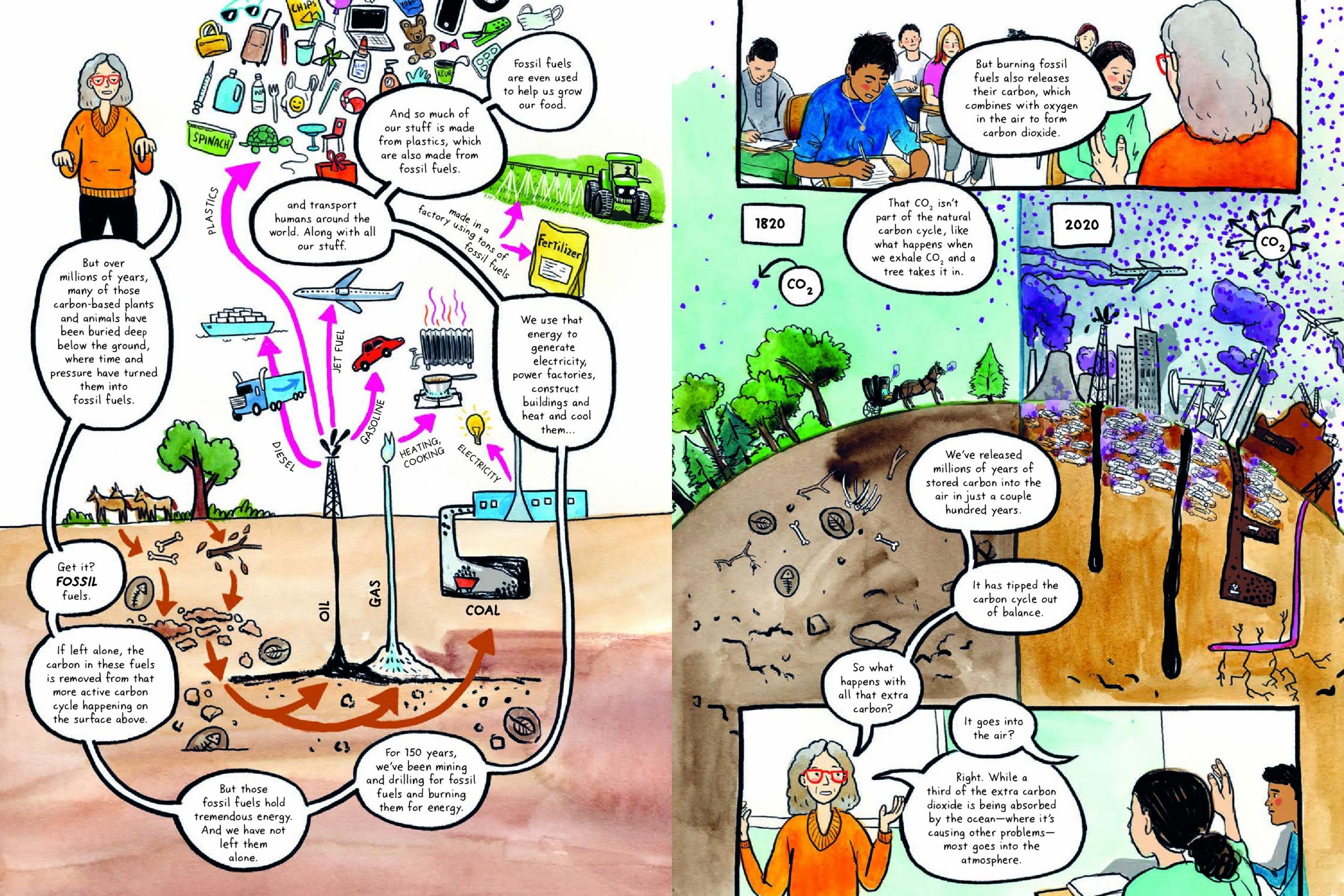
Novgorodoff’s watercolours seamlessly blend her fine art and cartooning sensibilities, and she peppers the book with vibrant landscapes like the Kentucky hills of her childhood. They serve as beautiful reminders of what these young activists are fighting to protect. On the text-heavy pages explaining the science behind the climate crisis, Novgorodoff understands the accompanying art must be simple yet visually striking. Her page layouts have an infographic quality, like the sample art depicting fossil fuel extraction. The content of the speech bubbles typify Subramanian’s excellent scientific communication, but the cutaway art that shows buried fossil fuels being extracted to produce everything from fertilizer to plastics neatly reveals how the climate crisis pervades our daily life. One of the few missteps in this book geared towards secondary school age children is a colour-coded timeline of climate events that spans six pages. The blocks of text stretch on for entirely too long and belabor the point that the climate crisis is manmade. A younger reader might find this section as engaging as their oft neglected textbooks.
For their final interlude, Subramaian and Novgorodoff catalogue the many possible solutions to the climate crisis. They discuss big picture changes such as fossil fuel divestment and reimagining land use alongside the small scale, individual changes people can make like composting or replacing oil furnaces with heat pumps. The variety of solutions can feel overwhelming, but it’s hoped some inspire readers into action. Throughout the book, as we return to the 2019 climate strike in Battery Park we catch a glimpse of Novgorodoff’s infant child lying in a buggy adorned with signs that read ”In 2050 I Will Be 30 Years Old.” A Better World is Possible is one step towards a 2050 where climate justice prevailed.