Review by Frank Plowright
How many people know the world’s longest known migration is endured by a Bar-Tailed Godwit named Miranda, tracked for over seven thousand miles across the Pacific ocean. It so impressed her parents that they named Miranda after it. Their admiration stems from a competitive athletic nature, described by Miranda as being “finish line junkies”. That all comes to an end with her mother’s back surgery, and among the projects postponed is an endurance canoe trip Miranda’s mother was planning to take with Miranda’s grandfather.
As seen over the opening section, Miranda may be an overachiever, but as drawn by Hanna Schroy she never seems happy. She strides through rooms with a grumpy expression, argues with her sister and is only seen smiling for photographs representing victories. She presents the worth of classmates via their grade point averages and social achievements and ranks herself against that, fearing mediocrity. It’s not a path to contentment.
Finish Lines clocks in at over 350 pages, which allows Sarah Broyles to greatly over-extend the extent of Miranda’s dissatisfaction and insecurities. Even references to the beginning of addiction seem trivially introduced, although it’s good to see any mention of addiction issues in a young adult graphic novel, and they register better when seen later.
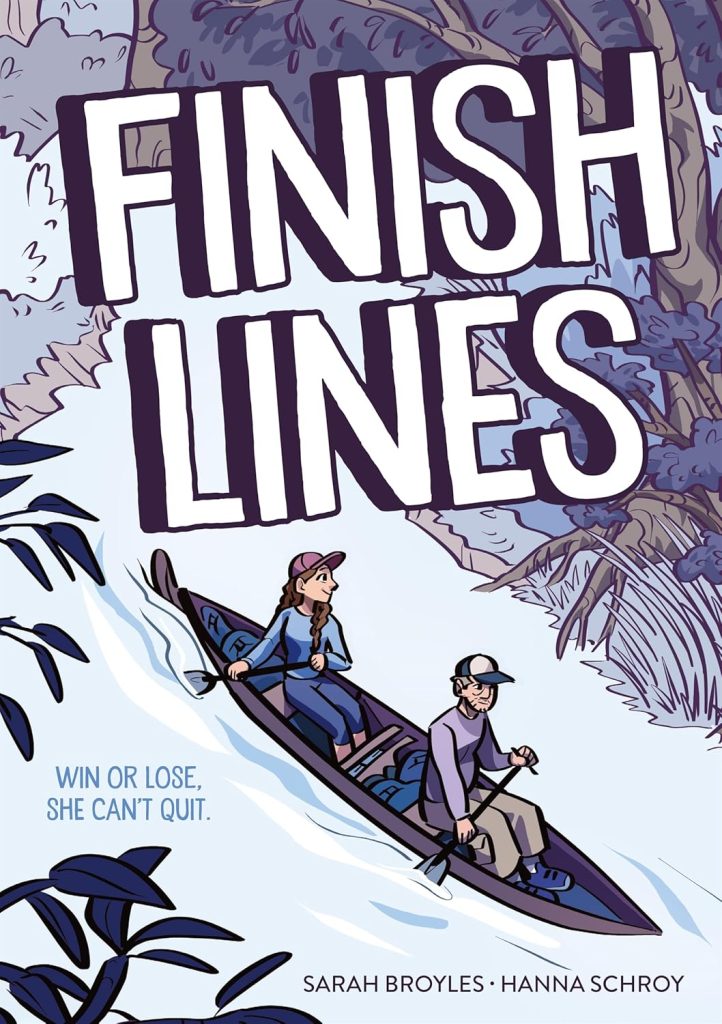
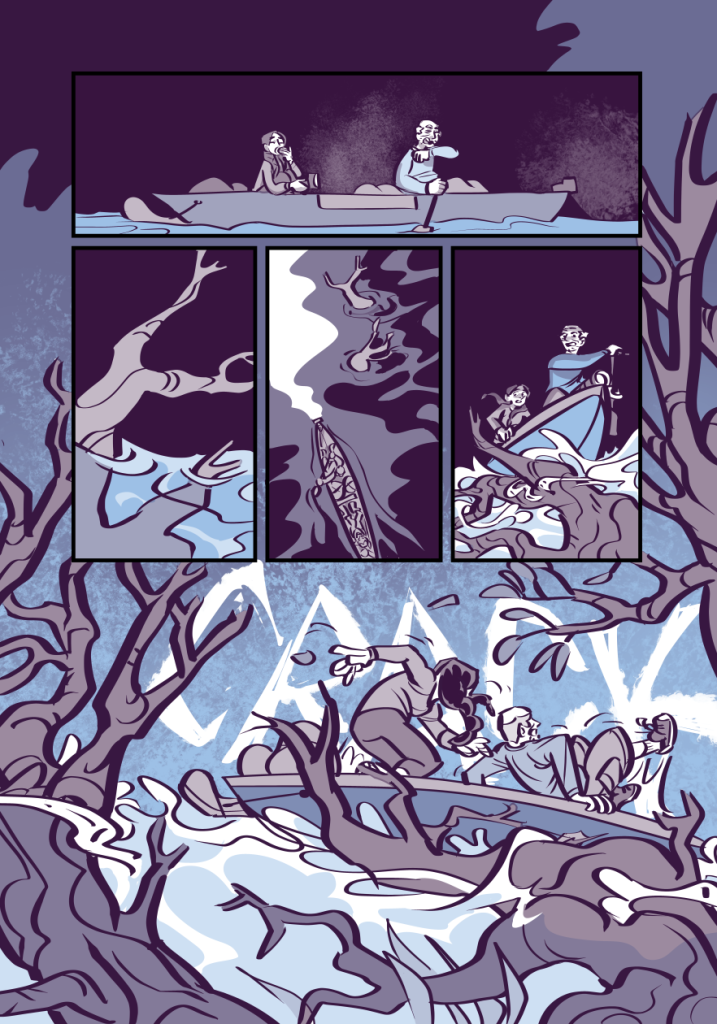
The cover shows Miranda and her grandfather on the river, and when that comes into play Finish Lines becomes part instruction manual as procedures and pitfalls are explained. Once that’s dealt with both Miranda and the story begin to open up, and both are better for it. Schroy contrasts the serenity of the river with the pressures at school extremely well, opening the panels and viewing from distance, and as seen by the sample art, the dangers of a fast flowing river are dynamically depicted.
A path of Miranda gradually realising what’s important to her and the downsides of a competitive nature will be apparent to older teenage readers, but could prompt them to recognise danger signs in their own life. However, perhaps in reflection of condition, there’s a lot of repetition and going around in circles, more understandable in the case of Miranda’s mother whose world has been removed. It’s a case of being true to life at the cost of shedding readers and negating the effect of the good advice provided.
It’s beyond halfway when the practice runs end and the canoe trip begins, and from there Finish Lines picks up considerably. The dangers and delights of canoeing are well illustrated by Schroy in wordless sequences, and the bonding between Miranda and her grandfather during hardship and strains has greater meaning. There are highs here, but Finish Lines is a case where shorter would have been better.