Review by Frank Plowright
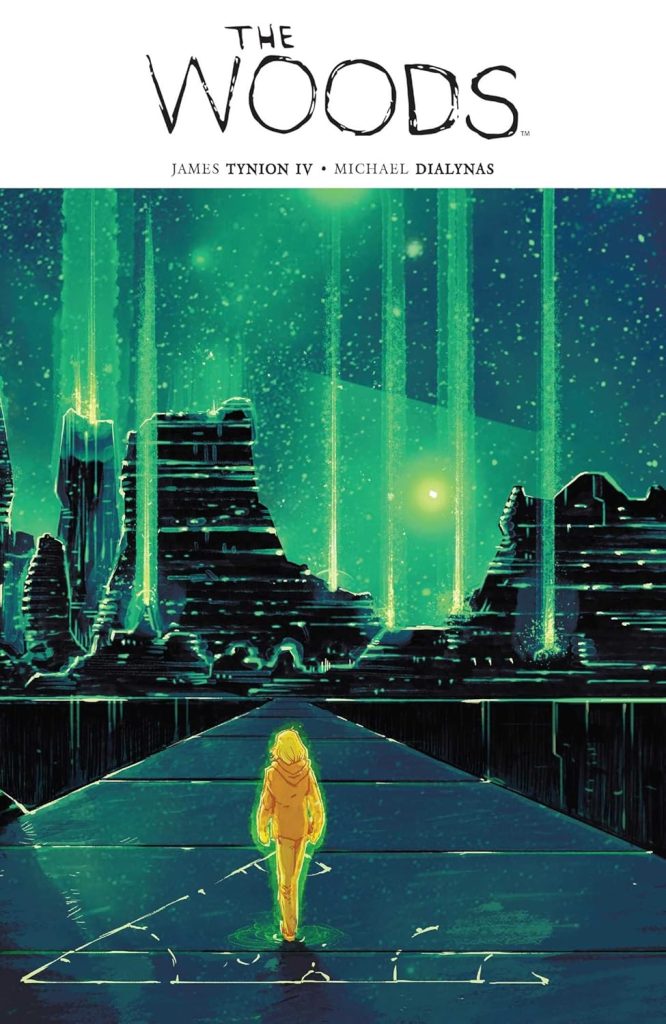
As The Black City opens, James Tynion IV introduces a new element to The Woods. We know a Wisconsin high school has been transported to an alien planet, but the residents of Milwaukie don’t have a clue about what’s happened. It’s been two years since hundreds of sons and daughters vanished, and over a few well written starting pages we meet parents previously only seen in flashbacks. Some believe their children are still alive somewhere, and some are right. However, Tynion has considerably whittled down the primary cast that’s sustained The Woods to date, two seemingly departing in The Lost. New characters have been introduced, with the most prominent being Sander, of a similar age and outlook to those remaining.
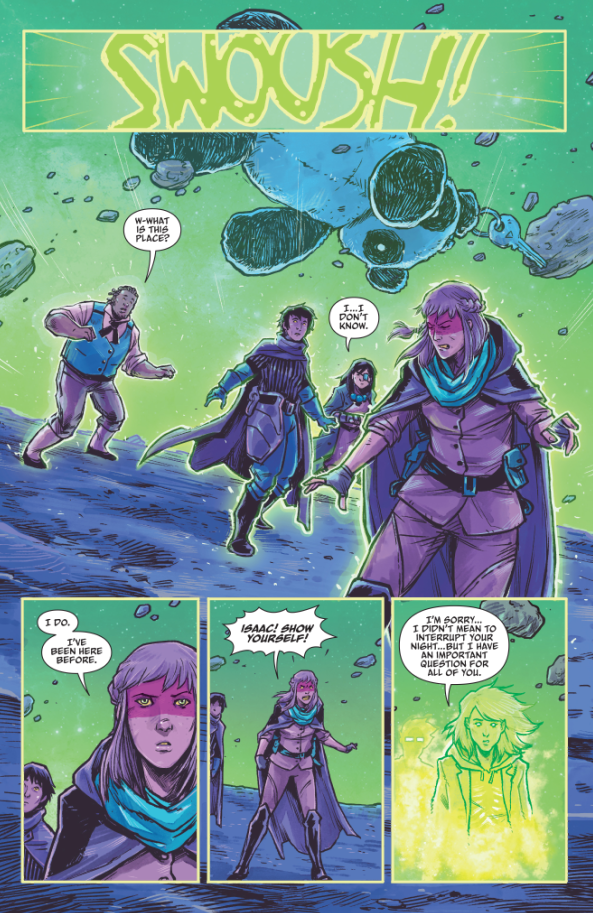
It’s also been a year since the events of the previous book, a year during which Isaac Andrews has been practicing with the powers he’s seemingly inherited from a dead friend, who, it’s noted, has improved his personality since death. Isaac thinks he’s found a way home. It involves a place called the Black City. No visitor to it has ever been seen again. Is that a sign of hope?
A focus on back home permeates the entire book. It’s there in the aspiration of the trapped teenagers, and the parents aren’t just seen in the opening chapter. Their introduction jolts the series when needed. It’s always been a character study, and while we’ve seen what people are like, the continued reference to the parents they left behind bolsters their personalities. Marcia Jacobs, mother to the irrevocably changed Karen is the most seen.
Drawing a convincing reality back on Earth comes easy to Michael Dialynas, because as previously noted, creatures apart, if colour weren’t added to his line art it could pass for reality most of the time. His versions of the parents are credible older versions of their children down to body types.
Before The Black City ends Tynion lays out solutions to the remaining mysteries, explaining what the wooded planet is now, and what its previous purpose was. He nevertheless keeps two major surprises for the final pages leading into The Final War. The mood of this volume is different from what’s come before, and it extends beyond the arrival of hope. The woods and their inhabitants play barely any part, and on the alien planet at least the series is reduced to a core cast. Although some transformations are more extreme than previously, there’s no emotional contrivance here, and change is good, meaning a strong volume.
This is combined with the two following volumes as the third Yearbook Edition, or the whole series is available collected as one bulky paperback just titled The Woods.