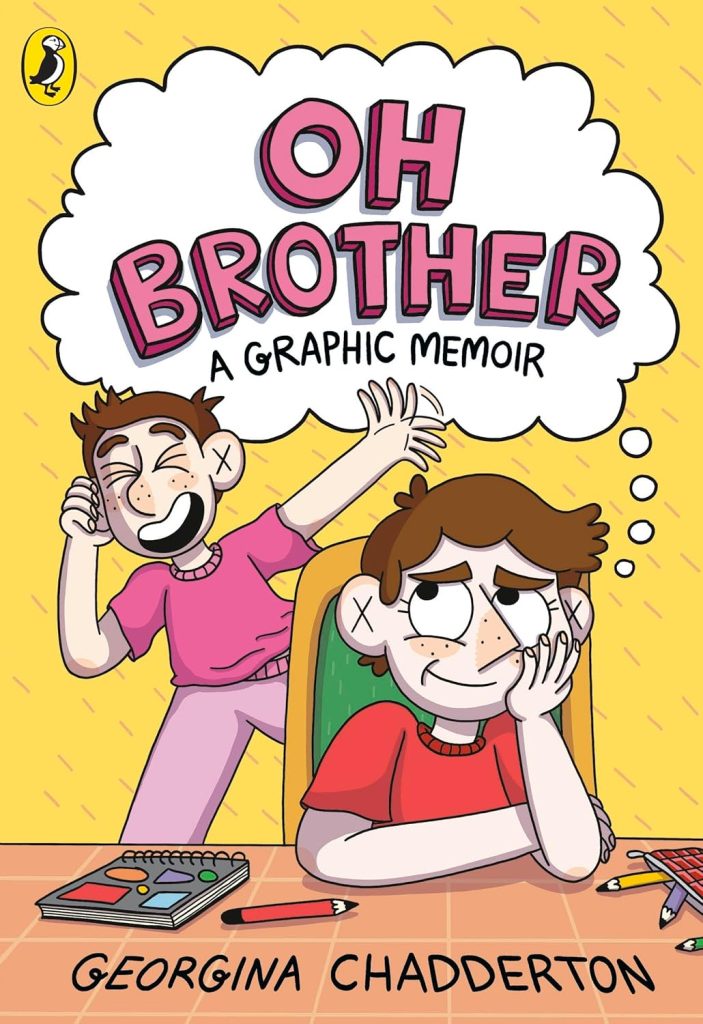
Review by Ian Keogh
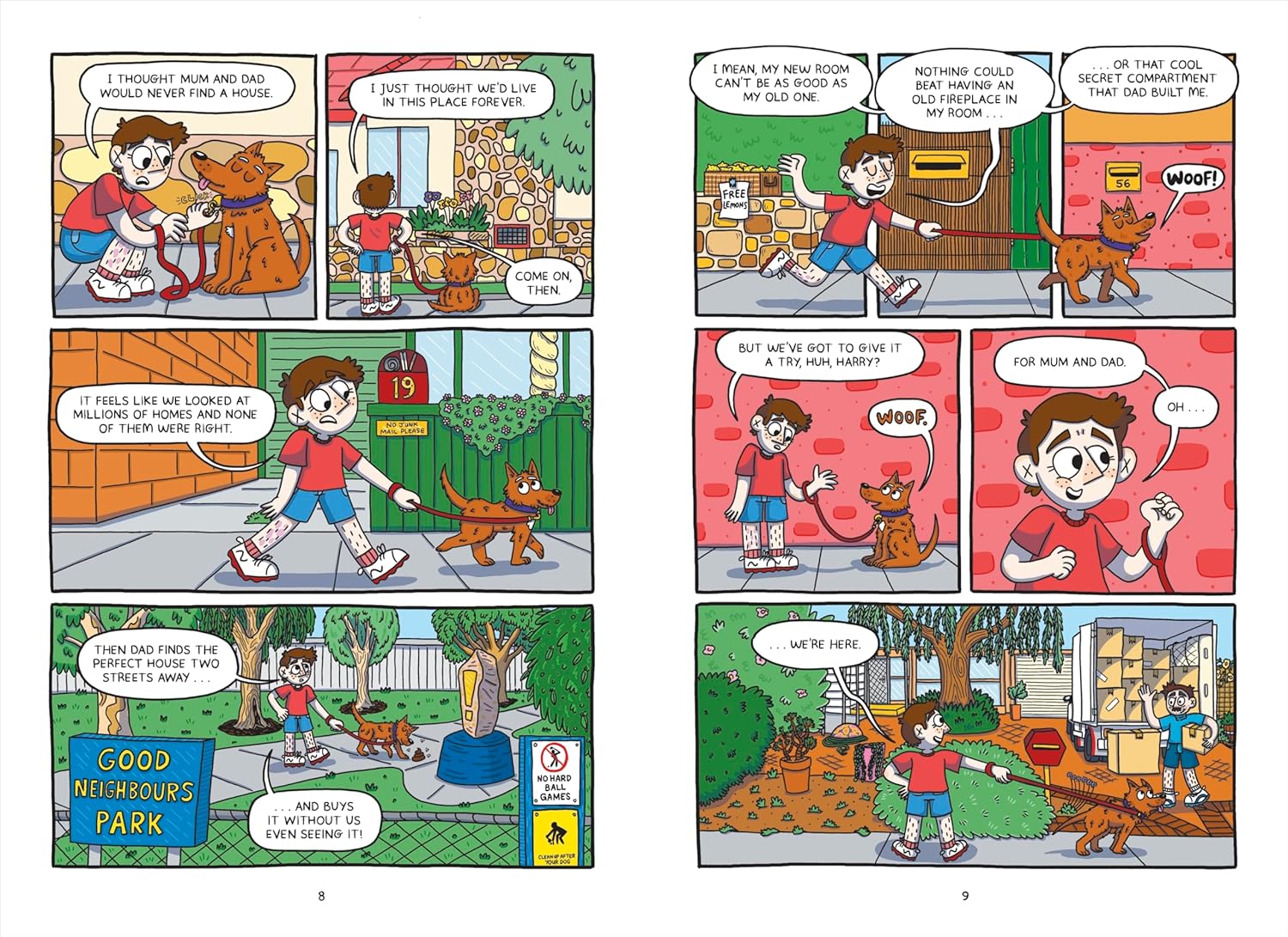
Georgina Chadderton grew up with a brother who has autism, and Oh Brother is a memoir of her youth in the Australian city of Adelaide in the early 2000s, which picks up with the family moving into a new house and settling in.
An introductory scene shows the siblings’ interaction before pin-up pages featuring each individually along with pertinent information about them, such as the creator always being called Gina during childhood. It’s established early how Rob’s autism impacts on the household in various ways. Because he’s unable to treat objects delicately, the family don’t have a DVD player, but still use VHS videos, and some doors have to be fitted with padlocks. Rob communicates with sounds and signs, but despite also experiencing learning difficulties he’s able to work systems out to get what he wants. However, there’s no accompanying understanding of boundaries or the impact of his behaviour on others. If he wants milk he’ll figure out how to open the fridge, but if he then doesn’t like it he’ll spit the milk back into the carton. He also seems capable of deliberate pettiness.
Chadderton delivers much of Oh Brother almost as a comedy featuring a puzzle-loving family constantly being tested to devise solutions to new problems as Rob figures ways around previous solutions. While Rob is featured strongly, he’s not the exclusive focus. Gina’s already noted an aversion to change, and she’s starting a new school. Although not mentioned, some behaviours regarding comfort and patterns indicate she’s at a lesser stage on the autism scale or has some other form of neuro-divergency.
A flat and two-dimensional style is applied to the cartooning, which doesn’t allow for much in the way of decoration, but within the style the surroundings and activities are well defined. People all have massive eyes, which can be distracting even if it’s consistent throughout, but the most important aspect, Rob’s behaviour, transmits well.
The readers at whom Oh Brother is aimed are at an age where non-conforming behaviour is puzzling at the very least, and possibly upsetting. They’ll benefit from Chadderton’s comprehensive understanding of autism and the way her younger self describes challenges faced by anyone with the condition, and their family. It’s a constantly evolving process, and one without end. Oh Brother, though does have an ending, and Chatterton knows readers are invested and likely to want an update on how life has been for Rob since, which is duly provided.