Review by Frank Plowright
Cuba is touchy subject for many Americans, particularly those of Cuban descent living in Florida, the nearest US state. Since the 1959 revolution orchestrated by Fidel Castro he and his Communist successors have run the island country. Before then it was a right wing dictatorial state heavily backed by the USA, and the private playground of US gangsters. The views of Cubans who thrived under that regime and subsequently fled when it was overthrown have been passed down generations and shaped the US attitude to Cuba ever since. Under both regimes ordinary people suffered.
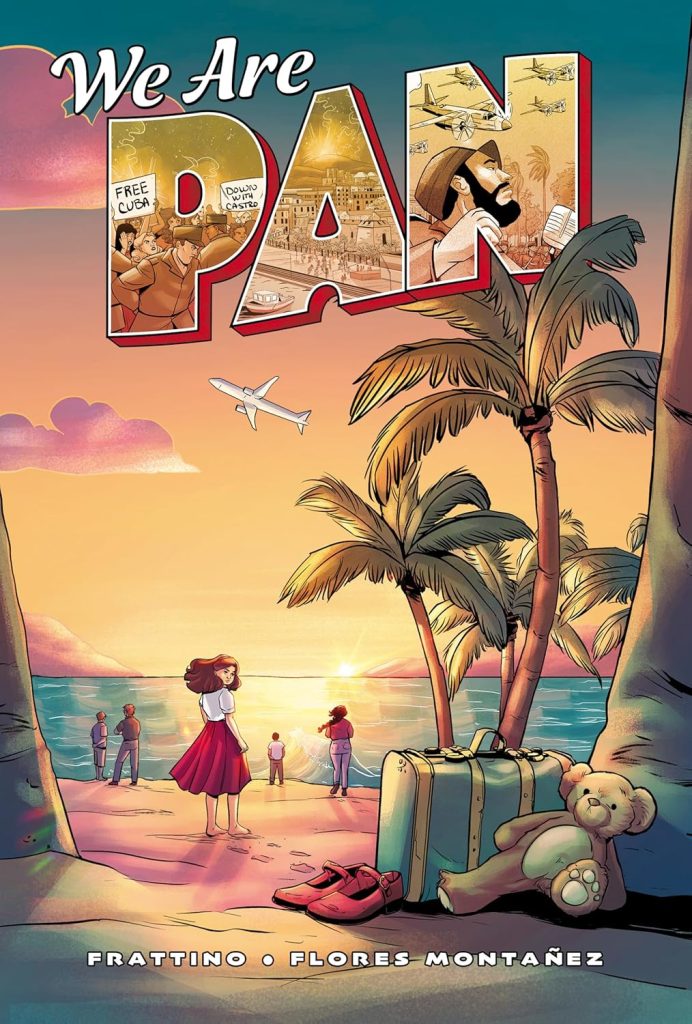
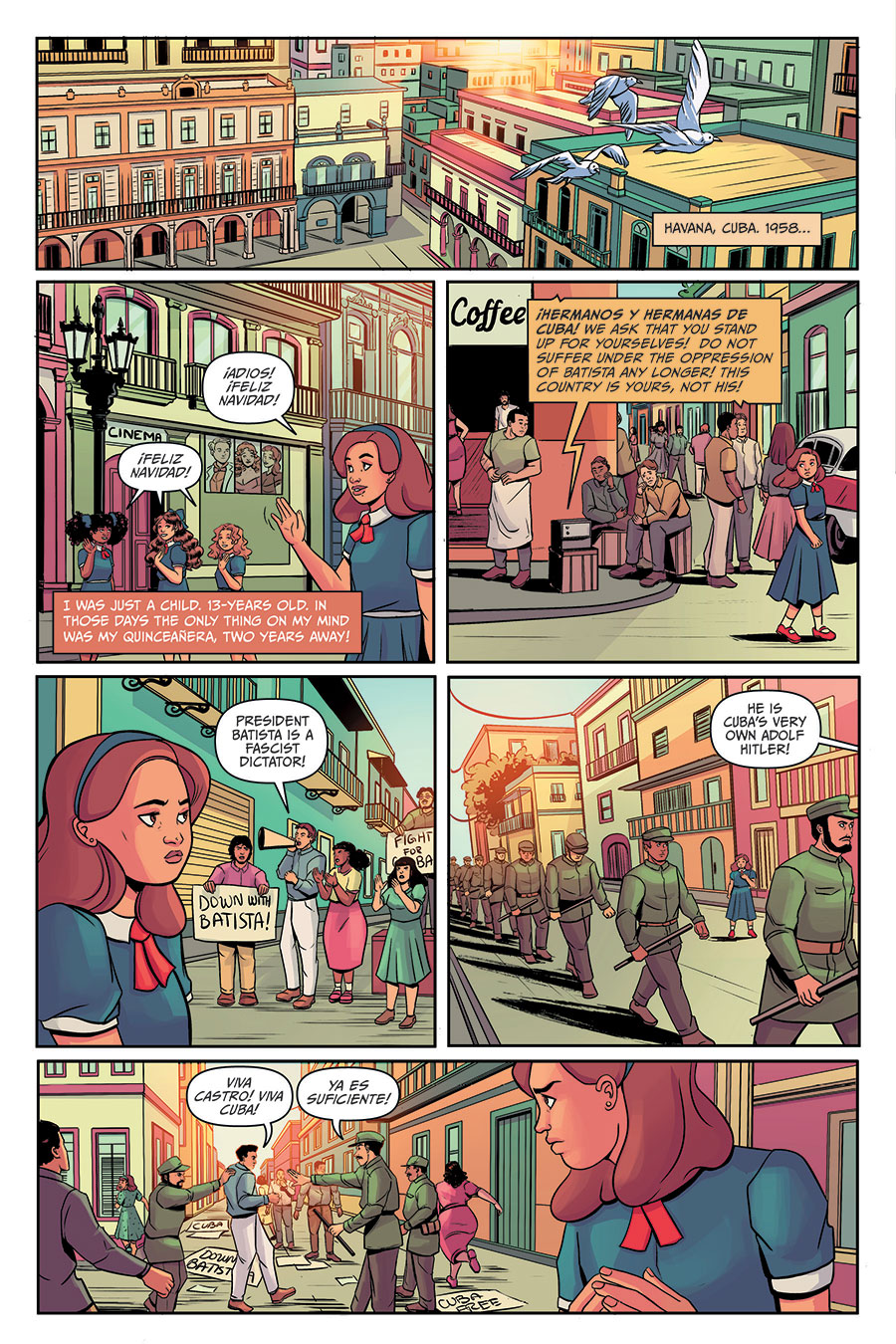
We are Pan picks up in the months before the revolution takes hold, and personifies subsequent events via a cast of characters representing life before and after the revolution. Andre Frattino’s ultimate purpose is to show how lives changed, but the day to day activities of the featured cast, interrupted by snippets of political discussion, occupy a quarter of the book, and Frattino’s cross-section fails to cover all bases. Those on the cusp of adulthood find their lives disrupted, and we see the gangsters enjoying themselves, but anyone with a legitimate gripe against the Cuban regime as it was in 1958 is relegated to a secondary character and dismissed by the more fortunate as misguided. It seems an inherent bias when plenty of scenes in the remainder of the book spotlight the score-settling and intimidation carried out by the Castro regime, but what’s not clear at this point is why those particular children are the focus.
Yasmín Flores Montañez draws the people well and ensures they can be distinguished, but their surroundings are so frequently without character. Unless a crowd is needed the streets are empty and residencies lack any indication of homely touches beyond furniture
Two-thirds of the way through the stories of the assorted young people join together as they attempt to leave Cuba via a plan hatched in Florida to set up a Cuban school there, where the pupils were colloquially known as Pedro Pans. We are Pan’s final third improves for moving at greater pace and induces greater sympathy for showing children without accompanying parents rather than relatively privileged family lives. It also becomes clear that the purpose is to tell the stories of those who left Cuba as part of this programme between 1960 and 1962.
Greater clarity earlier would have served Frattino far better, beginning perhaps with something setting the scene in the early 1960s rather than from decades later, leading to entirely different expectations. There’s a really interesting backstory behind We are Pan, but it takes too long to come into focus.