Review by Ian Keogh
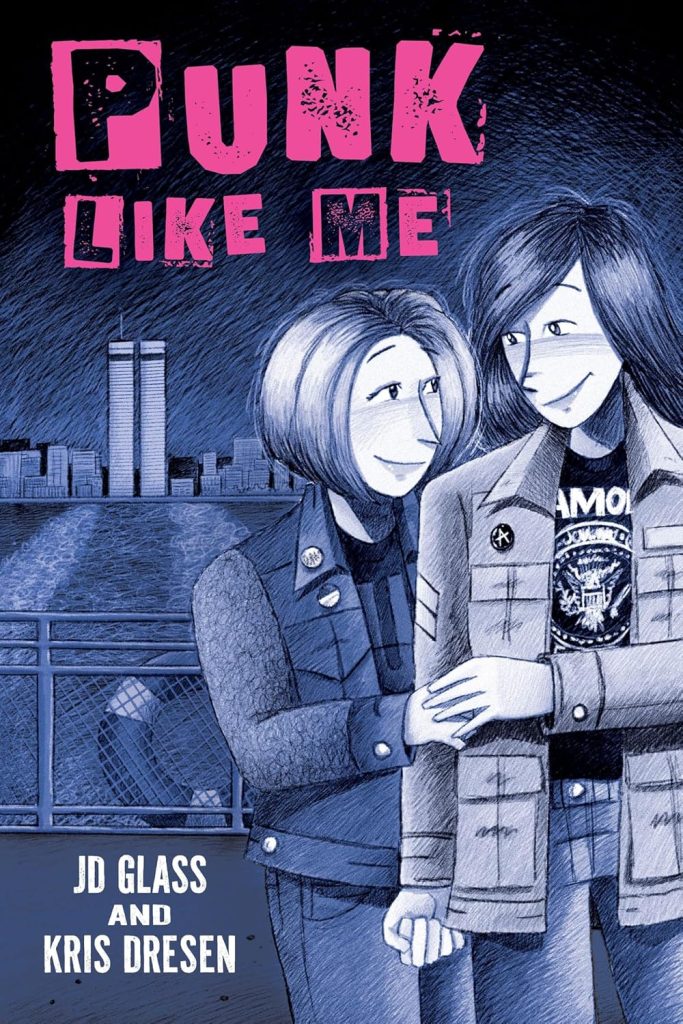
In adapting her own novel, JD Glass starts in the present before flashing back to the personal growth guitarist Nina experiences over the years. It might seem a well worn cliché, but given the following content it’s also a form of comfort blanket reinforcing that things turned out okay for Nina in the end.
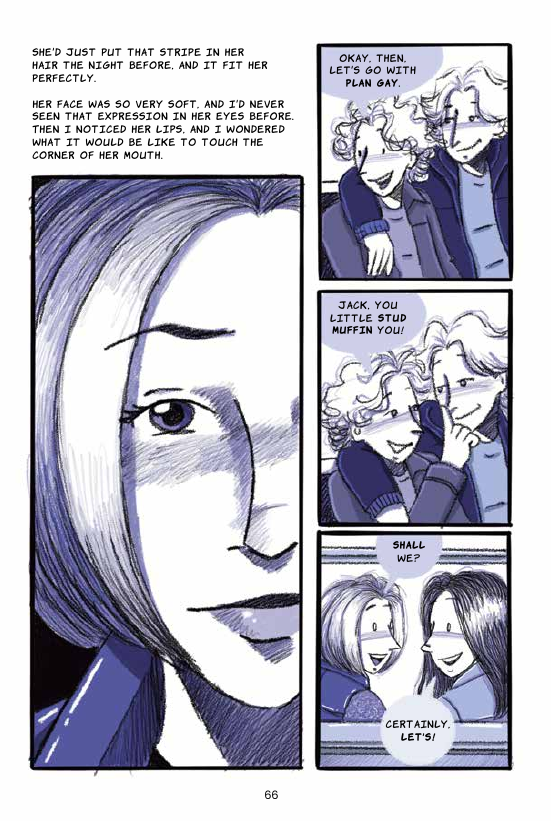
The main thrust begins in the 1980s with Nina in her later high school years only just discovering she’s attracted to other girls. Glass explores this during lengthy scenes, sensitively scattering moments of awakening between everyday activities and giving them the prominence needed, accompanied by inventively diverting dialogue. Kris Dresen time and again shifts the art with the mood, highlighting the important aspect while ordinary activities occur simultaneously. The expressive portrait accompanying the text on the sample page provides a good example.
Glass has a facility for investing readers in small dramatic moments of choice, such as whether Nina should see a show or obey the parental curfew, while Dresen gives weight to scenes that would seem trivial to observers, yet which hold a powerful emotional undercurrent. The sheer euphoria of first love is exuberantly captured in description and illustration, as is the overhanging tension of bigoted parents. The romanticism of Nina and her first girlfriend identifying with Maggie and Hopey from the Love and Rockets comics, and chapter titles are extra easter eggs supplied for music and film fans, although punk is surprisingly absent. Indeed, given the title, one might expect punk as both music and attitude to have a greater prominence than the opening few pages and the shift back to the present at the end.
Possibly because Glass is primarily a prose writer, there are places where she overwrites for comics. As long as Nina is finding her way this doesn’t particularly affect the pacing, but when all hell breaks loose it does. A multi-page parental lecture with a prescriptive list of demands lacks the required emphasis for being too long, as does a subsequent comforting conversation. A following scene where a point is forcefully made, though, unfolds with admirable brevity, yet saying everything that’s needed.
As coming of ages stories go, Punk Like Me resonates, and should be a comfort to gay teenage girls with parents who can’t understand.