Review by Frank Plowright
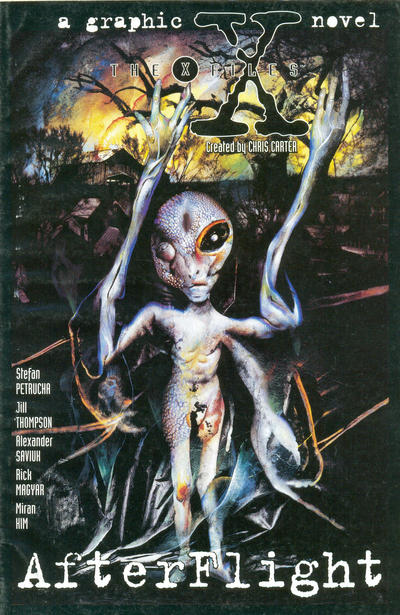
A recurring theme to Stefan Petrucha’s run on The X-Files is the fragility of memory, given his most explicit and poignant treatment in Afterflight and its focus on elderly inventor Professor Wilson afflicted by dementia. He’s convinced aliens are spying on the contents of his barn, and while reality and hallucination blur in his mind, there is a certainty about men in black suits with shades hanging about the property.
We’re also shown that while his now middle-aged daughter loves and cares for him there are others seemingly intent on manipulating him, possibly via his medicine.
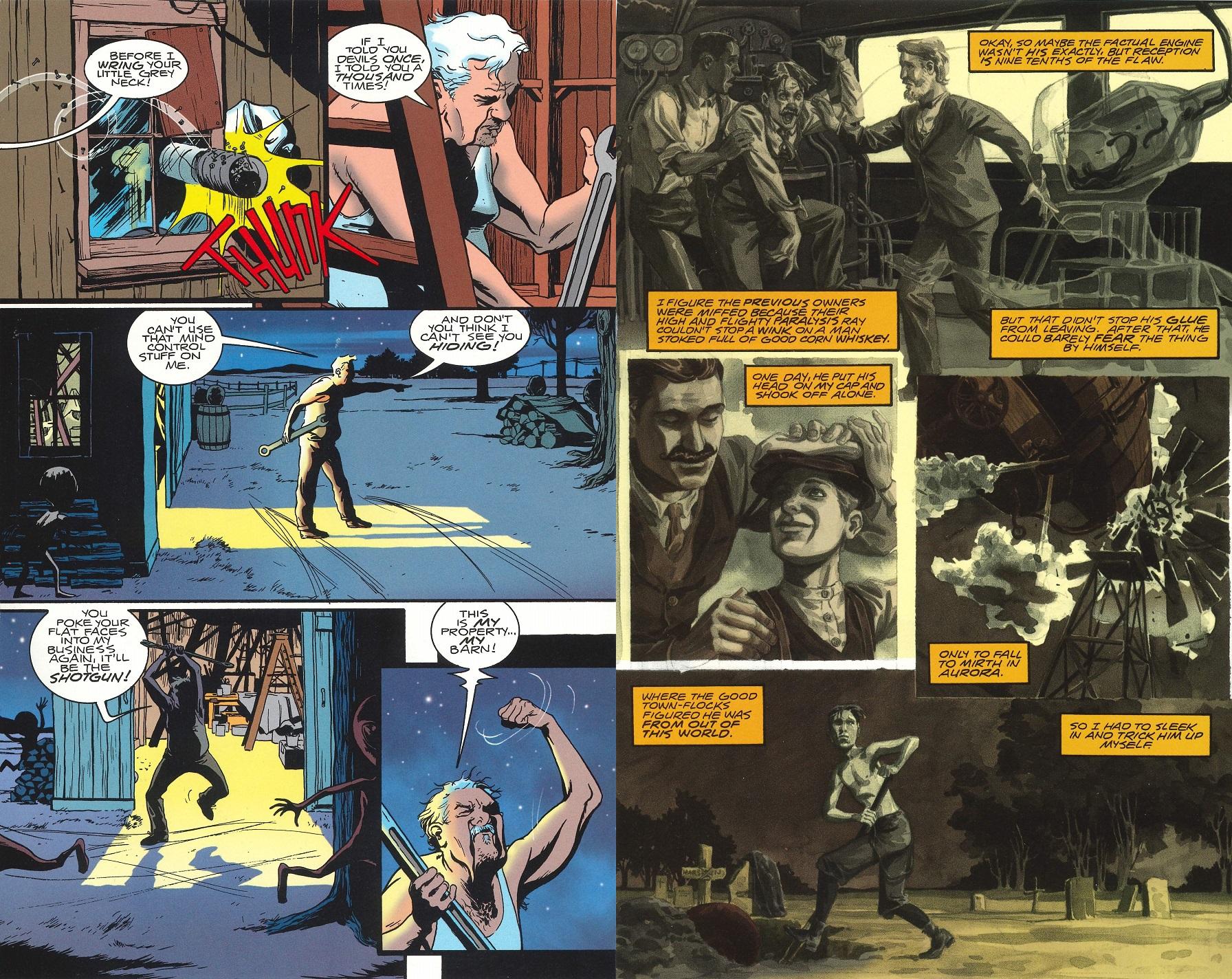
Artistically, this is a strange combination with individual credits not broken down. There’s considerable attractive delicacy to the artwork on present day sequences at the start, which fits the style of Jill Thompson. The faces of actors Gillian Anderson and David Duchovny, however, look in many cases to be drawn by someone else, on a couple of occasions quite crudely. Whether this is the contribution of the other credited artist Alexander Saviuk is uncertain. He could also be the artist responsible for the sepia painted flashback sequences, which are well composed, but there’s a stiffness to some figures. From midway through, there are more pages featuring less embellishment where the story is told, but functionally rather than decoratively.
Petrucha keeps the location relatively confined, everything taking place within a couple of miles radius of Professor Wilson’s barn. He generates considerable sympathy, not just for the incapacitated Wilson, but for the pressures on his daughter seeing her father’s condition slowly deteriorate, and some villains at least are apparent.
What differs Afterflight from Petrucha’s other X-Files work is definitive answers provided for readers. Mulder and Scully remain in the dark, but we’ve seen a truth. Were the art more consistent this would be Petrucha’s crowning glory on X-Files.