Review by Solomon Yeoh
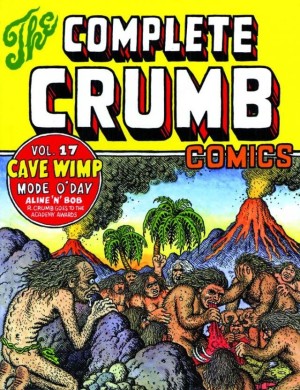
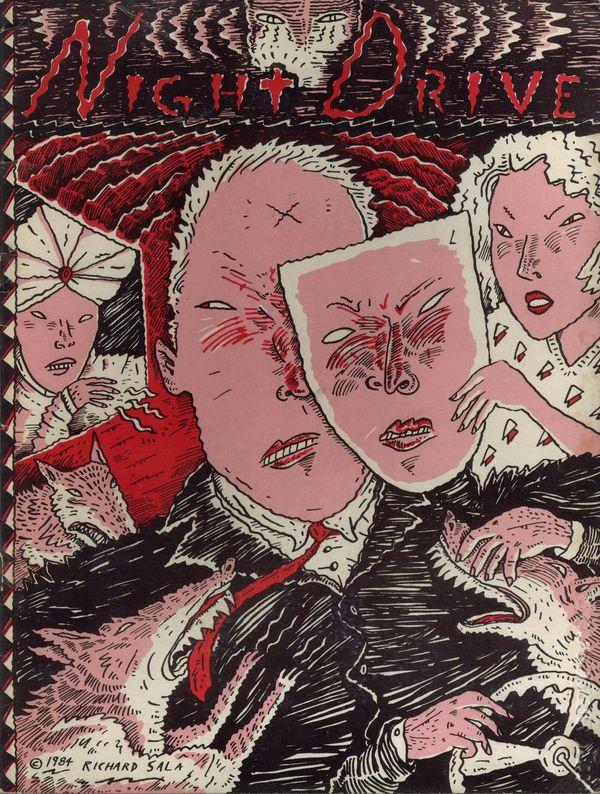
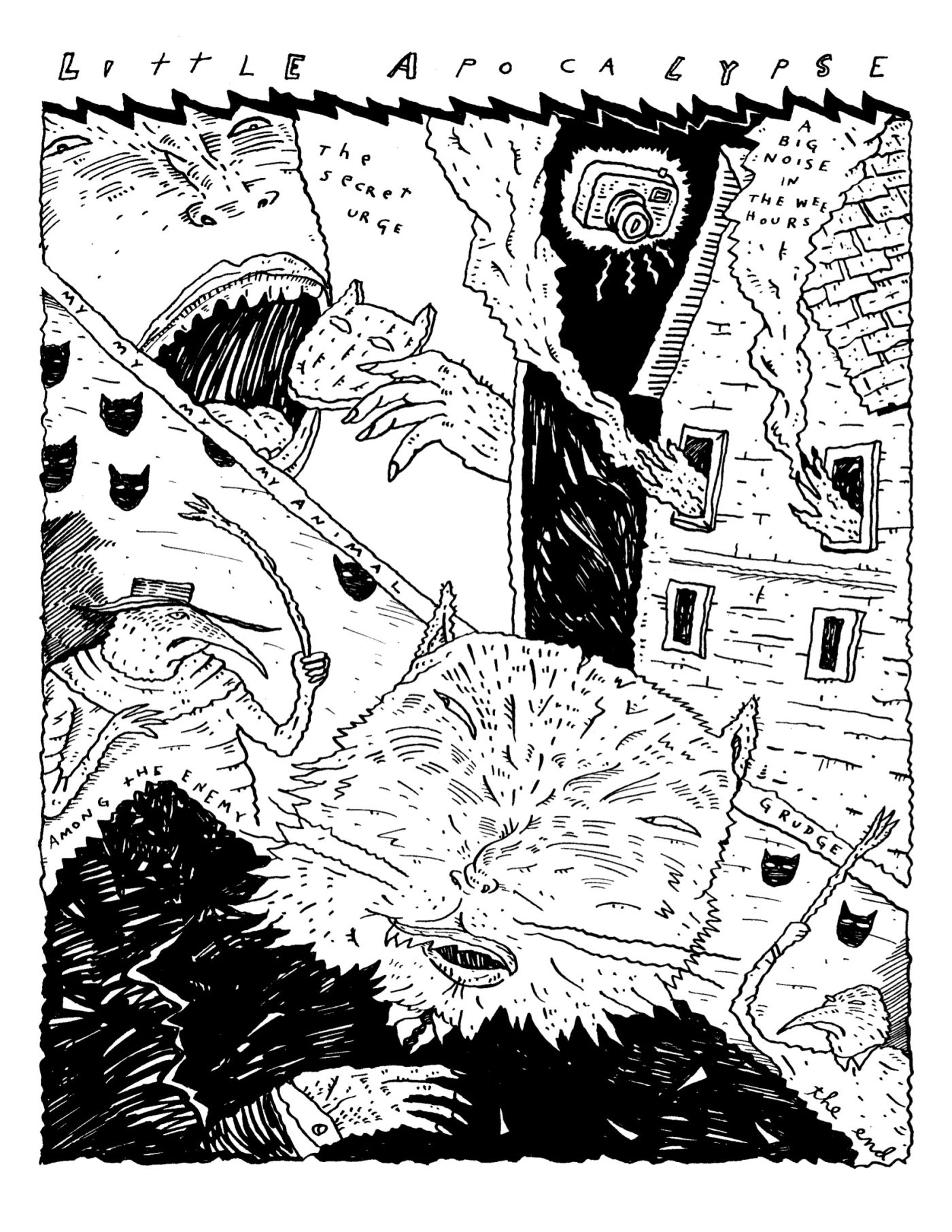
Night Drive is the comic strip that propelled prolific artist Richard Sala into recognition. He noted it was an unabashed attempt to “try to get other people to give me illustration work”, but it’s become a cult favourite. Long out of print since its initial run, this collection of vignettes is some of the more expressive work emanating from the 1980s underground culture. It features scratchy, abstract lines with excessive shading, reminiscent of some of Robert Crumb’s earlier work. However, none of Crumb’s anatomy rubbed off on Sala who instead opted to draw very nonrepresentational figures in a style that’s deceptively simple but also impossible to replicate.
Sala’s atmospheric artwork is astounding, but the written work is less than engaging. It comes off as overly pretentious and intentionally vague, resulting in a disconnect with the stories at play in these pages. One-page strips such as ‘Qualms in the Night’ and ‘The Twinge’ are especially cryptic, leaving readers confused and frustrated. Notwithstanding, the eponymous story ‘Night Drive’ is drawn poetry. Sala’s layouts are stunning, conveying motion and speed effortlessly, while the lettering he employs is also excellent, with the letters blending with the art to create an powerful canvas.
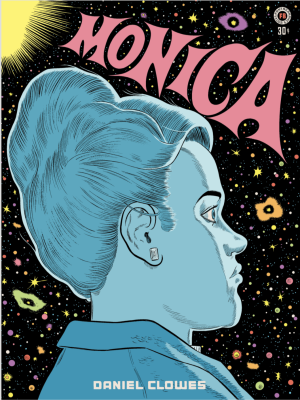
Perhaps the best achieved aspect of this collection is the wealth of interviews and essays included alongside the comics. An emotional obituary written by Dana Marie Andra tugs at the heartstrings, while the Sala interview is illuminating and contains some keys to unlock the esoteric comics. The highlight of the written sections is the afterword by Daniel Clowes, who is also the collection’s designer. Clowes reflects on his friendship with Sala and details the many changes that Sala underwent within their relationship, which makes for heavy but beautiful reading
The design of the collection itself is sleek and the interviews and various writings make the book a worthy purchase. With reservations for a general audience, this is an outstanding book for any long-time fan of Sala’s or for any interested in Sala’s work.