Review by Ian Keogh
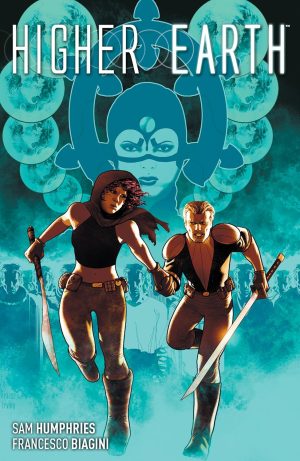
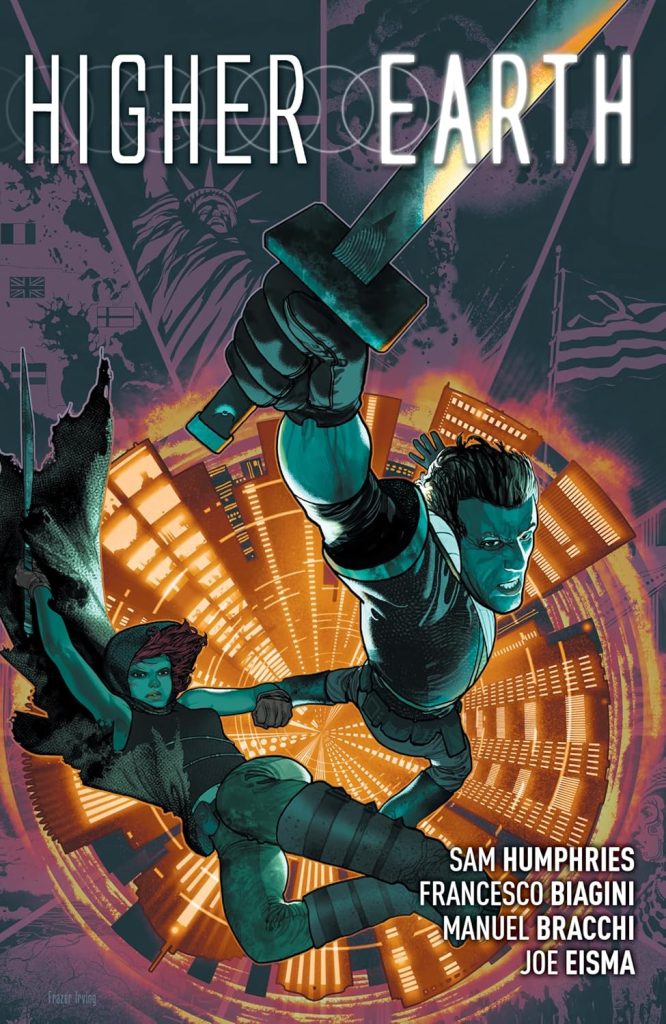
Higher Earth is Sam Humphries exploring the idea of a multiverse. Earth exists in many different forms, and each is connected to another by means of a wormhole, manifesting as a bright hole in the sky. According to records Heidi and her partner Jed appear to be multiversal fugitives, hiding out on a planet full of junk, but there have been changes since those records were created. She’s resourceful in surviving her environment, but Rex who arrives to pick her up is even more so, and so begins a tour of assorted Earths.
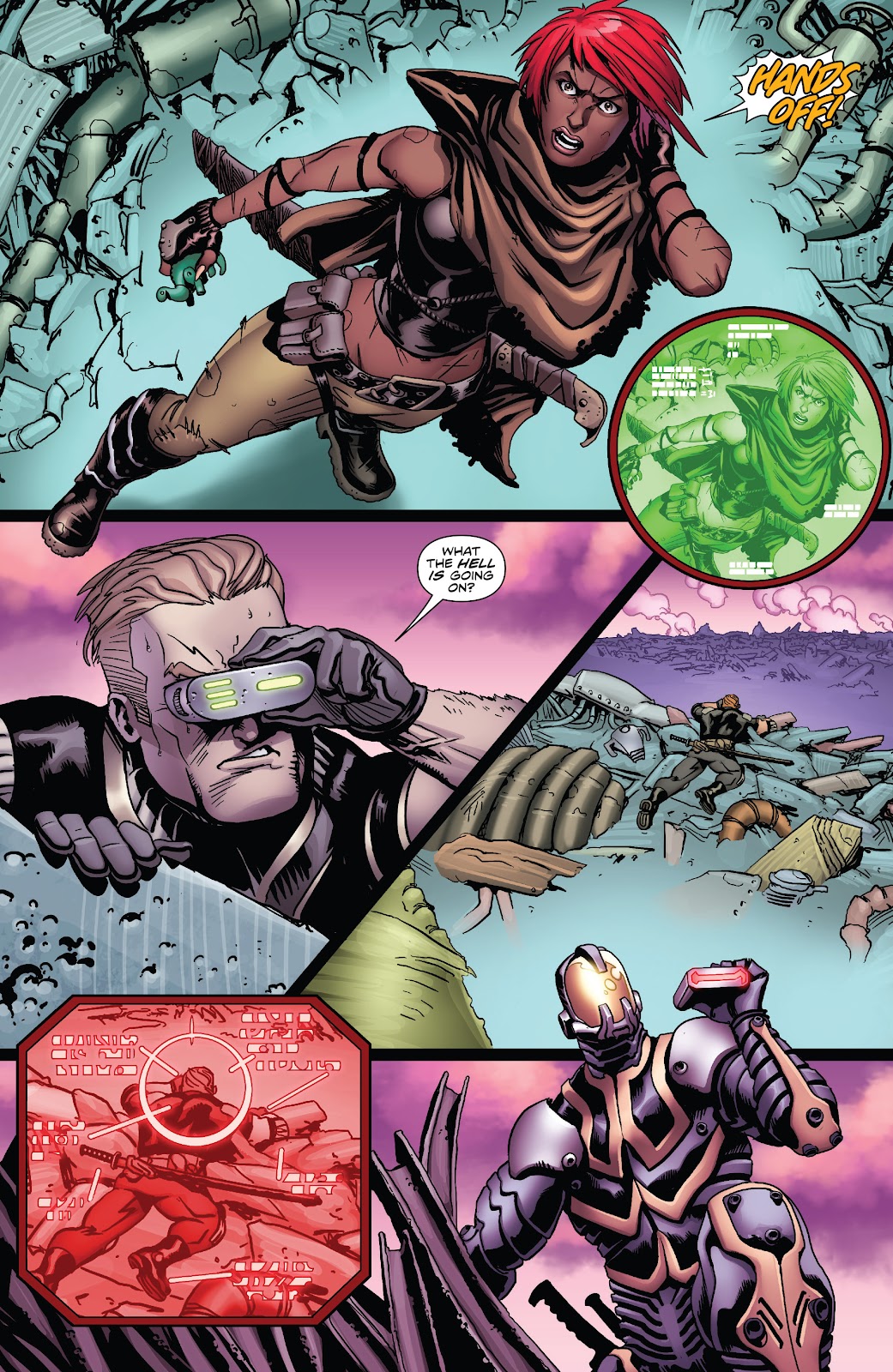
This is the future and Francesco Biagini makes it look a grim place. Cybernetic technology is near universal, but Biagini’s version is patchwork, cobbled together making it look as if people have operated on themselves, while forms of alien life are commonplace. The action rush from one hostile environment to the next is very reminiscent of UK serials running in 2000AD, and Biagini brings the assorted new environments to life in an energetic action style, while his people are almost all grimacing in anger. These aren’t pleasant looking places, but they’re intended as hostile.
It’s over halfway before Humphries and Biagini move beyond imaginatively choreographed chase sequences. A few hints have been dropped, both about Heidi’s capabilities and an Earth exploiting all others, the higher Earth. Humphries has a message about not caring for our future, but it’s buried within the action, and what he’s proved more prescient about in the short term is an unfortunate echo of present times, as armoured stormtroopers seek out illegal aliens and aren’t gentle when dealing with them.
With the scenario laid out and the possibilities of the future explained, any mystery about Heidi is likely to evaporate before the revelation leading into Higher Earth Vol. 2, but crucially enough groundwork has now been laid to ensure fans of SF action thrillers will want more.
Before heading there, though, there’s a well written final chapter building on what’s been revealed. Due to the prevalence of cloning, Humphries ensures we’re not certain as to whose story is being told set in a small isolated community. Joe Eisma’s art differentiates the world, his people stiffer, and his storytelling more restrained than Biagini, but suitable for what’s being revealed.