Review by Frank Plowright
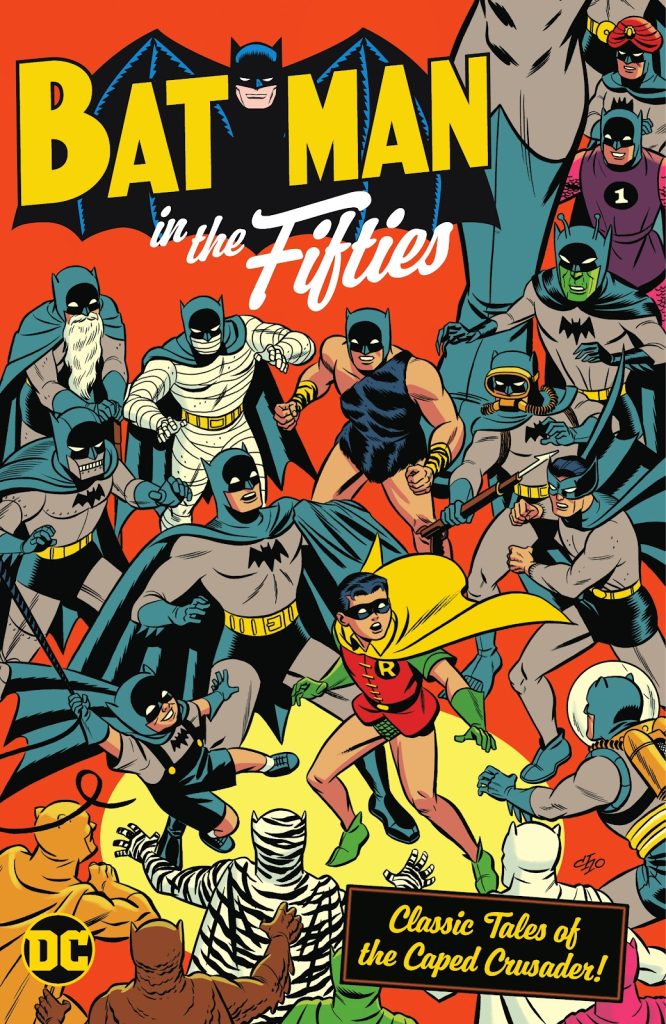
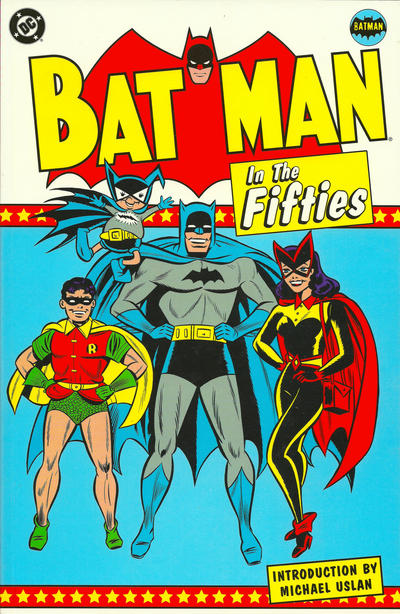
Your grandfather’s Batman is almost unrecognisable as the grim 21st century crimefighter. This Batman adopts disguises, fights aliens, giant apes and robots, and has a utility belt full of gimmicks for every need. He’s visited from the future, marries Batwoman and journeys to other planets.
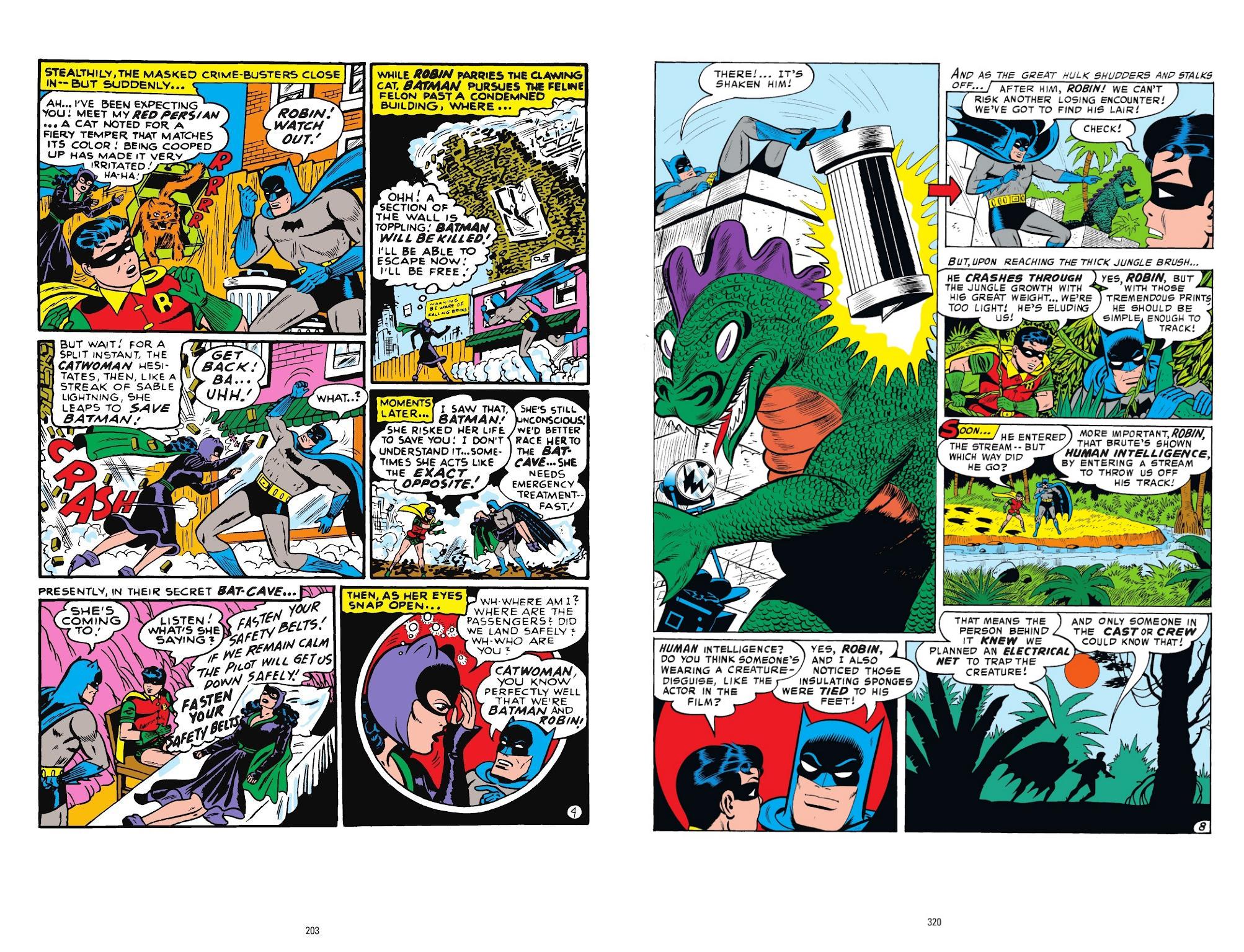
It might all sound rather silly, and much of it is, although no less enjoyable for that at a couple of stories at a time. Originally published in 2002, the 2021 reissue is able to be more fullsome with the credits, for as most readers should know, Bob Kane’s name might have appeared on every story, but his actual contribution amounts to the Batman and Robin figures on a tale from 1950 and two from 1951 (sample art left). They’re noticeably cruder than the surrounding work by Lew Sayre Schwartz.
In curating the material to reprint, editor Reza Lokman has opted for a crowd-pleasing selection sorted by theme rather than chronology. We have a sprinkling of timeless villains, a smattering of Superman team-ups, some introductions and a focus on classic equipment, such as Dick Sprang’s iconic design for the 1950s Batmobile opening the collection. In Bill Finger’s story Batman is out of action, so has to guide Robin remotely.
The relatively small selection of writers and artists represents the job for life era, and even when dealing with potentially ridiculous subjects Finger’s work has a little more finesse, and is less dependent on coincidence. That’s not to say the silliness isn’t enjoyable. Some DC editors in the 1950s conceived a sensational cover and then had the writers produce a story around it, and there’s the feeling of that method being applied to Edmond Hamilton’s tale of Batman and Superman being blackmailed by an egotistical historian from the future. It uses a theme frequently employed of Batman acting out of character causing readers to wonder why. Alternatively a mystery is set up to sustain the entire story. Who is Lightning Man? Will Batman and Robin actually die the following night?
Sprang’s exaggerated style defined the era’s Batman and he’s the best of the artists, his layouts the most creative, but so much of the art is by Sheldon Moldoff (sample art right). His stiff and exaggerated people now look very old-fashioned, as do his goofy monsters, but there’s an imagination present, just not as great as Sprang’s.
A chronological order isn’t applied, so there’s a false narrative in one sense, as Batman in the Fifties isn’t accurate in showing how the stories became increasingly outrageous. As the decade began Batman was still largely outwitting gangsters, but by the middle of the 1950s his methods became more eye-catching, and other heroes began to be fed in. Several of these stories also appear in The Black Casebook, compiled by Grant Morrison as influences on his version of Batman. By the end of the decade we have magical imp Bat-Mite.
Historical interest may over-ride quality, but there’s no post-modern irony nor any attempt to brush the silliness under the carpet. This is how Batman was in the 1950s, and a question to be asked is which version requires greater creativity, the gimmickry here or the negativity of the 21st century?