Review by Frank Plowright
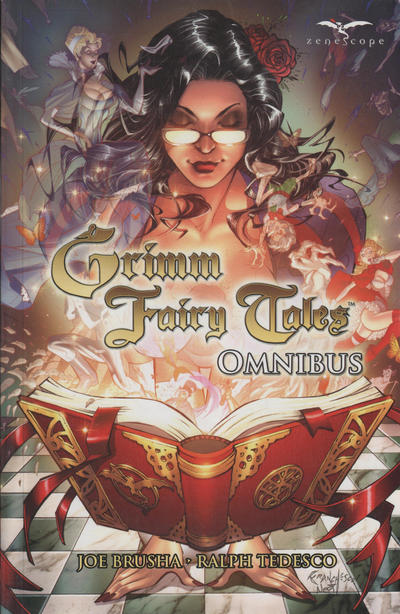
The contents of this Omnibus are exceptionally rare proof of a viable idea overcoming massive shortcomings in execution to eventually flourish as a massive franchise.
Joe Brusha, initially writing as Joe Tyler, and Ralph Tedesco write stories set in the real world where the experience of the protagonist is reflected in some way by the stars of a fairy tale. These fairy tales, though, are the folk tales told in their original horrific forms sometimes barely recognisable as the stories for children constantly revised and sanitised by the Brothers Grimm. Over time the presence of Sela Mathers becomes a frequently recurring thread. She’s first seen as a lecturer in folklore with a modern day version of Cinderella in her class, but as the series progresses she develops into the primary character. She possesses a book of fairy tales and is at first something akin to the old-fashioned horror anthology host as the book finds its way into the hands of those who need its morality tales. Sela’s backstory is provided in small doses until she becomes a proactive character with her own arch-enemy.
The fairy tales are twisted into suitably horrific experiences, and the writers, eventually joined by Raven Gregory, run through a considerable number of well known examples. You’ll not view the Three Bears, the Frog Prince or the Three Little Pigs in the same way again. It’s not immediately apparent, but there’s a continuity being constructed as well, although in a piecemeal manner. That story of the Three Little Pigs, for instance, prompts a sequel, and characters introduced such as the Pied Piper will go on to play roles in the wider Grimm Fairy Tales universe.
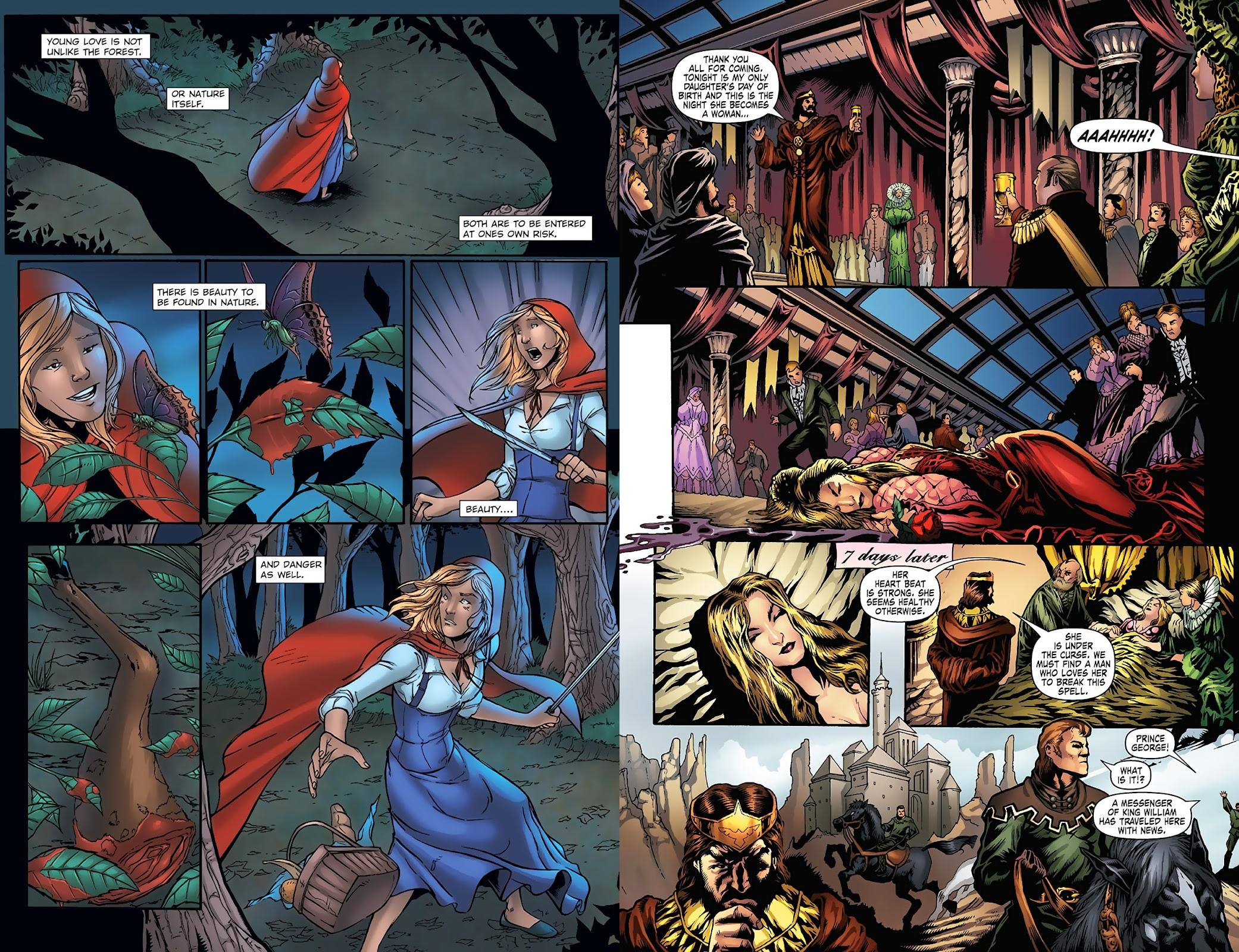
So, with imagination and originality, why does this Omnibus rank relatively low on the quality scale. It’s down to the art, which very gradually improves from a wretched start, but only begins to meet professional standards well beyond the halfway point. Given the minimal continuity it doesn’t greatly matter that a different artist draws almost every story, twenty four of them in total, but so few have any imagination beyond drawing female characters as exploitatively as possible. Even then the crimes against anatomy are manyfold. From the first half selection Christian Duce and Mark Dos Santos did progress to better work, but there’s a reason you’ll not have heard of most of their peers here. The sample spread combines art from Joe Dodd and John Toldeo, the only artists to tackle two stories. Dodd is more polished than Toldeo, but both number among the better artists.
Slowly after midway the art begins to improve, and eventually really poor looking pages are the exception rather than the rule. That’s combined with Brusha, Gregory and Tedesco seeing new possibilities in what they’ve established and drawing threads together. Sela becomes a more rounded character, although that’s initially at the cost of the fairy tales fading into the background, the USP replaced with ordinary fantasy. That too changes, but only right at the end.
There’s enthusiasm and originality here, but you have to work past the art to discover it. The content is also available across eight slimmer paperbacks with alluring Al Rio covers starting with Volume One.


