Review by Ian Keogh
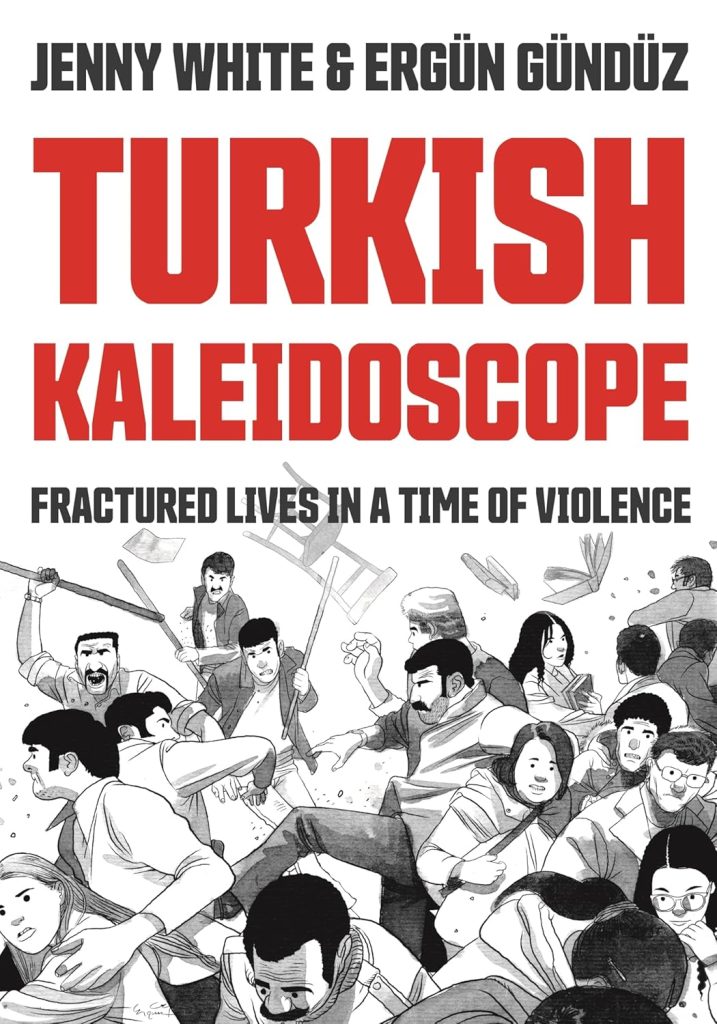
Turkish political upheaval during the 1970 was a complex and polarised state of affairs. Assorted parties on left and right jostled for supremacy as the government frequently changed, and those parties often found more common ground with their ideological opposites via religion than with those politically aligned with them. American scholar Jenny White lived in Turkey during that turbulent period and felt the graphic novel format offered the best opportunity of explanations.
White distils the factions to four people representing different genders, backgrounds, religious beliefs and political allegiances to concoct composites based on real people. Once she begins having people relate their experiences her choice of format becomes obvious. Even using this simplified and personalised presentation following the assorted factions is difficult, and one can only imagine the complexities of doing so from a textbook. However, with the best will in the world, differentiating the THKP from the THKP-C and DEV-SOL from DEV-YOL is a full time job.
The incidents related, though, are terrifying, random murders common and street violence endemic. White spends far more time focussing on the characters personifying left wing views, as despite the extra factor of religion, 1970s Turkish revolutionary idealism seems to follow a pattern common throughout the Western world. Those on the right of the political spectrum are able to put aside their differences to act together, while those on the left obsess on minor points of ideological interpretation and devolve into ever smaller combative factions. She also highlights a romantic view of socialism elsewhere, more prevalent in an era where information was more restricted and less personal.
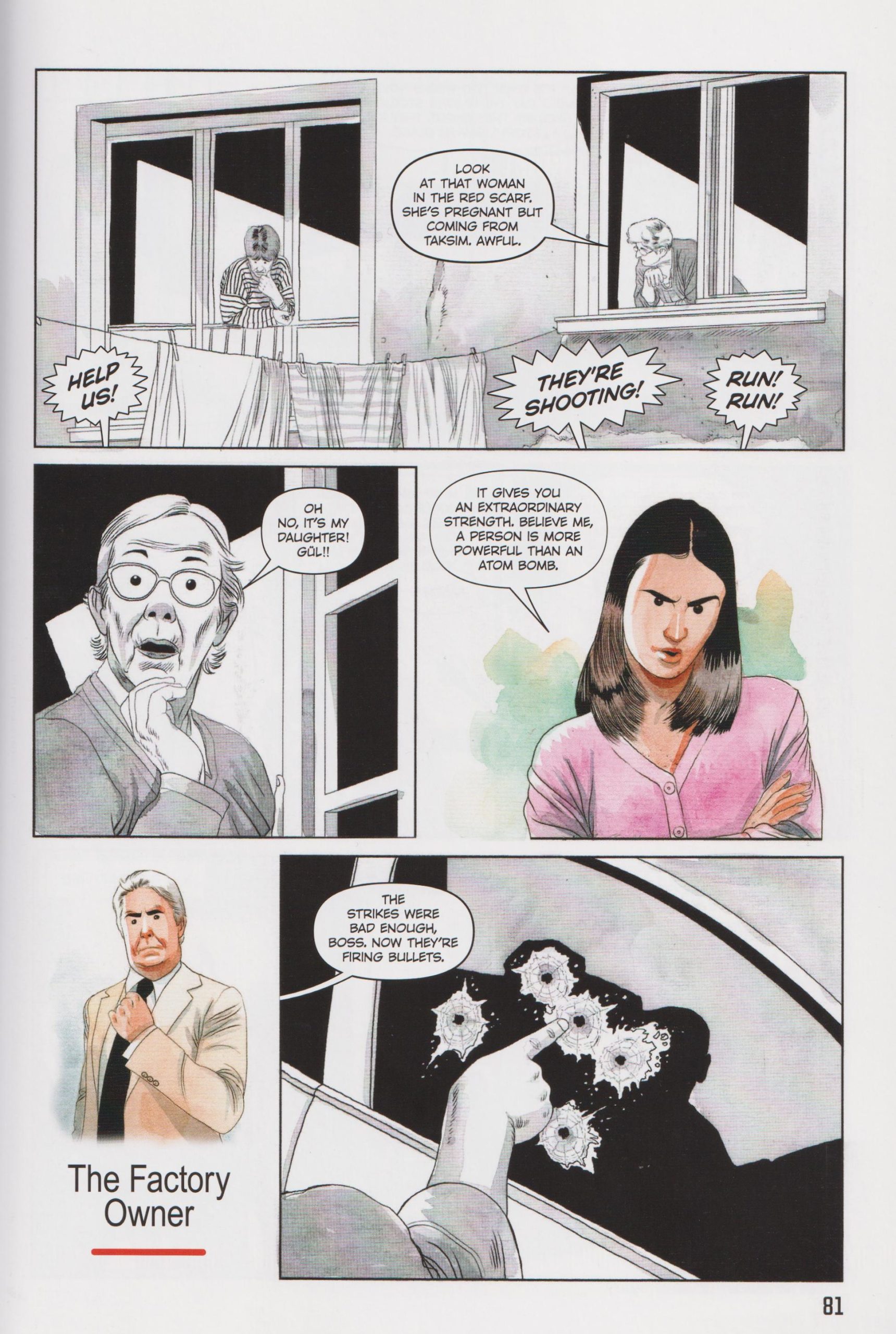
As the fashion among Turkish men seems to have been universal in embracing short hair with a moustache, artist Ergün Gündüz really has his work cut out for him. He differentiates via facial hair types and has an attractive clear style enabling people to look natural as they go about their business in days punctuated by violent interludes. Other than a final chapter set in 2012, beyond portraits colour is rarely used, and mostly for highlighting blood providing greater shock in a black and white world.
For all the good intentions and deep research, though, Turkish Kaleidoscope falls squarely between two stools. It never delivers a full understanding of the ideological complexities, yet is also unsatisfying in following personal journeys as it hop, skips and jumps through them. The reflections of the now elderly participants in 2012 provide surprises and some closure.